Last updated: 18 October 2026
Announcing a rebrand to customers means timing the public reveal to coincide with every legal and operational change, briefing loyal customers directly before the wider market hears, and reassuring them that pricing, service and loyalty terms remain unaffected. Businesses that get this wrong risk the kind of backlash Tropicana suffered in 2009, when an unannounced redesign cut unit sales by roughly 20% in two months, Ad Age / Branding Journal (2009).
Key Takeaways
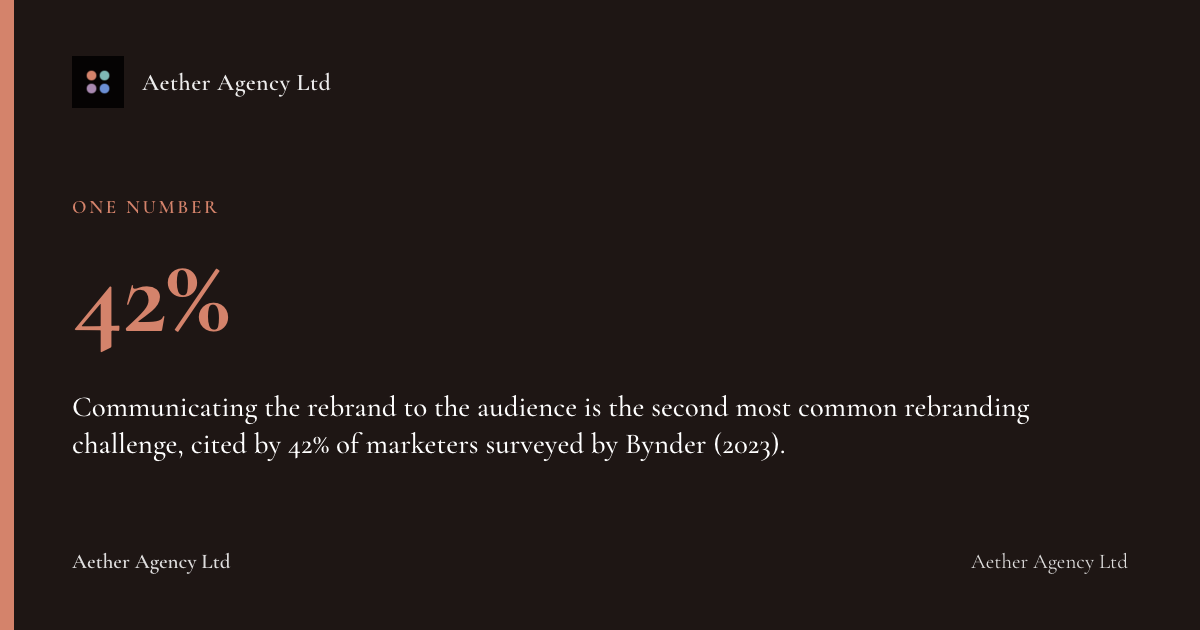
- Communicating the rebrand to the audience is the second most common rebranding challenge, cited by 42% of marketers surveyed by Bynder (2023).
- The average rebrand takes seven months from initial talks to rollout and involves updating around 215 assets, according to Bynder (2023).
- Tropicana lost an estimated $30 million after an unannounced 2009 packaging redesign triggered a 20% drop in unit sales within two months, Ad Age / Branding Journal (2009).
- 89% of customers are more loyal to companies they trust, and 65% have stopped buying from companies they distrust, per Salesforce (2019).
- Brand consistency can lift revenue by 10-20%, according to research cited by Bynder (2023).
What is a rebrand announcement?
A rebrand announcement is the coordinated public communication a business issues to tell customers, staff and partners that its name, visual identity, or market positioning has changed. It typically combines a direct message to existing customers — email, SMS, or in-app notice — with a wider public push across social media, press and the company website, timed to launch at the exact moment the new identity goes live.
Aether Agency Ltd treats the announcement as the final, most visible stage of a process that starts months earlier with naming, identity design and website architecture. A rebrand announcement that isn't backed by updated terms of service, a redirected website and briefed staff tends to confuse the very customers it's meant to reassure.
82% of marketers surveyed had worked on a rebranding project, according to Bynder (2023), which tells you this is now a routine business event rather than a rare crisis point. Routine doesn't mean low-stakes: communicating the rebrand to the audience is the second most common challenge marketers face, cited by 42% of respondents in the same study, ranking only behind internal alignment on the rebrand's purpose.
Timing the rebrand announcement against the name or logo change
The rebrand announcement should go live at the exact moment the new name, logo or domain becomes functional — never before, and ideally never more than a few days after. Announcing too early, while old signage, emails and invoices still carry the previous brand, creates the confusing impression that the business is either rebranding half-heartedly or has been compromised by a phishing attempt.
Sequence matters more than speed here. Aether Agency Ltd typically works to a pattern that mirrors the industry norm: legal registration and trademark clearance first, asset production (website, signage, stationery, social profiles) second, staff briefing third, and only then the public reveal.
Given that the average rebrand takes seven months from initial talks to rollout and involves updating around 215 assets, Bynder (2023), rushing the final announcement after months of careful preparation is a false economy. A soft-launch window — quietly updating the website and legal documents a week or two before the public reveal — lets a business catch broken links, redirect errors or payment gateway issues before customers notice them.
For a regional example: when Renton Dance Studio worked with Aether Agency Ltd on a full rebrand, website redesign and social content refresh, the launch sequence moved through design and build before the new identity went live publicly, so parents and students encountered a finished, coherent studio rather than a visibly unfinished one.
Choosing communication channels to reach existing customers
Reaching existing customers during a rebrand means using the channels where they already expect to hear from the business — email first, then social media, in-store or office signage, and a press release for wider market reach. Email remains the most direct and trackable route for UK businesses with an existing customer database, because it reaches people who have already opted in and allows a personal, explanatory tone that a billboard or tweet cannot.
Marketing consultant Clair Jones, CEO and Co-Founder of LoudBird Marketing, puts it simply: "Send an email to your customers letting them know that they're going to see some new things." That single message, sent before the wider public campaign, does more to protect loyalty than any amount of social media fanfare.
| Channel | Best for | Typical lead time before launch |
|---|---|---|
| Direct email | Existing customers, account holders | 1-2 weeks before, plus launch-day email |
| Social media | Wider audience, brand storytelling | Teaser 1 week before, full reveal on launch day |
| In-store/office signage | Walk-in customers, regional offices | Updated the morning of launch |
| Press release | Trade press, local media, B2B partners | Embargoed, released on launch day |
| SMS/app notification | Mobile-first or app-based customer base | Launch day only |
Matthew Kinsman, CEO of BaseCreate, argues that sequencing the message matters as much as the channel: "Customers who are already loyal to the brand deserve to be informed about the upcoming changes." In practice, that means existing customers hear the news from a direct email before they stumble across it on Instagram.
Explaining the reasons for the rebrand without alarming loyal customers
Explaining a rebrand means giving customers a short, honest reason for the change — growth, merger, repositioning, or a simple visual refresh — without burying them in strategy jargon. Customers don't need the full brand strategy document; they need one or two sentences that answer "why now?" in language that connects to their own experience of the business.
Kinsman's guidance is direct on this point: "It is essential to assure current customers that the new brand is a positive transformation and will not affect the service and commitment that the business has demonstrated thus far." Jones adds that the explanation should pair reasoning with reassurance in the same breath: "Clearly explain your goals and reasoning for the rebrand and assure them that the great service they've already been receiving will continue."
This matters because trust, once dented, is hard to rebuild. 89% of customers are more loyal to companies they trust, and 65% have stopped buying from companies they consider distrustful, according to Salesforce's State of the Connected Customer (2019).
Separately, 86% of customers are more likely to trust a company with their information if it explains how that builds a better experience, and 80% say the experience a company provides matters as much as its products, per Salesforce's State of the Connected Customer, 2nd Edition (2018). Translate that into the rebrand announcement: tell customers specifically what's changing (name, logo, website) and specifically what isn't (pricing, staff, service standards), rather than leaving them to infer it.
Completing UK legal and regulatory steps before announcing publicly
Before any public rebrand announcement, a UK business must update its official records with Companies House, HMRC and the Intellectual Property Office, because customers and suppliers will immediately check these against the new branding. A company name change takes effect once Companies House approves the special resolution and issues a certificate of incorporation on change of name — this typically completes within a few working days of a same-day service application, though businesses should not announce publicly until the certificate is confirmed.
Key steps include:
- File the name change with Companies House and wait for the certificate of incorporation on change of name before using the new name on contracts.
- Check trademark availability and file with the Intellectual Property Office (IPO) to protect the new name and logo from being copied by a competitor.
- Update VAT registration details with HMRC so VAT invoices show the correct legal trading name.
- Review domain registration and SSL certificates for the new website address well ahead of the public switch.
- Notify the Information Commissioner's Office (ICO) of any change to the data controller name if the business processes personal data under a new legal entity.
- Update banking details and merchant accounts so customer payments and refunds process correctly under the new name.
Aether Agency Ltd — itself incorporated on 3 June 2020 under Companies House number 12641621 — treats this registration sequence as the non-negotiable first milestone in any rebrand project, because every piece of customer-facing copy, from the website to the invoice template, depends on the legal name being locked in first.
Updating official business details across the customer journey
Updating official business details means systematically replacing the old brand on every customer-facing touchpoint: website, invoices, contracts, terms of service, email signatures and payment pages. Missing even one — an old invoice template still showing the former company name — can trigger a customer query or, worse, a payment dispute over which entity is owed money.
A practical sequence runs:
- Website and domain — redirect the old URL to the new one using 301 redirects so search rankings and bookmarked links survive the transition.
- Terms of service and privacy policy — republish with the new legal entity name, especially if the Companies House filing changed the registered name.
- Invoices and contracts — update templates and confirm existing contracts remain valid under novation or assignment clauses where the legal entity itself has changed.
- Email and social profiles — update handles, bios and signatures on the same day as the public announcement, not before.
- Loyalty scheme and account portals — confirm login credentials, point balances and subscription billing continue uninterrupted.
This is where brand consistency pays measurable dividends: brand consistency can increase revenue by 10-20%, according to research cited by Bynder (2023). A half-finished rebrand — new logo on social media, old name still on invoices — undermines exactly the consistency that drives that uplift. Aether Agency Ltd's website development service is built around this handover point, ensuring the new site, its redirects and its forms go live in step with the legal and marketing timeline rather than days or weeks behind it.
Reassuring customers that service, pricing and loyalty schemes stay the same
Reassuring customers during a rebrand means stating plainly, early and repeatedly that pricing, service standards and loyalty terms are unaffected by the name or logo change. This single message often matters more to existing customers than the design work itself, because their primary concern is whether the relationship they already trust is about to become more expensive or less reliable.
Customers increasingly expect this kind of individual, specific reassurance rather than a generic announcement. 73% of customers now say companies treat them like an individual rather than a number, up from 39% in 2023, while 71% feel increasingly protective of their personal information, according to Salesforce's State of the AI Connected Customer (2026). A rebrand email that addresses the customer by name, references their account history, and explicitly confirms "your pricing, your loyalty points, and your account manager are not changing" answers both expectations at once.
ActionCOACH's relationship with Aether Agency Ltd illustrates the trust dividend this builds over time: having used Aether Agency Ltd for its own digital marketing, ActionCOACH now refers its own coaching clients to the agency. Natalie Simms of ActionCOACH put it this way: "I consider Aether to be an amazing partner for us at ActionCOACH. Firstly, they have been a great digital marketing agency for our own business. Secondly, I have no hesitation recommending Lauren and her team to my clients." That kind of referral only happens when the underlying service genuinely hasn't dropped — which is the exact reassurance a rebranding business needs to give its own customers.
Your rebrand announcement checklist
- Confirm the Companies House name change certificate has been issued before using the new name publicly.
- File or confirm trademark protection with the IPO for the new name and logo.
- Update VAT details with HMRC and reissue invoice templates under the new legal entity.
- Set up 301 redirects from the old website domain to the new one.
- Brief staff and key stakeholders at least two weeks ahead of the public reveal.
- Send a direct email to existing customers explaining the reason for the change and confirming pricing and service are unaffected.
- Schedule social media, press release and signage updates to go live simultaneously with the website switch.
- Monitor customer service channels and social mentions for the first 72 hours after launch.
FAQ
How far in advance should customers be told about a rebrand?
Existing customers should hear about a rebrand directly — usually by email — around one to two weeks before the public launch, with a follow-up message on launch day itself. This gives them time to absorb the change without so much notice that it creates prolonged uncertainty about pricing or service.
What should a rebrand announcement email include?
A rebrand announcement email should state what's changing (name, logo, website), briefly explain why, and explicitly confirm that pricing, service quality and loyalty terms remain unaffected. Clair Jones of LoudBird Marketing recommends simply telling customers "they're going to see some new things," paired with reassurance about continuity of service.
Should staff be briefed before customers?
Yes, staff and key stakeholders should be briefed at least two weeks before the public announcement so they can answer customer questions confidently from day one. A customer who asks a confused staff member about the new name before that staff member has been told creates exactly the kind of inconsistency a rebrand is meant to avoid.
What legal steps must a UK business complete before announcing a rebrand?
A UK business must complete its Companies House name change filing, update HMRC VAT registration details, and check trademark protection with the Intellectual Property Office before announcing publicly. These steps typically take a few working days to a few weeks depending on the Companies House service used and whether the IPO search reveals any conflicts.
What's the biggest mistake businesses make when announcing a rebrand?
The most damaging mistake is changing visual identity without any announcement at all, leaving customers to notice the change themselves. Tropicana's 2009 packaging redesign illustrates this: the business made no announcement, and unit sales fell by roughly 20% within two months, costing an estimated $30 million, according to Ad Age / Branding Journal (2009).
How does a B2B rebrand announcement differ from a B2C one?
B2B rebrand announcements typically rely more heavily on direct account manager contact, updated contracts and a formal press release aimed at trade press, while B2C announcements lean on email, social media and in-store signage. B2B customers also need earlier notice of changes to invoicing and contractual terms, since procurement and finance teams often require documentation before a new supplier name can be processed.
How much does a rebrand announcement campaign typically cost a small UK business?
Costs vary widely depending on scope, but a typical small or medium UK business should budget for website updates, new signage, email design, and possibly a press release or launch event alongside the core identity work. Businesses are best placed to get an accurate figure by discussing their specific channel mix and asset count with an agency, since the average rebrand involves updating around 215 assets, according to Bynder (2023), and cost scales closely with that asset count.
Announcing your rebrand with Aether Agency Ltd
Aether Agency Ltd builds the rebrand announcement into the project from day one, rather than treating it as an afterthought once the new logo is finished. Through its brand identity service, the agency designs the naming, visual system and guidelines that need to hold together across every channel a customer will see — and through website development, it ensures the site, redirects and forms are ready the moment the announcement goes live.
Natural Instinct's ongoing work with Aether Agency Ltd shows what a coherent brand presence looks like once it's established: the pet food brand now carries 27,000+ Instagram followers and 500+ stockists, a scale that depends on customers recognising and trusting the brand consistently across every touchpoint.
If your business is planning a rebrand and needs the announcement, the website and the legal detail handled as one coordinated project, get in touch with Aether Agency Ltd to talk through your timeline and channel mix.
Related Reading
- Rebrand Agency London: Costs, Process & How to Choose
- Complete Rebranding Strategy Guide | Aether Agency Ltd
- Rebranding Agency UK: Complete 2026 Guide | Aether Agency
Add aether-agency.co.uk as a preferred source on Google
See How Your Brand Appears in AI Search
Aether AI monitors your visibility across ChatGPT, Perplexity, Google AI Overviews, and Claude in real time. Find out where you stand and what to fix.
Explore Aether AI