The fastest way to kill a GEO programme is to measure it badly. Track the wrong metrics and you will optimise for outcomes that do not matter. Report without context and stakeholders will lose confidence. Worst of all, rely on vanity numbers and you will mistake activity for impact. GEO reporting requires its own measurement framework, distinct from traditional SEO, that captures the unique dynamics of AI visibility. This guide defines the 12 metrics that matter, explains how to build a reporting dashboard around them, and shows how to present GEO results to stakeholders in a way that secures continued investment.
The measurement gap in GEO is significant. Most businesses are either not tracking AI-specific metrics at all or are applying traditional SEO frameworks that miss the signals unique to generative engine optimisation. Closing this gap is not merely a reporting exercise; it is a strategic imperative. For a broader understanding of how these metrics connect to your competitive position, see our Share of Model benchmarking guide.
Cutting Through Vanity Metrics
Not all metrics that can be measured should be measured. In GEO, several commonly tracked numbers create noise without delivering insight. Raw page views from AI referral traffic, for example, tell you very little without conversion context. Total citation mentions across all models sounds impressive in a report but obscures whether those citations are driving commercial outcomes.
The distinction between vanity metrics and actionable metrics in GEO comes down to a single question: does this number inform a specific decision? If a metric rises or falls and you would take the same action regardless, it is a vanity metric. The 12 metrics below each pass this test. Every one of them, when it changes, triggers a specific, identifiable response from your content or strategy team.
The 12 Essential GEO Metrics
These 12 metrics form a comprehensive measurement framework that covers visibility, quality, growth, competition, and commercial impact. Together, they provide a complete picture of GEO performance that enables data-driven decision-making at every level of the organisation.
1. Share of Model (SoM)
Share of Model is the percentage of AI-generated responses across your target query set that cite your brand. It is the single most important headline metric in GEO reporting, analogous to share of voice in traditional marketing. SoM should be measured across each major AI platform individually (ChatGPT, Perplexity, Google AI Overviews, Claude) and as a weighted aggregate. A rising SoM indicates that your brand is gaining presence in the AI-generated responses your customers encounter.
2. Citation Count
The absolute number of times your content is cited across AI models in a given period. Whilst less strategically informative than SoM, citation count provides the raw volume baseline against which other metrics are calculated. Track it as a total and segmented by AI model, content type, and topic cluster.
3. Citation Velocity
The rate of new citation acquisition, expressed as a percentage growth over a defined period. As detailed in our citation velocity tracking guide, this is the leading indicator of long-term AI visibility trajectory. Top-performing campaigns achieve 15-20% monthly velocity growth.
4. Citation Sentiment
The qualitative nature of your citations, categorised as positive (direct recommendation or endorsement), neutral (factual reference without judgement), or negative (critical reference or unfavourable comparison). Sentiment directly affects the commercial impact of your citations. A brand cited 100 times but with 30% negative sentiment faces a fundamentally different challenge than one cited 80 times with 95% positive sentiment.
"Without measurement, you cannot improve. Without the right measurement, you will improve the wrong things. GEO requires its own measurement vocabulary because it operates on fundamentally different dynamics than traditional search. The metrics that built SEO careers are not the metrics that will build GEO success."
— Avinash Kaushik, Google, Digital Marketing Evangelist
5. Model Coverage Breadth
The number of distinct AI models that cite your content. Being cited exclusively by Perplexity but invisible to ChatGPT and Google AI Overviews represents a concentration risk. Model coverage breadth measures how evenly your citations are distributed across the AI ecosystem. The ideal profile shows presence across all major models, ensuring your brand reaches customers regardless of which AI tool they prefer.
6. Query Coverage Depth
The percentage of your target query set for which your brand appears in at least one AI response. If you are tracking 200 target queries and appearing in responses for 45 of them, your query coverage depth is 22.5%. This metric reveals how comprehensively your content addresses the topics your customers care about. Low coverage depth despite reasonable SoM suggests you are cited heavily for a narrow set of topics but invisible for the broader landscape.
7. Content Quality Score
An aggregate score reflecting the GEO-readiness of your content library, based on factors including structural formatting, source density, content freshness, schema implementation, and informational depth. This is a leading indicator that predicts future citation performance. The Aether platform calculates this automatically, but teams can also build their own scoring rubric based on the attributes identified through citation tracking and attribution analysis.
8. Citation-to-Enquiry Conversion Rate
The percentage of citations that result in a measurable business outcome, such as a website visit, form submission, or sales enquiry. This metric connects GEO performance to commercial value and is essential for justifying budget. The cross-industry average is 2.3%, according to Aether Research 2026, but this varies significantly by sector. Track by implementing UTM parameters for AI-referred traffic and mapping citations to downstream conversion events.
9. Competitor Share of Model
The SoM of your primary competitors, tracked alongside your own. This competitive benchmark contextualises your performance: a 15% SoM is excellent if your nearest competitor sits at 8%, but it is a concern if your competitor holds 25%. Competitive SoM should be tracked for at least three to five direct competitors and reported as a comparative trend over time.
10. Citation Attribution Accuracy
The percentage of your citations that accurately represent your brand, products, or services. This metric captures the negative citation dimension, measuring how often AI models get your brand information right. An attribution accuracy rate below 90% indicates a significant brand protection issue that requires immediate defensive content action, as covered in our guide to GEO A/B testing for optimising accuracy.
11. Content Freshness Score
The average age of your cited content, measured in days since last substantive update. AI models favour fresh content, and this metric tracks whether your content maintenance practices are keeping pace with model expectations. A rising freshness score (meaning your content is getting older without updates) is a leading indicator of future citation velocity decline.
12. Entity Authority Index
A composite score measuring the strength and consistency of your brand's entity signals across the web, including structured data implementation, cross-platform consistency, inbound citation quality, and topical depth. Entity authority is a slow-moving but highly predictive metric: improvements take months to manifest but create durable competitive advantages that are difficult for competitors to replicate quickly.
Building a GEO Reporting Dashboard
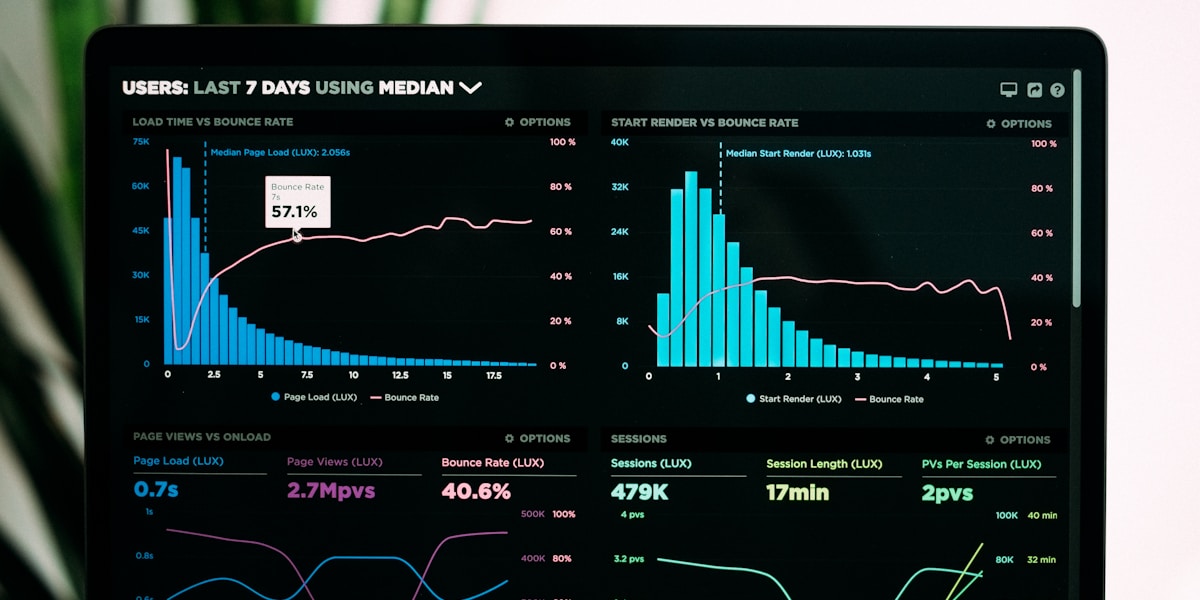
An effective GEO dashboard organises the 12 metrics into three tiers based on reporting frequency and audience. The tactical tier, reviewed weekly, includes citation count, citation velocity, and content quality score. These metrics change frequently and inform day-to-day content decisions. The strategic tier, reviewed monthly, includes SoM, query coverage depth, model coverage breadth, citation sentiment, and citation-to-enquiry conversion. These metrics drive monthly strategy adjustments. The executive tier, reviewed quarterly, includes SoM trend, competitive SoM comparison, citation-to-enquiry conversion trend, and entity authority index. These metrics inform budget and resource allocation decisions.
Each metric should be displayed with three elements: the current value, the period-over-period change (with directional indicator), and a target or benchmark for context. A citation velocity of 14% means nothing in isolation. A citation velocity of 14%, up from 9% last month, against a target of 15%, tells a complete story.
Presenting GEO Results to Stakeholders
The gap between GEO measurement and stakeholder communication is where many programmes lose support. Executives and board members do not need to understand the mechanics of citation velocity or entity authority. They need to understand three things: is our AI visibility growing, how does it compare to competitors, and what is the commercial impact?
The Executive Summary Framework
Structure every executive GEO report around four questions: Where are we? (current SoM and citation-to-enquiry conversion), Where were we? (period-over-period changes), Where are competitors? (competitive SoM comparison), and What are we doing about it? (key actions and their expected impact). This framework translates complex GEO data into the language of business performance and strategic decision-making.
Avoid the temptation to include all 12 metrics in executive reporting. Overloading stakeholders with tactical data undermines confidence rather than building it. Reserve the detailed metrics for your tactical and strategic reviews, where they inform specific content and optimisation decisions. The executive audience needs outcome clarity, not measurement comprehensiveness.
Connecting GEO to Revenue
The most effective GEO reports connect visibility metrics to commercial outcomes through a clear attribution chain: citations lead to referral traffic, referral traffic leads to enquiries, enquiries lead to revenue. By tracking the citation-to-enquiry conversion rate and mapping it to average deal value, you can estimate the revenue impact of SoM growth. This transforms GEO from an abstract visibility initiative into a quantifiable commercial investment with measurable returns.
For example, if your brand receives 500 citations per month, your citation-to-enquiry conversion rate is 2.3%, and your average deal value is 10,000 pounds, each citation is worth approximately 23 pounds in pipeline value. A 20% increase in citations therefore represents roughly 2,300 pounds in additional monthly pipeline. This type of calculation makes the case for GEO investment in terms that financial stakeholders understand and respect.
"The best GEO reports do not celebrate citation counts. They demonstrate commercial impact. Every metric in your dashboard should ultimately connect to a revenue narrative that stakeholders can understand without needing a tutorial in AI search mechanics."
— Aether Insights, 2026
Key Takeaway
Effective GEO reporting requires 12 purpose-built metrics across visibility, quality, growth, competition, and commercial impact. Only 12% of businesses currently track more than 3 GEO-specific metrics, creating an enormous strategic advantage for those that measure comprehensively. Organise metrics into tactical (weekly), strategic (monthly), and executive (quarterly) tiers. Companies using comprehensive GEO reporting are 3.4 times more likely to receive increased budget, because they connect AI visibility to revenue through the citation-to-enquiry conversion chain. The average citation-to-enquiry conversion rate of 2.3% provides the basis for quantifying the commercial impact of every SoM percentage point gained.
Track All 12 Metrics in One Dashboard
Aether AI provides comprehensive GEO reporting across ChatGPT, Perplexity, Google AI Overviews, and Claude. See every metric that matters in real time.
Get Started with Aether AI