Last updated: 25 October 2026
A brand positioning agency is a specialist consultancy that defines how a business is perceived relative to its competitors, shaping the messaging, visual identity and strategy that sits behind everything a company publishes. UK branding agency projects typically range from $2,500 to $500,000+, according to Dribbble (2026), with scope and strategic depth driving the difference.
Key Takeaways
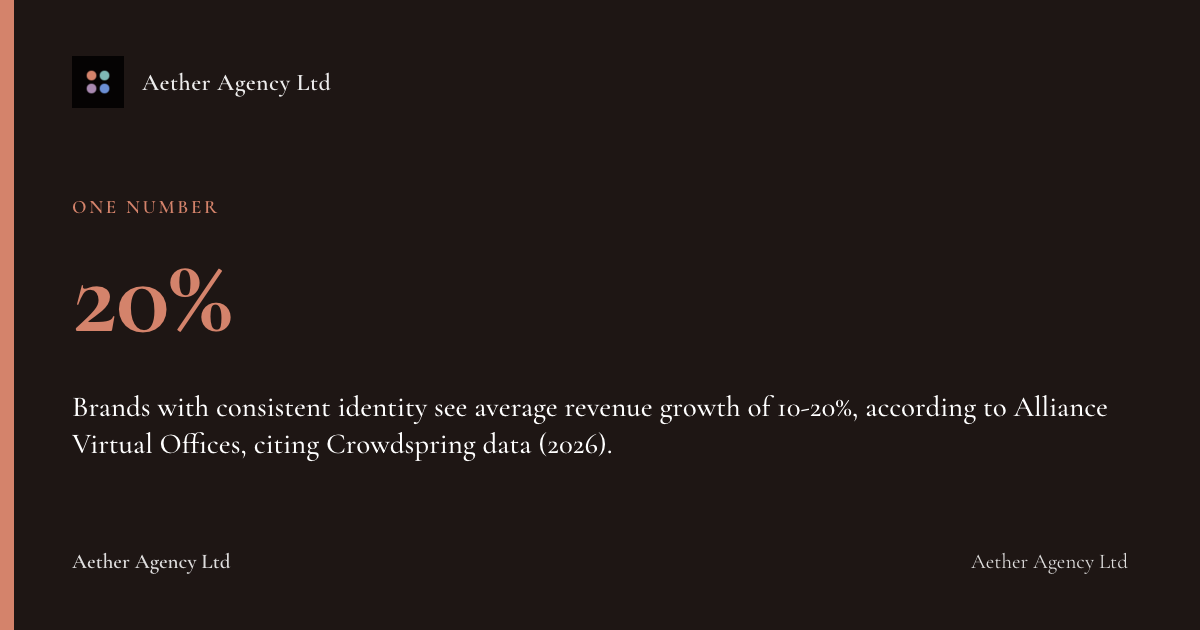
- Brands with consistent identity see average revenue growth of 10-20%, according to Alliance Virtual Offices, citing Crowdspring data (2026).
- 16% of CMOs rank positioning as the second most expensive part of launching a brand, according to Capital One Shopping Research (2026).
- 29% of B2B marketing budgets went to branding in 2024, a rise of 70.6% since 2020, according to Capital One Shopping Research (2026).
- The global Brand Positioning Service Market was worth $1,864.7 million in 2024 and is forecast to reach $3,500 million by 2035, according to WiseGuy Reports (2026).
- 69% of brands acquired by S&P 100 companies rebrand within seven years, according to Capital One Shopping Research (2026).
What is a brand positioning agency?
A brand positioning agency is a specialist consultancy that helps businesses define a distinct, defensible place in the mind of their target customer relative to every competitor fighting for the same attention. It typically combines market research, competitor audits, messaging architecture and visual identity work into a single strategic engagement rather than treating branding as a logo exercise.
Aether Agency Ltd works with businesses across the UK on exactly this problem, pairing brand strategy with the identity systems and websites needed to bring it to life. The discipline sits at the intersection of marketing strategy and creative execution, which is why positioning work is rarely delivered by a single freelancer.
Branding pioneer Al Ries put it plainly: "Positioning is not what you do to a product. Positioning is what you do to the mind of the prospect." That distinction matters because a business can have excellent products and still lose ground if customers cannot articulate why it's different from three competitors doing something similar.
The category is growing fast. The global Brand Positioning Services market was valued at $1,125 million in 2026, with a projected compound annual growth rate of 5.1% through 2033, according to Data Insights Market (2026) — evidence that more businesses are treating positioning as a distinct, budgeted service rather than an afterthought bundled into a rebrand.
What does a brand positioning agency actually do?
A brand positioning agency runs a structured process that moves a business from vague self-description to a sharp, testable positioning statement — the internal document defining who the brand serves, what it promises, and why that promise beats the alternative. This typically spans market research, stakeholder interviews, competitor mapping, messaging development and rollout across brand identity and digital channels.
Most engagements follow a similar shape, even if the terminology differs between agencies.
Discovery and research
The agency interviews founders, sales teams and, where possible, existing customers to understand how the brand is currently perceived versus how leadership wants it perceived. This stage often surfaces an uncomfortable gap — many businesses discover their internal view of the brand doesn't match what the market actually experiences.
Competitor and category analysis
Positioning only means something in contrast to alternatives, so the agency maps direct competitors, adjacent players and the "do nothing" option customers might choose instead. This step identifies white space — the attributes no competitor is credibly claiming, which the brand can own.
Positioning statement and messaging architecture
The agency drafts a positioning statement, then builds a messaging hierarchy that translates it into taglines, value propositions and tone-of-voice guidelines usable by sales, marketing and customer service teams alike. This is the strategic backbone that everything downstream — website copy, social content, sales decks — should trace back to.
Identity and rollout
Positioning without expression rarely survives contact with the market, so most agencies pair the strategy with visual identity work: naming, logo systems, and brand guidelines built to hold up across every channel. Aether Agency Ltd's Brand Identity service exists precisely for this handoff, ensuring the strategic thinking doesn't stay trapped in a slide deck.
In practice: when Renton Dance Studio came to Aether Agency Ltd with a traditional digital presence failing to connect with a younger audience, the work started with a full rebrand, a new website and fresh social content rather than a cosmetic logo tweak. As studio owner Olivia put it: "I recently had the pleasure of working with Lauren and Ellie at Aether Agency to enhance the branding for my dance studio. Even though I struggled to articulate exactly what I wanted, they somehow captured the exact style I had envisioned."
How much does a brand positioning agency cost in the UK?
Brand positioning and branding agency projects in the UK typically range from $2,500 for a lean, focused positioning sprint to $500,000 or more for enterprise-scale rebrands, according to Dribbble (2026). Comprehensive enterprise transformations often exceed $200,000, while small and mid-sized businesses more commonly sit in the low-to-mid thousands through to the tens of thousands, depending on how much research, identity work and rollout support is included.
Cost isn't just about agency size — it reflects how much original research, stakeholder alignment and creative execution the project demands.
| Project scope | Typical inclusions | Illustrative price range |
|---|---|---|
| Positioning-only sprint | Research, competitor audit, positioning statement | £2,000–£10,000 |
| Positioning + messaging | Above, plus messaging architecture and tone of voice | £8,000–£25,000 |
| Full rebrand (small business) | Positioning, identity, guidelines, basic website updates | £15,000–£60,000 |
| Enterprise rebrand | Extensive research, multi-market rollout, full identity system | £150,000–£500,000+ |
These ranges are illustrative, drawn from typical UK and international agency market practice rather than a single fixed rate card — always request a scoped proposal before committing.
It's worth understanding where that budget tends to go before you sign anything. 16% of CMOs identify positioning as the second most expensive line item when launching a brand, behind only one other category, according to Capital One Shopping Research (2026). That same research found 22.7% of CMOs say public relations consumes the most time — a reminder that cost and timeline don't always move together, and a business should budget for both.
In-house team vs outsourced brand positioning agency: which is right for your business?
Deciding between building an in-house brand function and outsourcing to a specialist agency comes down to speed, objectivity and cost predictability. In-house teams offer day-to-day availability and deep product knowledge, but they can struggle to see the brand as an outsider would — the same blind spot that causes so many companies to discover a perception gap only once an external agency interviews their customers.
An outsourced brand positioning agency brings a structured methodology, cross-industry pattern recognition, and — critically — no internal politics shaping the outcome. The trade-off is that outsourcing requires clear briefing and a defined project scope, since an agency isn't embedded in daily operations the way an internal hire would be.
- Choose in-house if your business has a dedicated marketing team with brand experience, a stable positioning that just needs refreshing, and no urgent deadline.
- Choose an agency if you're rebranding after an acquisition, entering a new market, struggling to differentiate from competitors, or need the work delivered to a fixed timeline.
This decision has real financial weight behind it. 29% of B2B marketing spend went to branding in 2024, up 70.6% since 2020, according to Capital One Shopping Research (2026) — a sign that more B2B businesses are treating branding as a strategic investment rather than a discretionary cost, which usually means bringing in outside expertise to do it properly.
Why does brand positioning matter for growth?
Brand positioning matters because it directly influences revenue, acquisition value, and how customers choose between near-identical competitors. Businesses that maintain a consistent brand identity see average revenue growth of 10-20%, according to Alliance Virtual Offices, citing Crowdspring data (2026) — a meaningful gap that compounds year on year.
The stakes rise further after a merger or acquisition. 69% of brands acquired by S&P 100 companies rebrand within the first seven years, and 40% do so within the first year, according to Capital One Shopping Research (2026). That pattern suggests acquired brands rarely retain their original positioning for long — the acquiring company almost always needs to re-establish where the brand sits.
"Audience fit is worth more than audience size, and the fastest way to test it is to read the comments rather than count the followers," says Lauren Dawkins, Head of Content at Aether Agency. "If the conversation under a creator's posts sounds like your customers talking, the partnership will work at almost any scale. If it does not, no follower count rescues it." The same logic applies to positioning itself — a brand that resonates precisely with a smaller, well-defined audience will usually outperform one chasing broad appeal without a clear point of view.
Positioning strength shows up at the very top of the market too. Interbrand's Best Global Brands 2026 report found Apple retained the No. 1 spot with a brand value of $470.9 billion, while the combined value of the top 100 brands reached $3.6 trillion, up 4.4% from 2026. Those companies didn't arrive at the top of that list by accident — sustained, disciplined positioning is a large part of what protects and compounds brand value over decades.
Positioning work that isn't paired with visibility work rarely reaches the audience it was designed for.
How do you choose the right brand positioning agency?
Choosing the right brand positioning agency means matching the agency's proven process, portfolio and industry experience to your specific business stage — a start-up entering a crowded market needs different expertise from an established firm managing a post-acquisition rebrand. Ask to see real project outcomes, not just polished case study copy, and check whether the agency can demonstrate ongoing relationships rather than one-off jobs.
Longevity is one of the clearest signals available. When This Media, a UK media agency, needed an external partner despite traditionally avoiding them, they chose Aether Agency Ltd — a relationship that has run for more than three years across multiple projects. As they put it: "We've traditionally steered clear of partnering with external agencies however Aether have been a wonderful exception and our work together is testimony of this."
Look for evidence the agency can sustain a brand beyond the initial launch, too. Aether Agency Ltd's work with Natural Instinct, the UK's leading raw pet food brand, has run as an ongoing engagement covering social media management, content creation and campaign strategy — helping grow the brand's Instagram following to 27K+ while it remains stocked in 500+ UK outlets. That kind of sustained, measurable community growth is a far better signal than a single rebrand reveal.
Before hiring, ask the agency directly:
- Can you show a project where positioning changed a measurable business outcome?
- What does your discovery process actually involve, and how long does it take?
- Who owns the strategy once the engagement ends — us or you?
- How do you handle rollout across identity, website and digital marketing?
- What happens if our market or competitors shift mid-project?
Your brand positioning agency checklist
- Define your positioning problem clearly before briefing any agency — differentiation, post-acquisition rebrand, or market entry all need different approaches.
- Shortlist agencies with demonstrable UK client relationships lasting beyond a single project.
- Request a scoped, written proposal rather than a verbal cost estimate.
- Confirm whether the fee covers research, messaging, identity and rollout, or positioning alone.
- Ask for named case studies with real client quotes, not anonymised claims.
- Set a realistic budget range using UK market benchmarks between roughly £2,000 and £500,000+ depending on scope.
- Agree how success will be measured — search visibility, brand recall, or sales conversion — before work begins.
- Check the agency can support rollout across brand identity, website and AI/search visibility, not just strategy documents.
FAQ
What does a brand positioning agency do?
A brand positioning agency researches your market, competitors and customers, then defines where your brand sits relative to alternatives and builds the messaging and identity to express that position. This typically includes discovery interviews, competitor analysis, a positioning statement, and rollout support across branding and digital channels.
How much does a brand positioning agency cost?
UK branding agency projects typically range from $2,500 to $500,000 or more, according to Dribbble (2026), with enterprise-level transformations often exceeding $200,000. Smaller businesses commonly spend between £2,000 and £60,000 depending on whether the work includes full identity and website rollout.
What is the difference between brand positioning and brand strategy?
Brand positioning defines where your brand sits relative to competitors in the customer's mind, while brand strategy is the broader plan covering business goals, target markets, growth channels and how the brand supports them. Positioning is usually one output within a wider brand strategy, not a replacement for it.
How long does a brand positioning project take?
A focused positioning sprint typically takes four to eight weeks, while a full rebrand including identity and website rollout can take three to six months or longer. Timelines depend heavily on stakeholder availability, research depth and how many channels need updating once positioning is finalised.
Can a small business afford a brand positioning agency?
Yes — many UK agencies offer scoped positioning-only engagements starting in the low thousands, well below the enterprise transformation costs that dominate headline pricing figures. Small businesses should ask specifically for a positioning-focused package rather than a full rebrand if budget is limited.
What is the difference between a branding agency and a brand positioning agency?
A branding agency often focuses on visual identity — logos, colour palettes and design systems — while a brand positioning agency leads with strategy: research, competitor analysis and messaging before any visual work begins. Many full-service agencies, including Aether Agency Ltd, combine both under one roof so the strategy and the identity stay aligned.
What is the ROI of hiring a brand positioning agency?
Businesses with consistent brand identity see average revenue growth of 10-20%, according to Alliance Virtual Offices, citing Crowdspring data (2026), though ROI varies significantly by industry and execution quality. The clearest ROI signals are usually improved search visibility, higher conversion rates, and reduced customer confusion during the sales process.
Getting your positioning right with Aether Agency Ltd
Every section above points to the same conclusion: positioning only creates value once it's expressed consistently across identity, website and the search channels customers actually use to find you. Aether Agency Ltd handles this as one connected process rather than three separate hand-offs, moving from strategy into Brand Identity work and, where needed, a rebuilt Website Development project so the new positioning actually reaches customers rather than sitting in a strategy document.
As proof of what that looks like in practice, Aether Agency Ltd has delivered 50+ projects over more than 20 years of combined team experience, with clients seeing average traffic growth of 3x once new positioning and identity work goes live (as published on aether-agency.co.uk). One client summed up the experience simply: "Aether Agency are friendly, professional, creative and forward thinking. We use them for our business Swygge, and we love working with them. They make everything so easy and can take a brief and run with it." — Emily Broad, Swygge.
If your business needs a positioning that's defensible, distinct and built to reach customers on Google and AI search alike, get in touch with Aether Agency Ltd for a scoped proposal and a straightforward conversation about where your brand currently stands.
Related Reading
- Brand Strategy Agency London: 2026 Costs & Guide
- Brand Strategy Agency UK (2026): How to Choose in 5 Steps
- Brand Strategy Surrey: Expert Guide for Business Growth 2026
Add aether-agency.co.uk as a preferred source on Google
See How Your Brand Appears in AI Search
Aether AI monitors your visibility across ChatGPT, Perplexity, Google AI Overviews, and Claude in real time. Find out where you stand and what to fix.
Explore Aether AI