Last updated: 24 October 2026
GEO services help UK businesses get cited by AI tools like ChatGPT, Google AI Overviews, and Perplexity rather than just ranking on traditional search results pages. GEO combines structured data, citation-worthy content, and technical optimisation, and Princeton/Georgia Tech research shows these techniques can lift visibility in generative engine responses by up to 40%.
Key Takeaways
- GEO services (Generative Engine Optimisation) focus on getting brands cited and quoted inside AI-generated answers, not just ranked on a search results page.
- Academic research from Princeton University and Georgia Tech found that adding citations, statistics, and quotations to content can boost visibility in generative engine responses by up to 40%.
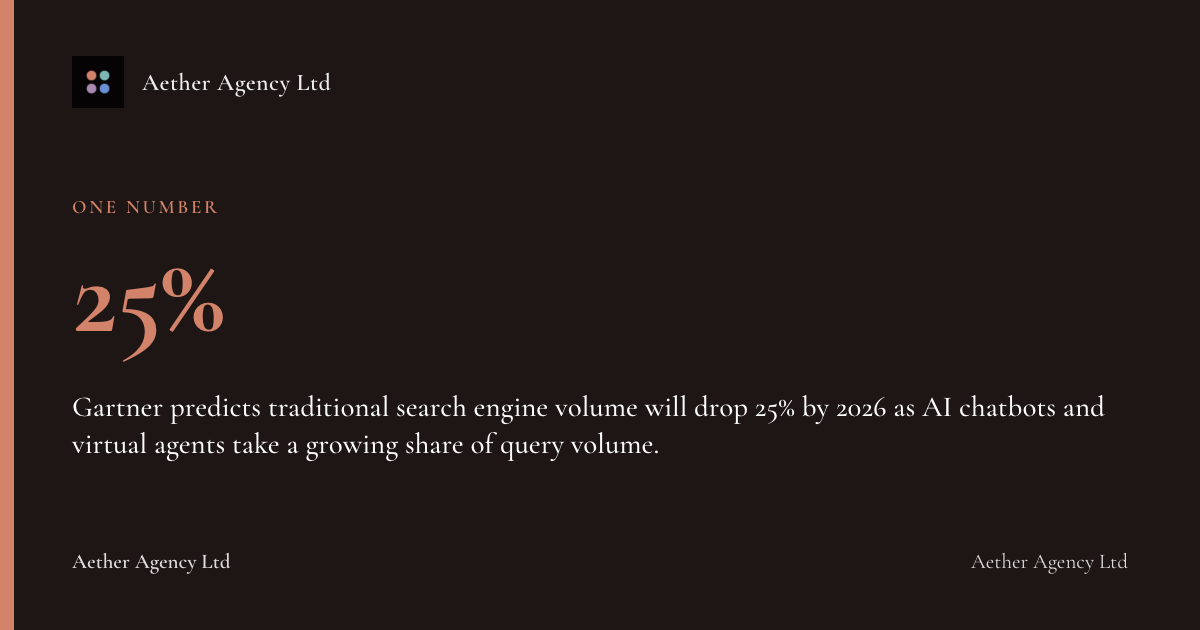
- Gartner predicts traditional search engine volume will drop 25% by 2026 as AI chatbots and virtual agents take a growing share of query volume.
- Google AI Overviews now appear on approximately 48% of all tracked Google search queries as of February 2026, according to BrightEdge, up 58% year-over-year.
- Websites using author schema are three times more likely to appear in AI answers, and sites adding structured data and FAQ blocks saw a 44% rise in AI search citations, per BrightEdge data cited by Superlines.
What Are GEO Services?
GEO services (Generative Engine Optimisation) are a set of technical, content, and structural practices designed to increase the likelihood that AI systems—ChatGPT, Google's AI Overviews, Perplexity, Gemini, and Claude—cite, quote, or recommend a business when answering user queries. Unlike traditional SEO, which targets a ranked list of blue links, GEO targets the synthesised answer itself. The discipline was formally named and tested in a 2026 academic paper from Princeton University, Georgia Tech, the Allen Institute for AI, and IIT Delhi, which benchmarked nine optimisation methods across 10,000 queries. For UK businesses, this matters because a growing share of buyer research now happens inside an AI chat window rather than on a Google results page.
The term GEO first entered mainstream industry use following that 2026 paper, presented at the ACM SIGKDD Conference on Knowledge Discovery and Data Mining. Researchers Pranjal Aggarwal and colleagues described their goal as introducing "a novel paradigm to aid content creators in improving the visibility of their content in Generative Engine responses through a black-box optimization framework." That framing—content creators optimising for machine-generated answers rather than a ranking algorithm—is the foundation of every GEO service offered today, including the work Aether Agency Ltd carries out for its UK clients.
GEO sits alongside related terms such as AEO (Answer Engine Optimisation) and AIO (AI Optimisation), and Wikipedia's entry on Generative Engine Optimization traces its origins to this same academic and industry lineage. In practice, most agencies use the terms interchangeably to describe optimising for any AI-mediated answer surface, whether that's a chatbot, a voice assistant, or an AI-generated search summary.
Why GEO Matters Now for UK Businesses
The shift towards AI-mediated search is not a distant forecast—it is already measurable. Gartner's 2026 research predicts a 25% drop in traditional search engine volume by 2026, driven by users turning to chatbots and virtual agents instead of typing queries into Google. Gartner Vice President Analyst Alan Antin explained the shift directly: "Generative AI (GenAI) solutions are becoming substitute answer engines, replacing user queries that previously may have been executed in traditional search engines."
For a UK business, this means potential customers researching "best accountants in Manchester" or "commercial cleaning company London" may never see a traditional results page at all—they may simply receive a synthesised AI answer naming three or four providers. If your business isn't structured to be cited in that answer, you're invisible at the exact moment a buying decision is being shaped.
How Is GEO Different From Traditional SEO?
Traditional SEO optimises for ranking positions on a search results page, measured by clicks, impressions, and keyword rankings. GEO optimises for being cited, quoted, or recommended inside an AI-generated answer, measured by citation frequency, share of voice within AI responses, and brand mentions across chatbot platforms. The two disciplines overlap heavily in technical foundations—site structure, page speed, authority signals—but diverge sharply in content strategy and measurement.
SEO has spent two decades optimising for ten blue links and a handful of featured snippets. GEO optimises for a single synthesised paragraph that may draw from dozens of sources simultaneously, weighting content differently depending on how citation-worthy, structured, and authoritative it appears to the underlying language model. The Princeton/Georgia Tech research found that citing external sources improved visibility by 115% for lower-ranked content, while adding statistics improved visibility by 41% and adding quotations by 28%, according to the same Princeton/Georgia Tech GEO study. This is a fundamentally different optimisation target than keyword density or backlink volume.
| Factor | Traditional SEO | GEO Services |
|---|---|---|
| Primary goal | Rank on page 1 of search results | Be cited/quoted inside AI answers |
| Success metric | Keyword rankings, organic clicks, CTR | Citation frequency, AI share of voice, brand mentions |
| Key tactic | Backlinks, keyword optimisation, page speed | Structured data, statistics, quotations, author schema |
| Content format | Long-form, keyword-targeted articles | Fact-dense, citation-friendly, well-structured passages |
| Platforms targeted | Google, Bing | ChatGPT, Google AI Overviews, Perplexity, Gemini, Claude |
| Measurement tools | Google Search Console, Ahrefs, SEMrush | AI citation trackers, brand mention monitoring |
| Maturity | Established, well-documented practice | Emerging discipline, evolving best practice |
Can GEO and SEO Work Together?
GEO and SEO are complementary rather than competing disciplines, and most UK businesses need both operating simultaneously. Strong technical SEO foundations—site speed, mobile usability, clean architecture, schema markup—directly support GEO performance, because AI crawlers rely on many of the same signals as traditional search crawlers. A business that abandons SEO entirely in favour of GEO risks losing the 75% of search volume Gartner still expects to remain on traditional engines by 2026. The smarter approach, and the one Aether Agency Ltd takes with clients, is an integrated strategy: SEO captures traditional organic traffic while GEO captures citation share inside AI-generated answers, with both disciplines feeding from the same well-structured, fact-rich content base.
What Does a GEO Agency Actually Do?
A GEO agency audits how a business currently appears (or fails to appear) across AI platforms, then implements technical and content changes designed to increase citation frequency. This typically includes adding structured data and schema markup, restructuring content into clearly answerable chunks, building author credibility signals, and monitoring brand mentions across ChatGPT, Perplexity, and Google AI Overviews on an ongoing basis. The work blends technical SEO, content strategy, and a genuinely new measurement discipline that didn't exist before 2026.
In practice, a GEO engagement usually involves several concrete workstreams:
- AI visibility audit: testing how a brand currently appears (or doesn't) when relevant queries are put to ChatGPT, Perplexity, Gemini, and Google AI Overviews.
- Structured data implementation: adding schema markup, including author schema, which BrightEdge data shows makes a site three times more likely to appear in AI answers.
- Content restructuring: rewriting key pages into self-contained, fact-dense passages that answer specific questions directly, since AI systems tend to extract complete chunks rather than entire articles.
- Citation and statistic enrichment: embedding relevant statistics, named sources, and quotations throughout content, mirroring the exact techniques tested in the Princeton/Georgia Tech GEO-bench benchmark.
- FAQ and structured answer blocks: building FAQ sections and direct-answer formats, which work together with structured data to increase the chance of being cited in AI search results.
- Ongoing monitoring: tracking brand mentions and citation frequency across AI platforms month over month, since this is a fast-moving and largely unregulated measurement space.
GEO In-House vs Outsourced: Which Should You Choose?
Many UK businesses initially try to handle GEO internally using their existing marketing or SEO team, and for organisations with strong technical resources and a well-established content function, that can work. However, GEO requires ongoing monitoring across multiple AI platforms, familiarity with schema markup and structured data implementation, and a genuinely different content approach than most in-house teams have been trained on. An outsourced GEO specialist typically brings faster implementation, cross-client benchmarking data, and dedicated tooling for tracking AI citation performance—advantages that are difficult to replicate with a generalist in-house team stretched across multiple priorities. The right choice often depends on internal capacity and how quickly a business needs to establish AI visibility relative to competitors.
How Much Do GEO Services Cost?
GEO services in the UK are priced similarly to established SEO and digital marketing retainers, typically structured as monthly retainers rather than one-off projects, because AI visibility requires continuous monitoring and content iteration. Costs vary depending on scope—whether a business needs a full audit and technical implementation, or an ongoing content and monitoring programme. As with SEO, pricing scales with business size, competitive intensity, and how many AI platforms and query sets need tracking.
Because GEO is such a new discipline, there is currently no standardised, market-wide pricing benchmark published by an independent UK body—pricing varies considerably between agencies and should always be requested as a tailored quote based on your specific goals, sector, and current AI visibility baseline.
Ways to reduce GEO costs:
- Start with a focused audit on your highest-value queries rather than a full-site overhaul.
- Combine GEO and SEO work under one integrated retainer rather than commissioning them separately.
- Prioritise structured data and FAQ implementation first, since these are lower-cost, high-impact changes.
- Focus initial efforts on the two or three AI platforms most relevant to your customer base rather than all of them at once.
Alternatives to consider:
- A one-off technical audit with recommendations you implement in-house, rather than an ongoing managed retainer.
- Training your existing content team on GEO best practices and schema implementation.
- A hybrid model where an agency handles technical setup and monitoring while your team produces content.
How Do You Measure Success in Generative Engine Optimisation?
Success in GEO is measured through citation frequency, share of voice, and brand mention tracking across AI platforms, rather than the keyword rankings and click-through rates used in traditional SEO. Because AI Overviews and chatbot answers don't generate traditional pageview data in the same way, measurement relies on manually or automatically testing representative queries against ChatGPT, Perplexity, and Google AI Overviews, then tracking whether and how often a brand is mentioned.
This shift in measurement matters because the underlying user behaviour has already changed. BrightEdge data from 2025 found that in the year after AI Overviews launched, total search impressions increased over 49% while click-throughs declined nearly 30%—meaning visibility inside the AI answer itself matters more than ever, because fewer users are clicking through afterwards. This trend has continued: Seer Interactive research covering June 2026 through September 2026 found organic click-through rate dropped 61% on queries where an AI Overview appears, falling from 1.76% to 0.61%.
Key GEO Metrics to Track
- Citation frequency: how often your brand is mentioned when relevant queries are put to major AI platforms.
- Share of voice: how your citation frequency compares to named competitors across the same query set.
- Sentiment and context: whether AI platforms mention your brand favourably, neutrally, or alongside caveats.
- Structured data coverage: the percentage of your key pages carrying schema markup and author attribution.
- AI referral traffic: the (currently still small, but growing) volume of visits arriving directly from AI chat platforms.
Which AI Platforms Does GEO Target?
GEO targets every major generative AI platform where a UK business's customers might be researching products or services, including ChatGPT, Google AI Overviews, Perplexity, Microsoft Copilot, and Google's Gemini. Each platform sources and weights information slightly differently—some rely heavily on real-time web crawling, others lean on curated indexes or partnership deals—so a comprehensive GEO strategy tests visibility across multiple platforms rather than optimising for just one.
Google AI Overviews carries particular weight for UK businesses given Google's dominant search market share in this country. With AI Overviews now appearing on approximately 48% of all tracked Google queries as of February 2026—up 58% year-over-year according to BrightEdge—almost half of all Google searches now return a synthesised answer before a single traditional link appears. That represents a near-total transformation of the search results page compared with just two years earlier.
Which Industries Benefit Most From GEO Services?
Industries where customers research extensively before purchasing—professional services, healthcare, financial services, home improvement, hospitality, and B2B software—tend to see the strongest early returns from GEO, because these sectors involve exactly the kind of comparative, question-based queries that AI platforms are best at answering. A prospective client asking "best commercial solicitors in Birmingham" or "which UK accountancy firms specialise in R&D tax credits" is asking precisely the kind of query an AI Overview or ChatGPT response is designed to answer directly.
That said, virtually every UK business with an online presence has some exposure to AI-mediated search, and the discipline is developing sector-specific playbooks. Regulated industries such as finance and healthcare require particular care around how claims and statistics are presented in GEO content, since AI systems tend to favour sources that demonstrate clear expertise, authority, and trustworthiness signals—closely related to Google's long-standing E-E-A-T framework.
How Long Does It Take to See Results From GEO Services?
GEO results typically begin appearing within a few months of implementation, though timelines vary depending on how much existing content needs restructuring and how competitive a business's sector is within AI-generated answers. Early wins often come from quick technical changes—adding schema markup, restructuring FAQ content, adding author attribution—while sustained citation share usually builds over a longer content and authority-building programme, similar to traditional SEO timelines.
Because GEO is such a recent discipline, there is limited independent long-term data connecting citation visibility to revenue outcomes, and businesses should treat early GEO reporting as a leading indicator (growing citation share, growing brand mentions) rather than an immediate replacement for existing lead generation channels. A sensible approach treats GEO as a compounding investment: the fact-dense, well-structured content that improves AI citation performance also strengthens traditional SEO, meaning the investment pays dividends across both channels simultaneously.
Your GEO Services Checklist
- Audit how your brand currently appears across ChatGPT, Perplexity, Gemini, and Google AI Overviews for your top 10-20 buyer queries.
- Add schema markup and author attribution across your key service and content pages.
- Restructure your highest-value pages into self-contained, question-answering sections of roughly 130-160 words.
- Embed relevant statistics, named sources, and direct quotations throughout your content, with full citations.
- Build or expand FAQ sections on service pages, using direct, extractable answers.
- Set up monthly monitoring of brand mentions and citation frequency across your priority AI platforms.
- Maintain your existing SEO programme in parallel, rather than diverting all resource into GEO.
- Review and refresh GEO-optimised content quarterly, since AI platforms continually update how they source and weight information.
FAQ
What are GEO services?
GEO services are a set of technical and content strategies designed to increase how often a business is cited, quoted, or recommended by AI platforms such as ChatGPT, Google AI Overviews, and Perplexity. The discipline emerged from a 2026 academic paper by researchers at Princeton, Georgia Tech, the Allen Institute for AI, and IIT Delhi, and now encompasses structured data implementation, content restructuring, and ongoing AI citation monitoring.
How is GEO different from traditional SEO?
GEO optimises for being cited inside AI-generated answers, while SEO optimises for ranking on a traditional search results page. The two share technical foundations like schema markup and page structure, but GEO content strategy focuses specifically on statistics, quotations, and citation-worthy structure, which Princeton/Georgia Tech research found can lift generative engine visibility by up to 40%.
How much do GEO services cost?
GEO services are typically priced as monthly retainers, similar to SEO and digital marketing engagements, with costs varying based on scope, business size, and how many AI platforms need monitoring. There is currently no standardised market-wide pricing benchmark for GEO in the UK, so businesses should request a tailored quote based on their specific goals and current AI visibility.
What does a GEO agency actually do?
A GEO agency audits current AI visibility, implements structured data and schema markup, restructures content into clearly answerable chunks, embeds statistics and citations, and monitors brand mentions across AI platforms over time. This combines technical SEO work with a newer content and measurement discipline focused specifically on generative engine citation performance.
Do I still need SEO if I invest in GEO?
Yes, most UK businesses need both SEO and GEO operating simultaneously, since Gartner predicts traditional search engine volume will only drop 25% by 2026—meaning a substantial majority of search volume remains on conventional engines. Strong technical SEO foundations also directly support GEO performance, making the two disciplines complementary rather than competing investments.
Can GEO and SEO work together?
Yes, GEO and SEO share the same technical foundations—site speed, structured data, clean architecture—while differing in content strategy and measurement approach. An integrated strategy allows a business to capture traditional organic traffic through SEO while simultaneously building citation share inside AI-generated answers through GEO.
How long does it take to see results from GEO services?
Early technical wins, such as adding schema markup and restructuring FAQ content, can show measurable improvement within a few months. Sustained citation share across competitive queries typically builds over a longer programme, similar to traditional SEO timelines, and should be treated as a compounding investment rather than an instant traffic replacement.
Getting your business found with GEO services from Aether Agency Ltd
If your business is investing heavily in a website and brand identity but still isn't appearing when prospective customers ask ChatGPT or Google AI Overviews for recommendations, that's precisely the gap Aether Agency Ltd was built to close. As a full-service creative studio, Aether Agency Ltd combines brand identity, website development, and marketing that gets clients found on Google, ChatGPT, and Perplexity—meaning GEO isn't bolted onto an existing SEO offering as an afterthought, but built into how every client site and content programme is structured from the outset.
Aether Agency Ltd's approach treats GEO and SEO as one integrated discipline: structured data, author attribution, and citation-rich content that serve traditional search rankings and AI-generated answers simultaneously. This matters because, as the research throughout this article shows, the two channels are converging rather than competing, and businesses that treat them separately risk falling behind on both.
If you'd like to understand how your business currently appears across AI platforms and what a tailored GEO and SEO programme would involve, get in touch with Aether Agency Ltd for a conversation about your goals and a clear, honest assessment of where the opportunities lie.
Related Reading
- GEO Agency UK: Optimise for AI Search in 2026 | Aether Agency
- What Is GEO in Marketing? Complete 2026 Guide | Aether Agency
- GEO vs SEO in 2026: What UK Businesses Must Know
Add aether-agency.co.uk as a preferred source on Google
See How Your Brand Appears in AI Search
Aether AI monitors your visibility across ChatGPT, Perplexity, Google AI Overviews, and Claude in real time. Find out where you stand and what to fix.
Explore Aether AI