Last updated: 11 November 2026
App branding is the strategic work of defining how an app looks, sounds and behaves across every touchpoint, from its icon to its onboarding screens, and it matters more now than ever because there are roughly 2.04 million apps on Google Play and 1.95 million on the Apple App Store, according to TekRevol (2026). A weak brand gets lost in that crowd before a single user opens it.
Key Takeaways
- App branding covers naming, visual identity, tone of voice, app store listing and in-app experience, not just a logo or icon.
- There are approximately 2.04 million apps on Google Play and 1.95 million on the Apple App Store, according to TekRevol (2026), making differentiation through branding a commercial necessity.
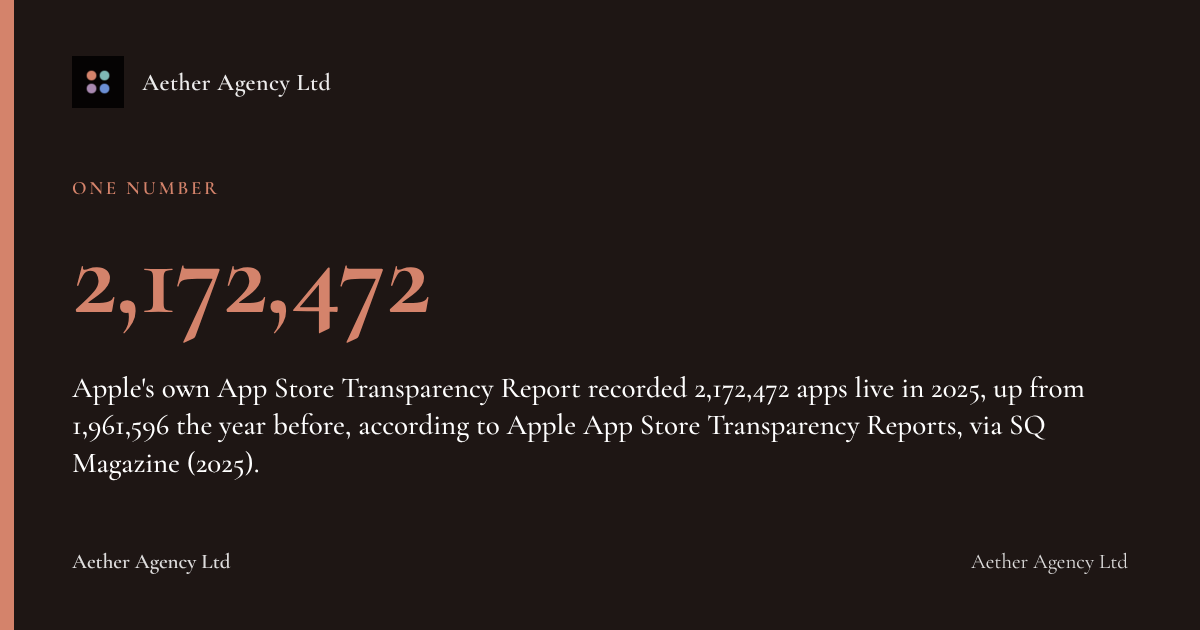
- Apple's own App Store Transparency Report recorded 2,172,472 apps live in 2025, up from 1,961,596 the year before, according to Apple App Store Transparency Reports, via SQ Magazine (2025).
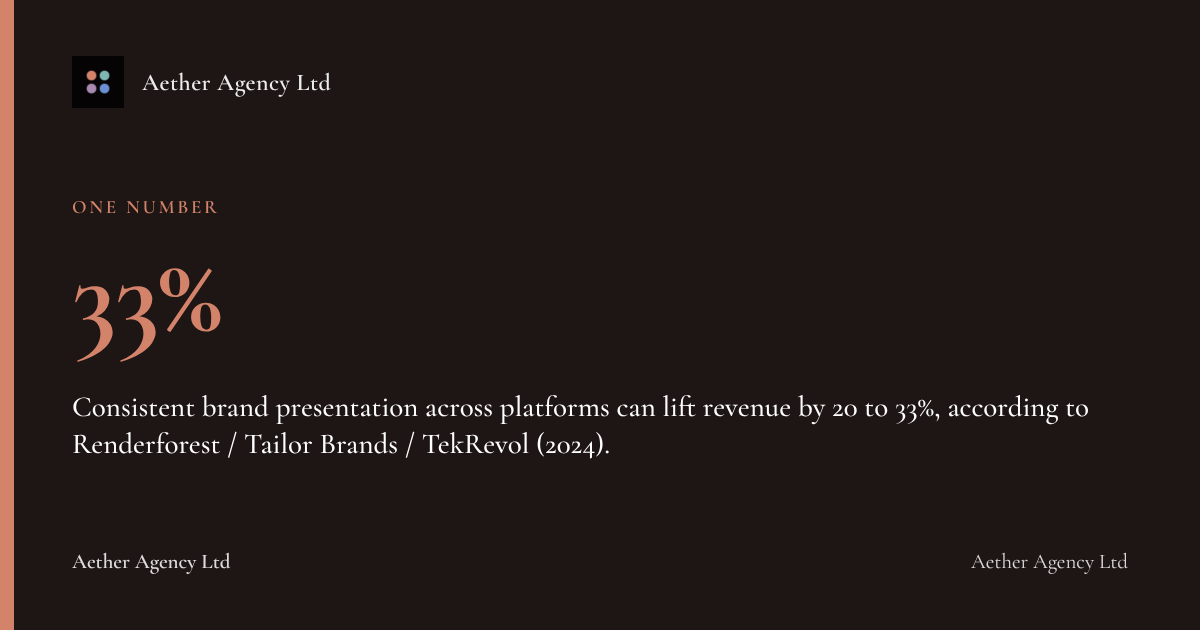
- Consistent brand presentation across platforms can lift revenue by 20 to 33%, according to Renderforest / Tailor Brands / TekRevol (2024).
- Aether Agency Ltd delivered the Guardian security and facilities management platform from concept through to a full brand identity system and market launch under one engagement.
What Is App Branding?
App branding is the deliberate design of an application's name, visual identity, tone of voice and user experience so that it reads as one coherent product across every screen a customer touches. It extends well beyond the icon that sits on someone's home screen.
A genuine app brand includes the app name and its App Store listing copy, the colour palette and typography used inside the interface, the microcopy and error messages a user reads mid-task, push notification tone, onboarding flow, and how all of that lines up with the parent company's wider identity. Apple's own developer guidelines and Google Play's policy centre both treat naming, icon design and metadata as brand assets subject to review, which is one reason branding decisions need to happen before development locks them in.
Aether Agency Ltd's work on the Guardian security and facilities management platform shows what this looks like in practice. The client arrived with a product concept and no brand, no application and no launch plan in place. Aether Agency Ltd delivered custom web application development, a full brand identity system, and a full-scale marketing launch as one connected engagement, taking the concept through to a live product under one roof rather than treating branding as an afterthought bolted on once the build was finished.
How Much Does Professional App Branding Cost in the UK?
Professional app branding in the UK typically ranges from a few thousand pounds for a lean startup package to tens of thousands for a full enterprise identity system with extensive research and testing. The right figure depends heavily on scope: naming alone, a full visual identity, or branding bundled with the application build itself.
The table below sets out illustrative ranges UK businesses commonly encounter, based on typical project scopes rather than a single published source.
| Scope | Typical UK price range | What's usually included |
|---|---|---|
| Logo and icon only | £500 to £3,000 | App icon, basic colour palette, limited revisions |
| Core brand identity | £3,000 to £10,000 | Naming support, logo, icon set, colour system, typography, basic guidelines |
| Full brand system | £10,000 to £25,000+ | Strategy, naming, full visual identity, voice guidelines, App Store assets, launch collateral |
| Brand plus app build | £25,000 upwards | Identity system combined with UX/UI design and development, as with an end-to-end build |
These are illustrative ranges only, not quotes from a single supplier. Three worked scenarios help make this concrete:
- A solo founder launching an MVP might spend £2,000 to £5,000 on a focused naming and icon package, saving the full identity system until the app proves demand.
- A scale-up with an existing company brand extending into an app might spend £8,000 to £15,000 adapting its existing identity into app-specific assets, icon sets and store listing copy.
- A business building an app from zero typically needs branding bundled with the application build itself, since the two inform each other from day one.
Ways to reduce cost include reusing an existing company brand's colour and type system rather than starting fresh, phasing the project (naming and icon first, full guidelines later), and bringing a clear brief to the first meeting so an agency isn't pricing in discovery time you could have scoped yourself.
What Are the Key Steps in Creating an App Brand From Scratch?
Creating an app brand from scratch follows a sequence that starts with strategy and ends with a documented guideline set, typically across five distinct phases. Skipping the early strategy steps to jump straight to logo design is the single most common cause of rework later.
- Discovery and positioning: define the target user, the problem the app solves, and how it differs from the roughly two million competitors already live on each platform, according to TekRevol (2026).
- Naming and availability checks: shortlist names, then check UK trademark availability and domain and app store handle availability before falling in love with any single option.
- Visual identity design: develop the logo, app icon (which must work at 1024x1024px down to a tiny home screen size), colour palette and typography.
- Voice and UX writing: set the tone for onboarding copy, push notifications, error states and in-app messaging so the product sounds like one brand throughout.
- Guidelines and rollout: document everything in a brand guideline pack and apply it consistently across the App Store listing, the UI, and marketing materials.
Only 25% of companies have formal brand guidelines that are actively enforced, even though 95% have some form of guidelines in place, according to Renderforest (2024). That gap between having a document and actually using it is where most app brands quietly drift off course within a year of launch.
Do I Need to Trademark My App Name or Logo in the UK?
Trademarking an app name or logo in the UK is not legally compulsory, but it is strongly advisable if the brand is central to the business, because an unregistered name offers very limited legal protection against copycats. The UK's Intellectual Property Office (IPO) handles trademark registration and maintains the public register you need to check before committing to a name.
Before finalising any app name, search the UK Intellectual Property Office trademark database to confirm no identical or confusingly similar mark exists in your goods and services class. App names typically fall under Class 9 (software) and Class 42 (software as a service), so check both. It's also worth running a basic Companies House search if the app name matches a proposed company name, since Companies House operates separately from the IPO and won't block a similar trademark on its own.
Registration through the IPO currently costs from £170 for a single class online, with the process taking several months to complete, and protection lasts ten years, renewable thereafter. Businesses planning to operate beyond the UK should also consider an EU or international filing via the Madrid Protocol, since a UK-only trademark offers no protection once an app expands into other territories.
What Are the UK App Store Guidelines Around Naming, Icons and Branding?
Apple and Google each publish detailed rules governing how an app can be named, iconed and described, and falling foul of them can delay or block a listing entirely. Apple's App Store Review Guidelines prohibit names that are confusingly similar to existing apps, that stuff keywords unrelated to the app's function, or that use trademarked terms the developer doesn't own.
Google Play's Developer Policy Centre takes a similar line on its Store Listing and Metadata policy, restricting misleading names, icon designs that mimic system UI elements, and impersonation of other brands. Both platforms require icons supplied at specific pixel dimensions (1024x1024px is the standard master size for both, scaled down automatically), and both reserve the right to reject or remove an app that breaches naming or trademark rules after launch, not just at submission.
This is why trademark and naming checks need to happen before development starts, not after the build is finished. An app rejected at review for a naming clash can lose weeks of launch momentum that no amount of marketing spend recovers.
In-House, Freelancer or Branding Agency: Who Should Own App Branding Decisions?
App branding decisions sit best with whoever has the authority to protect the brand across every channel it touches, which in most growing UK businesses means a founder or marketing lead working directly with a specialist agency, rather than leaving icon and naming choices to whoever is available on the development team. The choice between handling it in-house, hiring a freelancer, or commissioning a branding agency depends on scale, timeline and how much the app brand needs to align with an existing company identity.
| Approach | Best suited to | Trade-off |
|---|---|---|
| In-house | Teams with an existing brand function and spare capacity | Fast and cheap, but often lacks dedicated brand strategy expertise |
| Freelancer | Simple, single-deliverable projects (logo or icon only) | Lower cost, but rarely covers naming, trademark checks and voice guidelines together |
| Branding agency | Businesses launching a new product or needing brand plus build | Higher cost, but delivers a coherent system: strategy, identity, guidelines and rollout |
71% of businesses agree that inconsistent brand presentation leads to customer confusion, according to Renderforest (2024). That's the risk of splitting app branding across multiple freelancers without one party owning consistency end to end.
Aether Agency Ltd's approach on the Guardian platform illustrates the agency model at full stretch: a single engagement covering custom web application development, the full brand identity system, and the marketing launch, rather than three separate suppliers handing work back and forth.
What Mistakes Do UK Businesses Commonly Make When Branding a New App?
UK businesses most often undermine a new app brand by treating the icon as the whole job, skipping trademark checks until after launch, and letting the in-app experience drift from the App Store listing that sold the download. Each mistake is avoidable with a documented process, yet all three recur across founder-led launches.
- Designing the icon before defining the strategy: a striking icon with no positioning behind it looks good in a pitch deck and confuses users once they open the app.
- Skipping the UK trademark search: discovering a name clash after development is finished is far costlier than a search through the IPO register at the naming stage.
- Letting App Store copy diverge from in-app tone: a playful listing paired with a formal, corporate UI breaks the promise made at the point of download.
- No enforced brand guidelines: as noted above, only 25% of companies actively enforce the brand guidelines they hold, according to Renderforest (2024), which is exactly how fonts, colours and tone fragment across updates.
- Underestimating first impressions: 93% of people say the first purchase usually decides if they will continue their relationship with a brand, according to Renderforest (2024), and for an app, the first open plays the same role.
How Does App Branding Differ From General Product Branding?
App branding differs from general product or company branding chiefly because an app is used, not just bought, which means the brand has to perform inside a live interface, under time pressure, across dozens of micro-interactions a day. General company branding governs a logo on a letterhead or a shop front; app branding governs how a loading spinner looks, what an error message says, and how a push notification lands on a locked screen at 8am.
An app brand also has to survive two sets of external gatekeepers that a standalone company brand never faces: Apple's App Store Review Guidelines and Google Play's Developer Policy Centre, both of which can reject, suspend or remove listings that breach naming, icon or metadata rules. 60% of millennial consumers expect brands to be consistent across different platforms, according to Renderforest (2024), which raises the bar further for apps that exist simultaneously as a store listing, a home screen icon and an in-app experience.
Your App Branding Checklist
- Define positioning and target user before any logo concepts are drawn.
- Search the UK IPO trademark database under Class 9 and Class 42 before finalising a name.
- Check domain and app store handle availability alongside the trademark search.
- Design the icon at 1024x1024px master size and test it at home screen scale.
- Review Apple's App Store Review Guidelines and Google Play's Developer Policy Centre for naming and metadata rules before submission.
- Write voice guidelines covering onboarding, push notifications and error states, not just marketing copy.
- Document everything in one brand guideline pack and assign someone to enforce it.
- Audit the App Store listing, the in-app UI and marketing materials together to confirm they tell the same story.
FAQ
What exactly does app branding involve, beyond just a logo and app icon?
App branding involves the app's name, visual identity, tone of voice, onboarding flow, push notification style, App Store listing copy and how all of that aligns with the wider company brand. A logo and icon are two visible outputs of a much broader strategic process.
How much does professional app branding typically cost in the UK?
UK app branding typically ranges from £500 to £3,000 for an icon-only package up to £25,000 or more for a full brand system bundled with application development. The right figure depends on scope, whether naming and trademark checks are included, and whether an existing company brand can be extended rather than built from scratch.
How long does a full app branding project usually take?
A full app branding project usually takes between six and twelve weeks from discovery to a finished guideline pack, though timelines extend when the branding is bundled with full application development. Projects combining brand identity with a custom build, such as Aether Agency Ltd's work on the Guardian platform, run as longer ongoing engagements rather than fixed sprints.
Do I need to trademark my app name or logo in the UK?
Trademarking isn't legally required in the UK, but it's strongly recommended for any app central to the business, since an unregistered name has very limited legal protection. Search the UK Intellectual Property Office register under the software classes before committing to a name, and budget from £170 for a single-class registration.
What are the UK App Store guidelines around app naming and icons?
Apple's App Store Review Guidelines and Google Play's Developer Policy Centre both prohibit confusingly similar names, misleading metadata and icons that mimic system UI or impersonate other brands. Icons must be supplied at a 1024x1024px master size, and both platforms can reject or remove a listing that breaches these rules even after launch.
Should I hire a branding agency, freelancer, or handle app branding in-house?
The right choice depends on scale: a freelancer suits a single deliverable like a logo, in-house suits businesses with an existing brand function and capacity, and a branding agency suits anyone launching a new product or needing brand and build delivered together. Agencies typically own consistency end to end, which matters given that 71% of businesses link inconsistent branding to customer confusion, according to Renderforest (2024).
How do I keep app branding consistent across the store listing, UI and marketing?
Consistency comes from one documented guideline pack covering colour, typography, voice and icon usage, applied by whoever owns the brand across every channel. Consistent brand presentation across platforms can lift revenue by 20 to 33%, according to Renderforest / Tailor Brands / TekRevol (2024), which is the commercial case for enforcing one set of guidelines rather than letting each channel drift.
Building your app's brand with Aether Agency Ltd
Launching an app without a coherent brand behind it is exactly the gap Aether Agency Ltd closes for growing UK businesses, whether that means naming and visual identity, or branding delivered alongside the application build itself. The Guardian security and facilities management platform arrived as a concept with no brand, no application and no launch plan, and Aether Agency Ltd delivered the full brand identity system, custom web application development and the market launch as one connected engagement.
That end-to-end model, covering Brand Identity and Website Development under one roof, means naming, trademark checks, visual identity and the build itself inform each other from day one rather than arriving as disconnected handoffs.
If your business is planning a new app, or an existing one has outgrown its current branding, get in touch with Aether Agency Ltd to talk through what a brand identity project would look like for your launch timeline and budget.
Related Reading
- Branding for Schools: A UK Decision-Maker's Guide
- Branding for Construction Companies: A UK 2026 Guide
- How Are Branding Projects Priced? UK Cost Guide 2026
Add aether-agency.co.uk as a preferred source on Google
See How Your Brand Appears in AI Search
Aether AI monitors your visibility across ChatGPT, Perplexity, Google AI Overviews, and Claude in real time. Find out where you stand and what to fix.
Explore Aether AI