Last updated: 10 November 2026
Branding for recruitment agencies means building a distinct identity, visual system, website and messaging that make an agency recognisable to both candidates and hiring clients, not just choosing a logo. With the UK recruitment industry worth £43 billion to the economy according to the Recruitment & Employment Confederation (2024), standing out from thousands of near-identical competitors has become the deciding factor in who wins the best talent and the best client contracts.
Key Takeaways
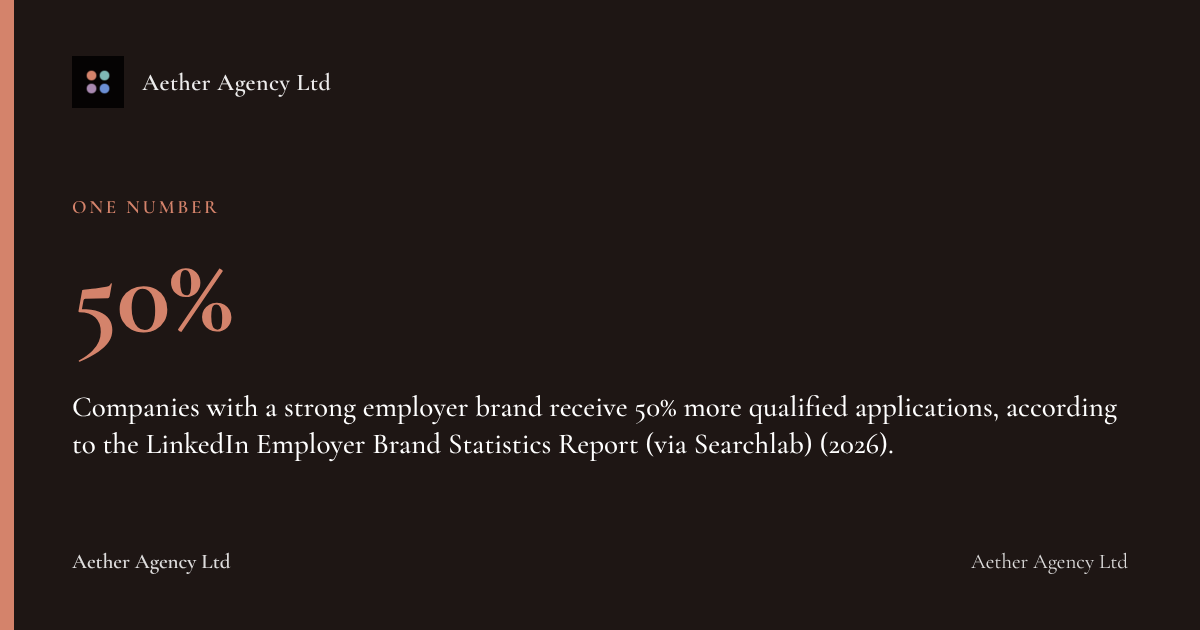
- Companies with a strong employer brand receive 50% more qualified applications, according to the LinkedIn Employer Brand Statistics Report (via Searchlab) (2026).
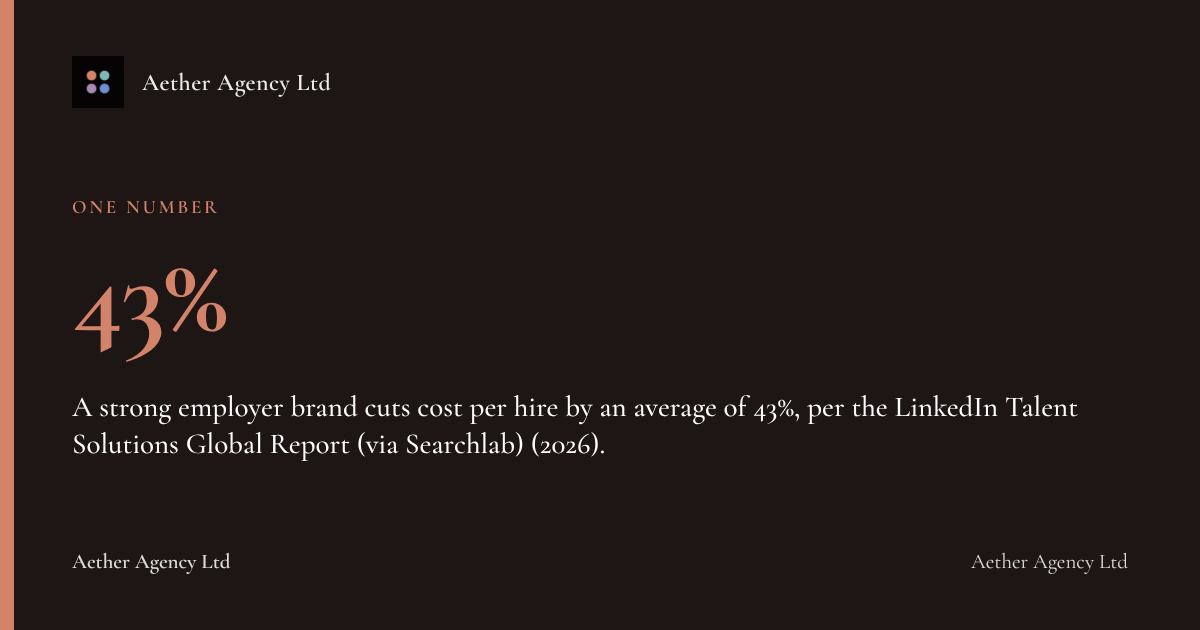
- A strong employer brand cuts cost per hire by an average of 43%, per the LinkedIn Talent Solutions Global Report (via Searchlab) (2026).
- 75% of job seekers research a company's employer brand before applying to a vacancy, found the Glassdoor Employer Branding Survey (via Searchlab) (2026).
- The UK recruitment sector is worth £43 billion, reports the Recruitment & Employment Confederation (2024), meaning brand differentiation operates inside a genuinely large and competitive pool.
- 72% of recruitment leaders worldwide say employer branding significantly affects hiring outcomes, according to the LinkedIn Global Recruiting Trends report (via Searchlab) (2026).
What does branding involve for a recruitment agency?
Branding for a recruitment agency is the complete system of name, visual identity, tone of voice, website and candidate experience that signals who the agency is and why it should be trusted with someone's career or a client's vacancy. It goes far beyond a logo, because a logo alone cannot explain why a candidate should register with one agency over the five others that appeared in the same Google search.
A genuine brand identity includes a defined positioning statement, a colour and typography system, messaging guidelines for job adverts, a consistent LinkedIn presence and a website architecture that serves two very different audiences at once. Aether Agency Ltd builds brand identity around naming, identity systems and guidelines designed to survive every channel, from a careers page to a printed roller banner at a jobs fair in Manchester.
For a recruitment agency specifically, branding also has to carry compliance signals. The Recruitment & Employment Confederation's quick guide to the legal framework explains how the Conduct of Employment Agencies and Employment Businesses Regulations 2003 governs what an agency can advertise and promise, and a brand that ignores this risks looking unprofessional even before a compliance issue arises.
75% of job seekers research a company's employer brand before applying to a vacancy, according to the Glassdoor Employer Branding Survey (via Searchlab) (2026). That means the brand is doing commercial work long before a recruiter ever picks up the phone.
How much does it cost to rebrand a recruitment agency in the UK?
Rebranding a UK recruitment agency typically costs anywhere from a few thousand pounds for a focused identity refresh to tens of thousands for a full brand, website and marketing programme, depending on scope and agency size. Price depends heavily on whether the project covers naming, a new website build, or ongoing marketing support alongside the identity work.
A sole-trader or two-person agency usually needs a lighter-touch identity package: logo, colour palette, a simple one-page site and a set of social templates. A regional agency with 10 to 50 consultants typically needs a fuller system covering a multi-page website, job board integration, email templates and a style guide for every consultant to follow. A national or sector-specialist agency competing for enterprise contracts often needs the most comprehensive package, including a bespoke website build, a candidate portal and a content strategy aimed at both Google and AI search engines like ChatGPT and Perplexity.
| Agency size | Typical scope | Illustrative price range |
|---|---|---|
| Independent (1 to 5 staff) | Logo, mini-site, social templates | £2,000 to £6,000 |
| Regional (6 to 50 staff) | Full identity, multi-page website, guidelines | £6,000 to £20,000 |
| National / specialist | Identity, custom website, ongoing marketing | £20,000+ |
These figures are illustrative ranges based on typical UK branding project scopes, not a quote from any single source. Aether Agency Ltd prices projects individually once it understands whether a client needs brand identity alone, a website build, or both alongside ongoing AI search marketing.
How long does a recruitment agency branding project take?
A full recruitment agency branding project usually takes between 6 and 14 weeks from kick-off to launch, depending on how much discovery, stakeholder sign-off and website development the scope includes. A straightforward identity refresh without a website rebuild can land closer to four weeks.
The typical phases run roughly as follows: discovery and positioning workshops in weeks one and two, concept design and name testing (if a rename is involved) in weeks three and four, refinement and guideline production in weeks five and six, and website build and content population running in parallel through to launch. Agencies that also commission ongoing marketing, such as AI search optimisation or social content, treat launch as the start of a continuous programme rather than a finish line.
Aether Agency Ltd's work with Fulk Butchers, a family butcher in Surrey, illustrates how a brand-build-grow sequence runs in practice even outside recruitment. The business had no brand identity and no route to online orders despite a strong local reputation, so Aether Agency Ltd built a full identity from scratch, delivered an e-commerce website with online ordering, and moved straight into ongoing social media and marketing support, with the same team carrying the identity from packaging through to the order confirmation email. Recorded outcomes include online sales up 180% and a 4.8 star Google rating (no earlier figure on record for either).
How does branding for recruitment agencies differ from other service industries?
Branding for recruitment agencies differs from most other service sectors because it has to persuade two completely separate audiences through the same visual system at the same time: candidates and hiring clients. A law firm or an accountancy practice generally speaks to one type of buyer, but a recruitment agency's website, adverts and LinkedIn page must work for a nervous jobseeker and a time-pressed HR director simultaneously.
This dual-audience problem is compounded by trust economics that are unusually visible. A strong employer brand reduces cost per hire by an average of 43%, according to the LinkedIn Talent Solutions Global Report (via Searchlab) (2026), while organisations with a strong employer brand experience 28% less turnover, reports LinkedIn's Global Talent Trends research (via Searchlab) (2026). A recruitment agency's own brand gets judged on the same logic it sells to clients: weak employer brands cost more to hire against.
There's also a reputational penalty baked into the market. Companies with a negative employer brand reputation pay an average of 10% more in salary to convince candidates to join, found Harvard Business Review / Glassdoor Research (via Searchlab) (2026). A recruitment agency with a dated, generic brand is effectively asking its own clients to absorb that same penalty by association.
Compliance adds another layer most service businesses don't face in the same way. The REC's recruitment law and compliance training covers GDPR and the Conduct Regulations, both of which shape what an agency can claim in its advertising, candidate communications and website copy.
Should a recruitment agency separate its candidate and client brands?
A recruitment agency should keep one unified brand identity but build distinct messaging tracks and website journeys for candidates and clients rather than creating two separate brands. Running two entirely different visual identities risks confusing the market about who the agency actually is, while a single identity with tailored content for each audience keeps recognition high while still speaking the right language to each side.
In practice, this means one logo, one colour system and one tone of voice, applied across two distinct website sections or landing pages: one built around job search, career advice and a simple application journey, the other built around service lines, sector expertise and case studies for hiring managers. 89% of recruiters and employer branding professionals use LinkedIn as their primary channel for employer communications, according to LinkedIn's Global Recruiting Trends report (via Searchlab) (2026), which makes LinkedIn the natural place to run parallel candidate and client content streams under the same consistent identity.
Aether Agency Ltd's rebrand of Renton Dance Studio shows how the same principle plays out for any business trying to speak to a new audience without losing recognisability. The studio's traditional digital presence was failing to connect with a younger audience, so Aether Agency Ltd delivered a complete rebrand, website redesign and social content creation that moved the identity from traditional to modernised, while remaining recognisably the same studio. As the owner, Olivia, put it: "I recently had the pleasure of working with Lauren and Ellie at Aether Agency to enhance the branding for my dance studio. Even though I struggled to articulate exactly what I wanted, they somehow captured the exact style I had envisioned."
What are common recruitment agency branding mistakes?
The most common mistake is treating branding as a one-off logo project rather than an ongoing system that touches job adverts, email signatures, LinkedIn banners and the website at the same time. A new logo dropped onto an old website with inconsistent fonts and outdated messaging does more reputational damage than no rebrand at all.
A second common error is copying competitor positioning instead of defining a genuine point of difference, which matters given how many agencies compete inside that £43 billion UK market reported by the REC (2024). Generic claims like "people-first recruitment" or "we go the extra mile" appear on hundreds of agency homepages and register as noise rather than differentiation.
Other recurring mistakes include:
- Ignoring candidate-side trust signals, despite 75% of job seekers researching employer brand before applying, per Glassdoor (via Searchlab) (2026).
- Rebranding without stakeholder buy-in, so consultants keep using old templates and email signatures after launch.
- Neglecting legal review, risking claims that breach the Conduct of Employment Agencies and Employment Businesses Regulations 2003 referenced in REC guidance.
- Underinvesting in the website, since a brand refresh with no corresponding site rebuild rarely improves conversion.
- Skipping AI search visibility, leaving the new brand invisible to tools like ChatGPT and Google AI Overviews that increasingly answer "best recruitment agency near me" style queries directly.
Who should lead a recruitment agency branding project?
A recruitment agency branding project should be led by someone with direct authority over both commercial strategy and marketing, typically the managing director or a dedicated head of marketing, supported by input from senior consultants who understand candidate and client pain points first-hand. Branding decisions made by committee, or delegated entirely to a junior marketing hire without senior sign-off, tend to stall or get diluted before launch.
The strongest internal structure pairs one senior decision-maker, who owns final sign-off on name, positioning and visual direction, with a small working group of consultants from different desks (for example, one from a permanent recruitment desk and one from a temporary or contract desk) who can stress-test messaging against what candidates and clients actually say in calls. External specialists, such as a branding studio, then translate that input into a coherent identity system rather than guessing at it from the outside.
This is where many agencies choose to bring in outside expertise rather than build entirely in-house: a specialist branding studio has run the exercise repeatedly across sectors and can spot differentiation opportunities an internal team, close to its own business, tends to miss.
Should a recruitment agency hire a branding agency or go in-house?
A recruitment agency should weigh its internal design and strategic capacity honestly before deciding between an in-house rebrand and hiring a specialist branding agency, since the two routes suit genuinely different situations. In-house branding works when an agency already employs a skilled designer and marketer, and when the rebrand is relatively small in scope, such as a colour and messaging refresh without a full website rebuild.
| Factor | In-house | Branding agency |
|---|---|---|
| Speed | Slower, fitted around day-to-day work | Faster, dedicated project timeline |
| Objectivity | Harder to challenge internal assumptions | External view on differentiation |
| Website and SEO/GEO expertise | Often limited | Typically built in |
| Cost | Lower direct cost, higher opportunity cost | Higher upfront cost, clearer scope |
| Best suited to | Minor refresh, strong internal design team | Full rebrand, new website, growth phase |
A specialist branding agency tends to be the stronger choice when the project includes a full identity overhaul, a new website build and an ongoing marketing or AI search strategy, because those elements require skills that rarely sit inside a single in-house marketing hire. Aether Agency Ltd works across brand identity, website development and AI search marketing as a connected sequence, brand, build, grow, so the identity, the site and the ongoing visibility work are never handled as disconnected projects by separate suppliers.
Your recruitment agency branding checklist
- Define one clear positioning statement that differentiates the agency from direct competitors in its specific sector or region.
- Audit every existing touchpoint, from job adverts to email signatures, against the proposed new identity before launch.
- Build distinct candidate and client content tracks within a single, unified brand identity.
- Check all website and advert copy against the Conduct of Employment Agencies and Employment Businesses Regulations 2003.
- Confirm trademark availability for the name and logo before committing to print or large-scale digital rollout.
- Brief consultants on tone of voice and messaging guidelines before the public launch date.
- Set a measurement baseline (applications, cost per hire, client enquiries) before the rebrand goes live.
- Plan the website and ongoing marketing as part of the same project, not a separate decision made later.
FAQ
What does branding for a recruitment agency actually involve?
Branding for a recruitment agency involves far more than a logo: it covers naming, visual identity, tone of voice, website architecture and consistent messaging across both candidate and client touchpoints. Aether Agency Ltd treats this as a full identity system built to survive every channel, from job adverts to LinkedIn to print collateral.
How much does a recruitment agency rebrand typically cost in the UK?
Costs typically range from around £2,000 to £6,000 for a small independent agency doing a light identity refresh, up to £20,000 or more for a national or specialist agency commissioning a full identity, website build and ongoing marketing. Scope, not agency size alone, is the biggest driver of final cost.
Most full branding projects run between 6 and 14 weeks from initial discovery to launch, depending on whether a website rebuild and ongoing marketing are included. Lighter identity refreshes without a new website can be completed in around four weeks.
Should a recruitment agency have separate brands for candidates and clients?
No, most recruitment agencies should keep one unified brand identity while tailoring messaging and website journeys separately for candidates and clients. Running two fully separate brands risks confusing the market about which business candidates and clients are actually dealing with.
What is the difference between employer branding and recruitment marketing?
Employer branding is the reputation and perception an organisation builds as a place to work, while recruitment marketing is the set of tactics, such as job adverts and social campaigns, used to promote specific vacancies and attract applicants. Both sit under the wider recruitment agency brand, which covers the agency's own identity as a business rather than just its clients' vacancies.
Does REC membership affect a recruitment agency's brand credibility?
Yes, membership of the Recruitment & Employment Confederation signals adherence to professional standards and the Code of Professional Practice, which strengthens trust with both candidates and clients. Agencies that reference their REC status clearly in branding materials give prospective clients a concrete, checkable reason to trust them.
How do you measure whether a recruitment agency rebrand has worked?
Measure a rebrand against baseline figures captured before launch, including application volumes, cost per hire, client enquiry numbers and website traffic. Given that a strong employer brand reduces cost per hire by an average of 43%, according to LinkedIn Talent Solutions Global Report (via Searchlab) (2026), cost per hire is one of the clearest commercial indicators to track over the months following launch.
Branding your recruitment agency with Aether Agency Ltd
Recruitment agencies face a specific branding challenge that most service businesses never encounter: convincing a nervous candidate and a demanding hiring client with the same visual identity on the same day. Aether Agency Ltd builds brand identity around naming, identity systems and guidelines designed to hold together across every one of those touchpoints, from a careers page to a LinkedIn banner to a printed brochure left at a client meeting in Leeds or London.
Aether Agency Ltd has delivered 50+ projects (as published on aether-agency.co.uk), bringing more than 20 years of combined team experience to brand, website and growth projects across multiple sectors. The agency's brand, build, grow approach means identity work, website development and ongoing AI search marketing are planned as one continuous programme rather than three separate suppliers working in isolation.
If your recruitment agency's current brand no longer reflects the business you've actually become, get in touch with Aether Agency Ltd for a conversation about what a rebrand, a new website, or a combined programme would look like for your agency.
Related Reading
- Branding for Schools: A UK Decision-Maker's Guide
- Branding for Construction Companies: A UK 2026 Guide
- Employer Branding Agency UK: What to Expect in 2026
Add aether-agency.co.uk as a preferred source on Google
See How Your Brand Appears in AI Search
Aether AI monitors your visibility across ChatGPT, Perplexity, Google AI Overviews, and Claude in real time. Find out where you stand and what to fix.
Explore Aether AI