Last updated: 10 November 2026
Branding for security companies is the process of building a visual identity, name and message that convince a client to trust someone with their premises, staff or data before any contract is signed. It differs from most sectors because the product being sold is reassurance itself, and 81% of consumers need to trust a brand before buying according to Edelman research cited via ClearDigital (2025).
Key Takeaways
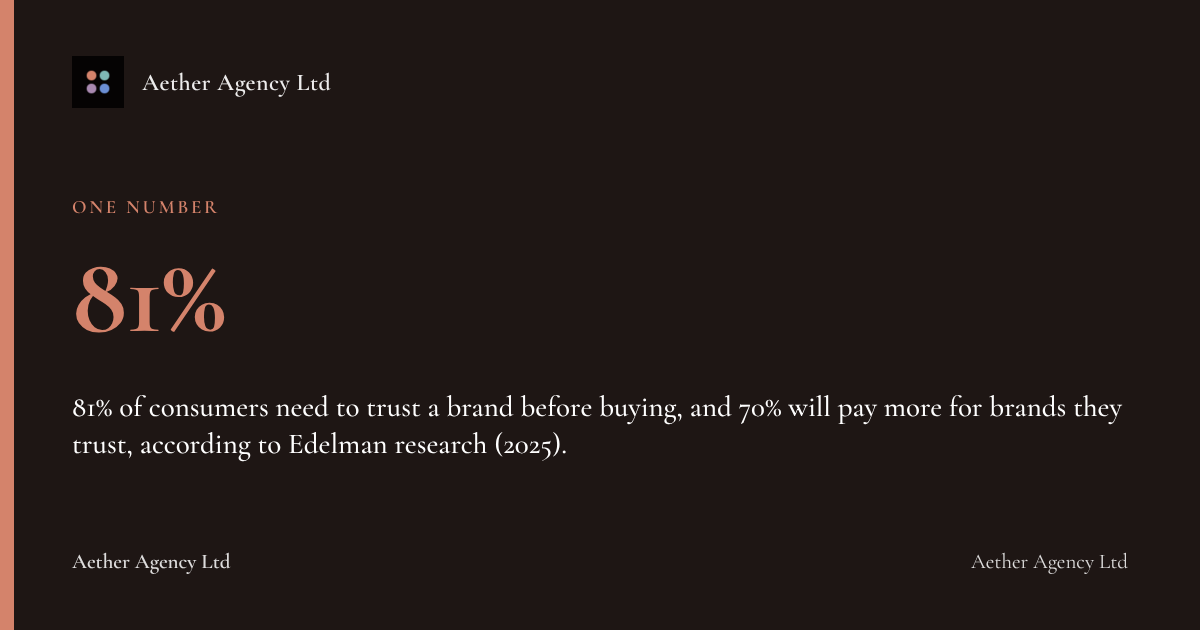
- 81% of consumers need to trust a brand before buying, and 70% will pay more for brands they trust, according to Edelman research (2025).
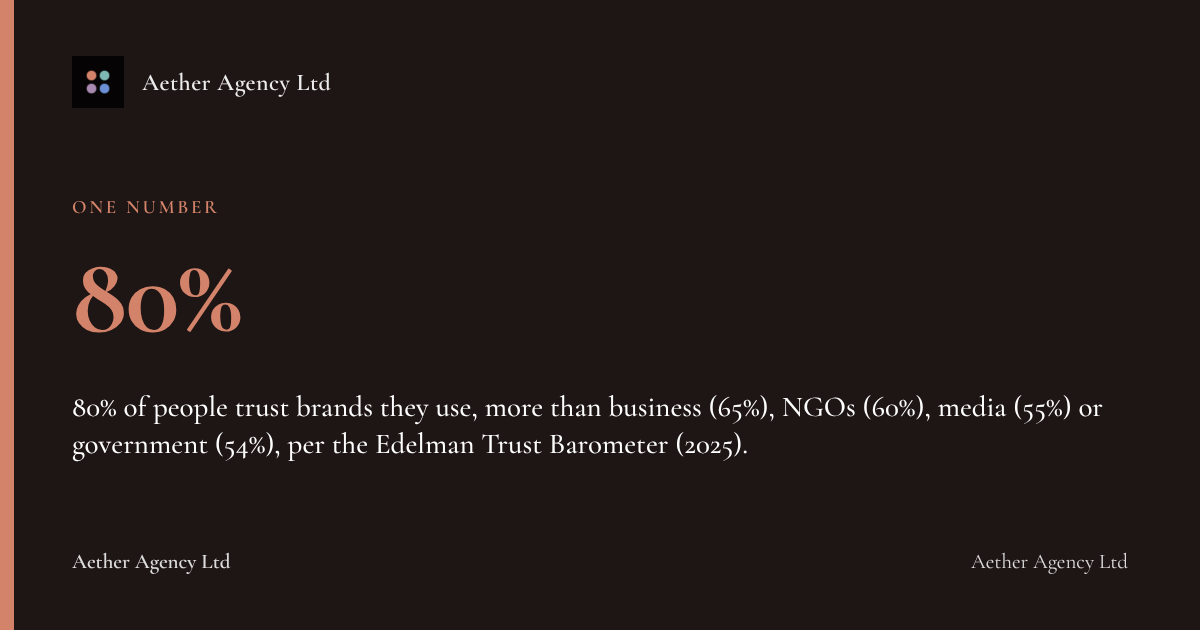
- 80% of people trust brands they use, more than business (65%), NGOs (60%), media (55%) or government (54%), per the Edelman Trust Barometer (2025).
- 70% of consumers say they would stop doing business with a company after a security incident, and 58% see a breached brand as untrustworthy, according to TechClass (2024).
- Private security firms with under 10 employees make up 61% of the industry, meaning most UK operators compete on trust signals rather than scale, per WorldMetrics (2023).
- The global security services market was worth $101.3 billion in 2025 and is projected to reach $154.3 billion by 2035, according to Building Security Services (2026).
What Makes Branding for Security Companies Different From Other Industries?
Branding for security companies is fundamentally a trust exercise rather than a product showcase, because the buyer is handing over keys, access codes or sensitive data on the strength of a perceived reputation. A retail brand sells a feeling; a security brand sells the absence of risk, and that changes every design and messaging decision that follows.
This distinction matters commercially. The global security services market reached $101.3 billion in 2025 and is forecast to hit $154.3 billion by 2035, a 4.3% compound annual growth rate according to Building Security Services (2026), and within that, guard and patrol services alone account for roughly $36.6 billion, about three-quarters of total industry revenue, per the same source. A separate assessment put the global security guarding services market at $247.75 billion in 2024, rising to $407.28 billion by 2033 at a 5.7% CAGR, according to Business Research Insights (2024).
A growing, fragmented market like this rewards operators who look credible fast. Buyers in this sector rarely have time to vet a supplier thoroughly before an urgent contract starts, so a brand has to do the reassurance work that a long sales process would normally handle. The Security Industry Authority (SIA), the statutory UK regulator created under the Private Security Industry Act 2001, licenses individuals working in roles such as door supervision and close protection, and that licensing framework is itself a trust signal that competitors in most other industries simply don't have access to.
What Are the Key Elements of a Strong Brand Identity for a Security Company?
A strong brand identity for a security company is the combined system of logo, colour palette, typography and messaging that signals competence and restraint rather than aggression or generic stock-photo menace. Each element has to earn its place because security buyers, whether a facilities manager in Canary Wharf or a homeowner in the Cotswolds, read visual cues as proxies for operational discipline.
Colour carries more weight here than in most sectors. Navy, charcoal and deep green read as authoritative and calm; bright red or black-and-yellow hazard striping reads as alarm, which is rarely the tone a client wants from the people protecting their building. Typography should favour clean, geometric sans-serifs over anything decorative, because legibility on a uniform patch, a liveried van or a CCTV sign matters as much as legibility on a website.
Messaging needs to avoid two common traps: over-claiming ("unbeatable protection") and under-explaining (jargon lifted from a tender document). The strongest security brands state what they do, for whom, and under what accreditation, in plain English. Aether Agency Ltd's brand identity work typically builds a full system, naming, visual identity and guidelines, so that the same tone holds whether it appears on a uniform, a patrol vehicle or a tender document; see Aether Agency Ltd's Brand Identity service.
A useful proof point here is Guardian, a security and facilities management platform in the UK. Guardian approached Aether Agency Ltd with a product concept but no brand, no application and no launch plan, and Aether Agency Ltd delivered a custom web application, a full brand identity system and a full-scale marketing launch, taking the concept all the way to a live product under one roof. That end-to-end build shows what "key elements" look like when they're assembled from zero rather than refreshed from an existing identity.
How Much Does Professional Branding for a Security Company Typically Cost in the UK?
Professional branding for a UK security company typically ranges from a few thousand pounds for a focused logo-and-guidelines project to tens of thousands for a full identity system paired with a website and launch marketing. The right figure depends on scope: a sole-trader alarm installer needs far less than a multi-site manned guarding contractor bidding for council tenders.
Given that 61% of private security firms employ under 10 people according to WorldMetrics (2023), budget-proportionate branding matters more in this sector than in most. The table below sets out illustrative ranges; these are indicative only and should be confirmed with a chosen agency or freelancer.
| Branding scope | Typical inclusions | Illustrative UK price range |
|---|---|---|
| Logo and basic guidelines | Logo, colour palette, one typeface pairing | £800 to £3,000 |
| Full brand identity system | Logo, naming support, colours, typography, uniform and vehicle livery guidelines | £3,000 to £12,000 |
| Brand identity plus website | Full identity system, new website build, basic SEO setup | £8,000 to £25,000 |
| Brand, website and launch marketing | Full identity, website, launch campaign, ongoing content | £15,000+ |
Ways to manage the cost: a phased approach, logo and guidelines first, website second, campaign third, lets a smaller operator spread spend across a financial year. Freelancers typically undercut agencies on price but rarely offer the same project management, legal name-checking or ongoing support that a studio provides.
Alternatives to consider: some smaller firms start with a template-based logo tool and basic signage, then invest properly once a contract pipeline justifies it. This can work short-term but rarely survives contact with a formal tender process that scores presentation and professionalism.
How Should a Security Company Choose a Branding Agency or Freelancer?
Choosing a branding agency or freelancer for a security business starts with checking their track record on trust-led, regulated-industry work, not just their portfolio of logos. Security buyers scrutinise credentials harder than most consumers do, so the agency building that credibility needs to understand compliance language, not just colour theory.
Before committing, a security company owner should check:
- Portfolio relevance: has the agency worked with regulated, trust-sensitive sectors, not only lifestyle brands?
- Process transparency: does the agency explain naming, trademark and Companies House checks as part of the process?
- Deliverables: will you receive full guidelines (logo variations, colour codes, typography rules) or just a flat logo file?
- Website capability: can the same team build a fast, findable website, or will that be a separate, disconnected project?
- References: can they name a comparable client and describe what was actually delivered?
Aether Agency Ltd has delivered 50+ projects as published on aether-agency.co.uk, and the studio's team brings 20+ years of experience as published on aether-agency.co.uk, spanning brand identity, website development and the AI search marketing that now determines whether a security firm is found at all. That combination matters because a brand that looks right but can't be found on Google or cited by an AI assistant isn't doing its job.
What Role Does Online Presence Play in a Security Company's Overall Brand Strategy?
Online presence, meaning a company's website, social media activity and client reviews, now functions as the first and often only impression a security buyer forms before making contact. A polished uniform and liveried van count for little if the website behind them is slow, outdated or impossible to find on Google.
This matters more than ever because trust research consistently shows people now trust brands more than they trust institutions: 80% of people trust the brands they use, ahead of business generally (65%), NGOs (60%), media (55%) and government (54%), according to the Edelman Trust Barometer (2025). For a security company, the website and review profile ARE the brand experience for most prospective clients, since very few will visit a site office before enquiring.
Three elements do most of the work:
- Website speed and clarity: a security buyer researching a supplier for an urgent contract will leave a slow site within seconds.
- Reviews and testimonials: Google reviews, displayed prominently, substitute for the face-to-face reassurance a buyer would otherwise need.
- AI search visibility: as more buyers ask ChatGPT, Perplexity or Google's AI Overviews to shortlist suppliers, a brand's content needs to be structured so these engines can cite it accurately, which is the specific discipline covered by Aether Agency Ltd's AI Search Marketing (GEO) service.
Fluent AI, a related business to Aether Agency Ltd (Fluent AI is a related business, not an independent client: it is owned by Lauren Dawkins, who also runs Aether Agency), recorded traffic up 3x and lead generation up 250% as a client case study published on aether-agency.co.uk, illustrating the scale of change a properly structured online presence can support when a brand and its digital infrastructure work together.
How Does Branding Differ Across Manned Guarding, Cybersecurity, Alarm Installation and Close Protection?
Branding differs sharply across security sub-sectors because each sells a different kind of reassurance to a different buyer. Manned guarding sells visible deterrence; cybersecurity sells invisible competence; alarm installation sells reliability of equipment; close protection sells discretion above all else.
| Security sub-sector | Primary buyer | Brand tone that works | Visual cues to prioritise |
|---|---|---|---|
| Manned guarding | Facilities managers, retail, events | Visible, disciplined, approachable | Clean uniforms, consistent livery, SIA licence visibility |
| Cybersecurity | IT directors, procurement | Technical, precise, evidence-led | Minimalist, data-driven, certification badges (e.g. ISO 27001) |
| Alarm installation | Homeowners, small business owners | Reassuring, local, responsive | Warm but professional, clear call-to-action, response-time claims |
| Close protection | High-net-worth individuals, executives | Discreet, understated, exclusive | Muted colours, minimal branding, no overt logos on vehicles |
This is why a template logo rarely works across the sector. A cybersecurity brand that looks like a manned guarding firm will read as unsophisticated to an IT director, while a close protection brand that over-brands its vehicles defeats the entire point of the service. The TechClass research found that 58% of consumers view a brand hit by a data breach as "not trustworthy," and 70% say they would stop doing business with a company after a security incident, according to TechClass (2024), underlining how much heavier the trust burden is for cybersecurity brands specifically, where the "product" is invisible until something goes wrong.
What Common Mistakes Do Security Companies Make When Branding Their Business?
Security companies most often undermine their own branding by over-claiming competence, under-investing in the website, and ignoring how their identity looks on a uniform or van rather than just a screen. These mistakes compound because a security buyer scrutinises every touchpoint, not just the logo.
The recurring errors Aether Agency Ltd sees across sector branding work include:
- Generic imagery: stock photos of padlocks, fingerprints or men in dark glasses that every competitor also uses.
- Overclaiming: language like "100% guaranteed protection" that invites scepticism rather than trust, especially given 73% of people say their trust in a brand would increase if it authentically reflected today's culture, per the Edelman Trust Barometer (2025).
- Ignoring uniform and livery as brand assets: treating the logo as a website-only concern when it also appears on patrol vehicles, ID badges and patrol vests.
- No website investment: a brand identity with a dated or slow website behind it, undermining the credibility the logo was meant to build.
- Skipping legal checks: failing to confirm a chosen name or logo doesn't clash with an existing SIA-approved contractor or trademark.
- Inconsistent application: different colours or logo versions appearing across vans, uniforms and paperwork, which reads as disorganisation to a procurement team.
What Legal Requirements and Industry Regulations Should Be Reflected in Security Branding?
Aether Agency Ltd advises that security branding and marketing materials should accurately reflect a company's actual regulatory status, because misrepresenting SIA licensing or accreditation is both a credibility risk and a potential legal problem. The Security Industry Authority, the UK's statutory regulator under the Private Security Industry Act 2001, licenses individuals in roles including door supervision, close protection and CCTV operation, and genuinely holding those licences is a fact worth stating clearly, not a fact to imply vaguely.
Firms that have achieved the SIA's Approved Contractor Scheme (ACS) status, which assesses a contractor against defined operational and quality criteria under the Private Security Industry Act 2001 (Approved Contractor Scheme) Regulations 2006, should display that status prominently, since it's one of the few independently verified credentials in the sector. Branding materials should:
- State SIA licence numbers or ACS status only where genuinely held and current.
- Avoid implying accreditation (ISO 27001, Safe Contractor, ACS) that hasn't actually been achieved.
- Reflect data protection obligations under UK GDPR where a firm handles client data, particularly relevant for alarm monitoring and cybersecurity firms, with the Information Commissioner's Office (ICO) as the relevant regulator.
- Ensure health and safety claims align with duties under the Health and Safety at Work etc. Act 1974 rather than overstating them.
Getting this right is not a marketing nicety; it's the difference between a brand that survives due diligence and one that collapses the moment a procurement team checks the SIA's public register.
Your Security Company Branding Checklist
- Define the specific trust signal your sub-sector needs (visible deterrence, discretion, technical precision) before choosing colours or imagery.
- Confirm your proposed name and logo don't clash with an existing SIA-approved contractor or registered trademark.
- Build brand guidelines that specify how the logo appears on uniforms, vehicles and ID badges, not just digital assets.
- State SIA licensing or ACS status accurately and only where currently held.
- Replace generic stock imagery (padlocks, fingerprints) with photography specific to your actual operation.
- Pair any rebrand with a website rebuild, since a dated site undermines a new identity instantly.
- Structure website content so both Google and AI search engines can find and cite it accurately.
- Review the brand across every touchpoint, van livery, patrol vest, invoice template, for consistency before launch.
FAQ
What makes branding for security companies different from other industries?
Branding for security companies centres on trust rather than desire, because the buyer is handing over access to premises, staff or data rather than buying a lifestyle product. This is why 81% of consumers need to trust a brand before buying, according to Edelman research (2025), a figure that carries particular weight in a sector built on reassurance.
How much does professional branding cost for a UK security company?
UK security branding typically costs between £800 for a basic logo package and £25,000+ for a full identity, website and launch campaign. The right budget depends on company size and whether the brand needs to support formal tender submissions.
How long does it take to develop a full brand identity for a security firm?
A full brand identity typically takes between 6 and 12 weeks from initial discovery to final guidelines, though timelines vary with scope and how many stakeholders need to sign off. Projects that also include a website build, such as Aether Agency Ltd's end-to-end work for Guardian, run longer as an ongoing engagement rather than a fixed sprint.
Who should lead a rebrand within a security company?
Ownership should sit with whoever has final authority over commercial decisions, typically the owner or managing director in smaller firms, working closely with an external branding agency for execution. In-house marketing managers can coordinate the process, but strategic naming, legal and design decisions benefit from specialist input given how much trust a security brand has to carry.
What should be checked before choosing a branding agency for a security business?
Check the agency's experience with regulated or trust-sensitive sectors, ask whether they provide full brand guidelines rather than just a logo file, and confirm they can also build the website that will carry the new identity. Asking for a named, comparable project and what was actually delivered is the fastest way to separate a credible agency from a template seller.
Does branding differ for manned guarding compared with cybersecurity companies?
Yes, manned guarding brands typically lean into visible, disciplined professionalism while cybersecurity brands lean into precise, technical credibility because the "product" in each case is reassured very differently. The stakes differ too: 58% of consumers see a brand hit by a data breach as untrustworthy, according to TechClass (2024), a risk that weighs especially heavily on cybersecurity branding.
How does a strong brand help a security company win more contracts?
A strong, consistent brand signals operational discipline to procurement teams before a single conversation happens, which matters given that 70% of consumers say they'll pay more for brands they trust, according to Edelman (2025). In a market with $101.3 billion in global security services revenue in 2025, per Building Security Services (2026), standing out on trust rather than price is often the only sustainable differentiator for smaller operators.
Building Your Security Brand With Aether Agency Ltd
Branding for security companies lives or dies on whether the identity holds up under the exact scrutiny this article has described: SIA registers checked, uniforms examined, websites judged in seconds. Aether Agency Ltd builds brand identity systems designed to survive that scrutiny across every channel a security firm actually uses, from uniform guidelines to tender documents to the website a procurement team searches for first.
Aether Agency Ltd's end-to-end work for Guardian, a UK security and facilities management platform, shows what this looks like in practice: a product concept with no brand, no application and no launch plan, taken through a full brand identity system, a custom web application and a complete marketing launch under one roof. That same combination, Brand Identity paired with Website Development, is what most security companies need when an identity has outgrown what a logo alone can carry.
If your security business needs a brand that earns trust before the phone even rings, get in touch with Aether Agency Ltd to discuss a brand identity project built for how security buyers actually make decisions.
Related Reading
- Branding for Schools: A UK Decision-Maker's Guide
- Branding for Construction Companies: A UK 2026 Guide
- Employer Branding Agency UK: What to Expect in 2026
Add aether-agency.co.uk as a preferred source on Google
See How Your Brand Appears in AI Search
Aether AI monitors your visibility across ChatGPT, Perplexity, Google AI Overviews, and Claude in real time. Find out where you stand and what to fix.
Explore Aether AI