Last updated: 24 October 2026
Instagram influencer marketing agencies in the UK connect brands with over 98,000 Instagram accounts holding more than 5,000 followers, operating within a market projected to reach £2.9 billion in 2026 according to Charle and IMARC Group. These agencies deliver an average return of £5.78 for every £1 invested whilst ensuring compliance with ASA and CMA advertising regulations that govern all paid social media endorsements across the United Kingdom.
Key Takeaways
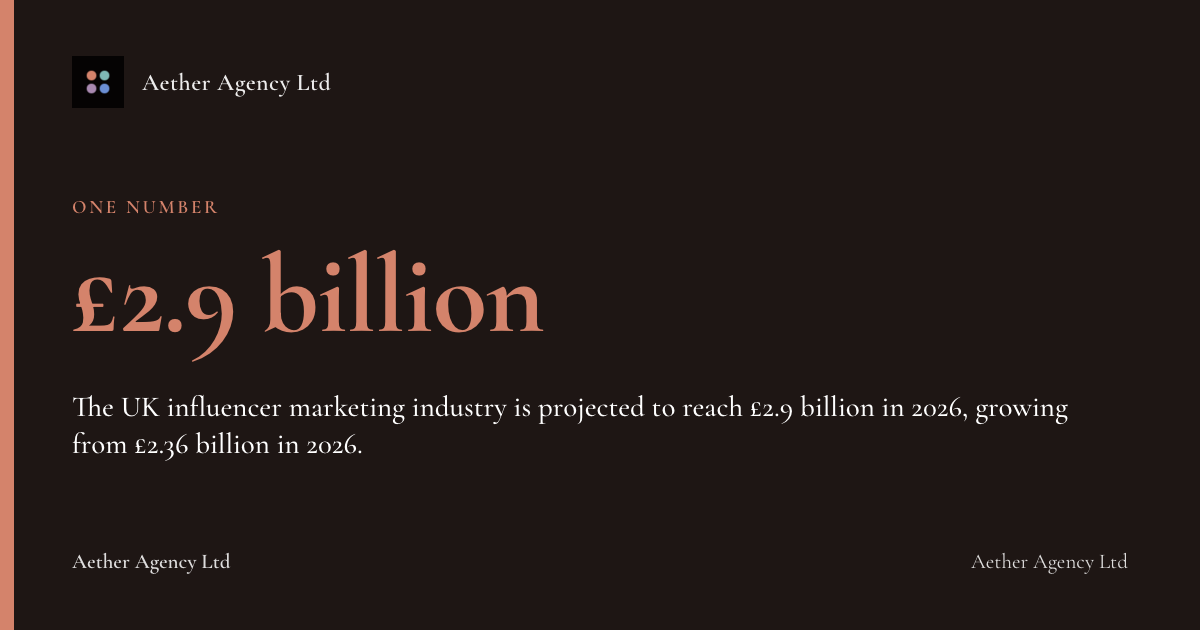
- The UK influencer marketing industry is projected to reach £2.9 billion in 2026, growing from £2.36 billion in 2026.
- Instagram has over 35 million monthly users in the UK, with over 70% aged between 18 and 44 (Gen Z and Millennials), making it the dominant platform for influencer campaigns targeting these demographics.
- Brands earn an average of £5.78 for every £1 invested in influencer marketing, according to Charle's 2026 analysis.
- 81% of brands expect to increase their influencer marketing budgets in 2026, according to the Kolsquare State of Influencer Marketing 2025 Report.
- All Instagram influencer partnerships in the UK must comply with Advertising Standards Authority (ASA) and Competition and Markets Authority (CMA) regulations requiring clear disclosure of commercial relationships.
What Is an Instagram Influencer Marketing Agency?
An Instagram influencer marketing agency is a specialist consultancy that manages the entire lifecycle of influencer partnerships on behalf of brands. These agencies maintain databases of vetted creators, negotiate contracts, ensure regulatory compliance, coordinate content production, and measure campaign performance across Instagram's feed, Stories, Reels, and shopping features.
In the UK market, these agencies operate within a highly regulated environment. The Advertising Standards Authority (ASA) and Competition and Markets Authority (CMA) mandate that all paid partnerships must be clearly disclosed to consumers. According to Kolsquare's State of Influencer Marketing Report, 76% of UK brands ensure that influencers follow advertising regulations—a significantly higher compliance rate than many international markets.
Professional agencies bridge the gap between brands seeking authentic audience engagement and creators who have built loyal communities. They handle everything from initial creator discovery and vetting through to campaign reporting and payment processing. For business professionals, this removes the operational burden of managing dozens of individual influencer relationships whilst ensuring every partnership meets legal standards.
The rise of these agencies reflects Instagram's dominance in the UK social media landscape. With over 35 million monthly users in the UK, according to Kolsquare, Instagram provides unparalleled reach amongst the 18-44 demographic that represents over 70% of the platform's UK user base. This concentrated audience makes Instagram the primary channel for influencer campaigns targeting millennials and Gen Z consumers.
How Much Do Instagram Influencer Marketing Agencies Cost in the UK?
Instagram influencer marketing agency fees in the UK typically follow three pricing models: monthly retainers, project-based fees, or commission structures. Understanding these models helps business professionals budget effectively and select an agency aligned with their campaign objectives.
Monthly Retainer Model: Agencies charge between £2,000 and £15,000 per month for ongoing influencer marketing management. This model suits brands running continuous campaigns or those requiring regular influencer partnerships throughout the year. The retainer covers strategy development, creator sourcing, contract negotiation, content approval, and performance reporting.
Project-Based Fees: For one-off campaigns or product launches, agencies typically charge £5,000 to £50,000 depending on campaign scope, number of influencers involved, and content complexity. A campaign featuring 10-15 micro-influencers (5,000-50,000 followers) might cost £8,000-£15,000 in agency fees, whilst a campaign with 2-3 macro-influencers (500,000+ followers) could command £25,000-£50,000 in management fees alone.
Commission Structure: Some agencies work on a 15-25% commission on total influencer spend. If a brand allocates £50,000 to pay influencers directly, the agency would charge £7,500-£12,500 in fees. This model aligns agency incentives with campaign scale but can become expensive for high-budget campaigns.
Regional Cost Variations
| Region | Monthly Retainer Range | Project Fee Range |
|---|---|---|
| London | £5,000 - £15,000 | £15,000 - £50,000 |
| Manchester, Birmingham, Leeds | £3,000 - £10,000 | £8,000 - £30,000 |
| Regional UK cities | £2,000 - £7,000 | £5,000 - £20,000 |
These fees sit separately from influencer payments themselves. Micro-influencers typically charge £200-£500 per Instagram post, whilst macro-influencers command £2,000-£10,000+ per post depending on engagement rates and audience demographics.
Worked Cost Scenarios
Scenario 1: E-commerce Brand Product Launch
- Campaign goal: Launch new product line to female 25-35 demographic
- Strategy: 20 micro-influencers + 2 mid-tier influencers
- Agency project fee: £12,000
- Influencer payments: £18,000
- Total investment: £30,000
- Expected reach: 800,000-1.2 million impressions
Scenario 2: Ongoing Brand Awareness Campaign
- Campaign goal: Build sustained brand presence in lifestyle sector
- Strategy: Monthly retainer with 8-12 influencer partnerships per month
- Agency monthly retainer: £6,500
- Monthly influencer budget: £8,000
- Total monthly investment: £14,500
- Annual commitment: £174,000
Scenario 3: Enterprise Multi-Channel Campaign
- Campaign goal: National campaign across Instagram, TikTok, YouTube
- Strategy: Integrated campaign with 5 macro-influencers
- Agency project fee: £35,000
- Influencer payments: £65,000
- Content production support: £15,000
- Total investment: £115,000
Why UK Businesses Choose Instagram Influencer Marketing Agencies
The decision to partner with an Instagram influencer marketing agency rather than managing campaigns in-house stems from several strategic advantages that directly impact campaign ROI and regulatory compliance.
Regulatory Expertise and Compliance: The UK maintains some of the strictest influencer marketing regulations globally. The ASA's third edition guidance, developed in collaboration with the CMA, sets clear requirements for disclosure, affiliate marketing labelling, and sponsored content identification. Agencies maintain up-to-date knowledge of these evolving standards and ensure every partnership includes compliant disclosure language. According to the ASA's updated guidance, violations can result in enforcement action against both the brand and the influencer, making professional compliance management essential.
Access to Vetted Creator Networks: Professional agencies maintain relationships with thousands of UK-based Instagram creators across every niche and audience demographic. They conduct thorough vetting processes that examine engagement authenticity, audience demographics, previous brand partnerships, and content quality. This eliminates the risk of partnering with creators who have purchased followers or whose audience doesn't align with brand values.
Negotiation Power and Efficiency: Agencies negotiate hundreds of influencer contracts annually, giving them market knowledge about fair pricing and standard terms. They understand regional rate variations, seasonal pricing fluctuations, and which creators are open to performance-based compensation. This expertise typically saves brands 15-30% on influencer fees compared to direct negotiations.
Campaign Performance Measurement: According to Sprout Social's research, 59% of marketers plan to partner with more influencers in 2025 compared to 2024. This expansion requires sophisticated tracking systems that monitor engagement rates, conversion attribution, audience sentiment, and ROI across multiple simultaneous partnerships. Agencies deploy analytics platforms that provide real-time performance dashboards and post-campaign analysis that most in-house teams lack the tools to replicate.
The average ROI of £5.78 per £1 invested demonstrates that professional agency management typically pays for itself through improved creator selection, negotiation efficiency, and performance optimisation.
What Services Do Instagram Influencer Marketing Agencies Provide?
A full-service Instagram influencer marketing agency in the UK delivers end-to-end campaign management that encompasses strategic planning, creator partnerships, content coordination, and performance analysis. Understanding these services helps business professionals evaluate agency capabilities and identify which functions deliver the greatest value.
Strategic Planning and Audience Analysis: Agencies begin by analysing a brand's target audience, competitive landscape, and campaign objectives. They identify which Instagram creator categories (beauty, fitness, lifestyle, business, technology) align with brand positioning and which audience demographics offer the highest conversion potential. This strategic foundation determines campaign structure, budget allocation, and success metrics.
Creator Discovery and Vetting: Using proprietary databases and social listening tools, agencies identify potential influencer partners who match campaign requirements. The vetting process examines follower authenticity, engagement quality, audience demographics, previous brand partnerships, content aesthetics, and values alignment. In the UK market, agencies also verify that creators understand ASA disclosure requirements and have a history of compliant sponsored content.
Contract Negotiation and Legal Compliance: Agencies draft influencer contracts that specify deliverables, usage rights, exclusivity terms, payment schedules, and disclosure requirements. They ensure every contract includes ASA-compliant disclosure language and CMA-required transparency about commercial relationships. This legal framework protects brands from regulatory violations whilst establishing clear creator expectations.
Content Briefing and Approval: Whilst influencers create content in their authentic voice, agencies provide creative briefs that communicate brand messaging, product features, and campaign hashtags. They coordinate content approval workflows that allow brands to review posts before publication whilst respecting creator editorial control. This balance maintains authenticity whilst ensuring brand safety.
Campaign Management and Coordination: During campaign execution, agencies coordinate posting schedules, monitor content publication, track engagement metrics, and handle influencer communications. They manage payment processing, resolve content issues, and optimise campaign performance based on real-time data.
Performance Reporting and Analysis: Post-campaign, agencies deliver comprehensive reports covering reach, impressions, engagement rates, click-through rates, conversion attribution, audience sentiment, and ROI calculation. These insights inform future campaign strategy and demonstrate marketing effectiveness to stakeholders.
Crisis Management and Brand Safety: When influencer partnerships generate negative sentiment or unexpected controversy, agencies provide rapid response protocols that protect brand reputation whilst supporting creator partners through difficult situations.
How to Choose the Right Instagram Influencer Marketing Agency
Selecting an Instagram influencer marketing agency requires evaluating capabilities across strategic expertise, creator networks, compliance knowledge, and performance measurement systems. Business professionals should assess agencies against these critical criteria.
Demonstrated UK Market Expertise: The UK influencer landscape differs significantly from other markets due to regulatory requirements, audience preferences, and creator ecosystems. Prioritise agencies with proven UK campaign experience who understand ASA guidelines, regional audience variations, and local creator communities. Request case studies from brands in your industry operating within the UK market.
Creator Network Quality and Diversity: Examine the agency's creator database across several dimensions: follower size ranges (micro to macro), content categories, geographic distribution across the UK, and demographic reach. The UK has over 98,000 Instagram accounts with more than 5,000 followers, but only a fraction will align with any specific brand. Agencies should demonstrate access to creators who authentically connect with your target audience.
Compliance and Regulatory Knowledge: Given that 76% of UK brands ensure influencers follow advertising regulations, compliance expertise is non-negotiable. Ask agencies to explain their ASA compliance processes, how they ensure proper disclosure labelling, and their experience handling CMA investigations or ASA complaints. Request examples of compliant disclosure language they've implemented in previous campaigns.
Performance Measurement Capabilities: Agencies should offer transparent reporting that tracks metrics aligned with your campaign objectives—whether that's brand awareness (reach, impressions), engagement (likes, comments, shares, saves), or conversion (clicks, purchases, sign-ups). Ask to see sample campaign reports and understand which analytics platforms they use.
Strategic Approach and Campaign Planning: Evaluate how agencies approach campaign strategy. Do they begin with audience research and competitive analysis? Do they recommend influencer mixes based on data or relationships? Do they suggest testing approaches before committing full budgets? Strategic sophistication separates agencies that deliver consistent ROI from those that simply connect brands with creators.
Budget Transparency and Pricing Models: Understand exactly what the agency fee covers and what constitutes additional costs. Some agencies bundle content production, photography, or paid amplification into their fees; others charge separately for these services. Clarify whether the agency receives any commissions from influencers or platforms that might create conflicts of interest.
Industry Specialisation: Some agencies specialise in specific sectors—fashion, beauty, technology, finance, healthcare—where they've built deep creator networks and regulatory knowledge. If your industry has unique compliance requirements (financial services, healthcare, alcohol), prioritise agencies with demonstrated expertise navigating those regulations.
Instagram Influencer Marketing Regulations in the UK
The UK maintains comprehensive regulations governing influencer marketing through the Advertising Standards Authority (ASA) and Competition and Markets Authority (CMA). Business professionals must understand these requirements to ensure campaign compliance and avoid enforcement action.
ASA Disclosure Requirements: The ASA's third edition Influencers' Guide, co-published with the CMA, mandates that all commercial relationships between brands and influencers must be clearly disclosed to consumers. This applies regardless of whether the influencer receives payment, free products, or other incentives. The disclosure must be "upfront, prominent, and unambiguous"—typically using labels like #ad, #advert, or #sponsored at the beginning of captions before any other text or hashtags.
According to the ASA's updated guidance, disclosure must appear in the post itself, not buried in comments or hidden behind "see more" buttons. Instagram's "Paid partnership with [Brand]" label satisfies ASA requirements but should be supplemented with hashtag disclosure for maximum clarity. The ASA has issued enforcement rulings against both brands and influencers for inadequate disclosure, making compliance essential.
CMA Consumer Protection Requirements: The CMA enforces consumer protection law requiring that paid endorsements are clearly identifiable as marketing communications. The CMA's "Social Media Endorsements: Guidance for Brands" published on GOV.UK establishes that brands bear responsibility for ensuring influencers disclose partnerships appropriately. Brands cannot claim ignorance if influencers fail to disclose—they must provide clear instructions and monitor compliance.
The CMA has taken enforcement action against brands whose influencers failed to properly disclose commercial relationships, including formal investigations and public commitments to improve compliance. These actions demonstrate that regulatory risk extends beyond individual posts to brand reputation and legal liability.
Affiliate Marketing Disclosure: When influencers use affiliate links or discount codes that generate commission, the ASA requires additional disclosure beyond standard sponsored content labelling. Posts must clearly state that the influencer earns commission from purchases made through their links. Phrases like "I earn from qualifying purchases" or "Commission earned on sales" should accompany affiliate links.
Platform-Specific Requirements: Instagram provides built-in branded content tools that allow influencers to tag brand partners, triggering the "Paid partnership with [Brand]" label. The CMA's "Hidden Ads Principles for Social Media Platforms" establishes expectations that platforms like Instagram facilitate transparent disclosure. Brands should require influencers to use these native tools alongside hashtag disclosure.
Enforcement and Penalties: The ASA can require non-compliant content to be removed and publish adverse rulings that damage brand reputation. The CMA possesses broader enforcement powers including court orders and financial penalties for serious violations. Repeat offenders face escalating consequences including public enforcement actions that generate negative media coverage.
Industry Self-Regulation: The Influencer Marketing Trade Body (IMTB) provides industry guidance consolidating ASA requirements and promoting best practices. Whilst IMTB membership is voluntary, the organisation's resources help brands and influencers maintain compliance with evolving regulations.
Instagram vs Other Platforms for UK Influencer Marketing
Whilst Instagram dominates UK influencer marketing, business professionals should understand how it compares to alternative platforms to make informed channel selection decisions.
Instagram's UK Dominance: Instagram's 35 million monthly UK users according to Kolsquare, combined with its visual-first format and sophisticated shopping features, make it the primary platform for most influencer campaigns. The platform's demographic concentration—over 70% of users aged 18-44—aligns perfectly with the purchasing power of millennials and Gen Z consumers. Instagram's suite of content formats (feed posts, Stories, Reels, IGTV, Shopping) provides flexibility for different campaign objectives.
TikTok's Rising Competition: TikTok has experienced explosive growth in the UK, particularly amongst Gen Z audiences. Its algorithm-driven discovery feed gives smaller creators viral potential that Instagram's follower-based system doesn't match. For brands targeting under-25 demographics with entertaining, authentic content, TikTok influencer partnerships often deliver higher engagement rates than Instagram. However, TikTok's e-commerce integration remains less developed than Instagram Shopping.
YouTube's Long-Form Authority: YouTube influencers command higher fees than Instagram creators but deliver longer content that builds deeper product understanding. For complex products, services, or B2B offerings, YouTube's long-form format allows detailed explanations that Instagram's visual brevity cannot accommodate. YouTube content also has longer shelf life, with videos generating views months or years after publication.
LinkedIn's B2B Opportunity: For business professionals targeting other businesses, LinkedIn influencer partnerships offer access to decision-makers that consumer-focused platforms cannot reach. LinkedIn's professional context makes it ideal for thought leadership, industry expertise, and B2B service promotion. However, LinkedIn's influencer ecosystem is less developed than Instagram's, with fewer creators and less sophisticated campaign infrastructure.
Multi-Platform Strategy:, 59% of marketers plan to partner with more influencers in 2026 compared to 2026, and many successful campaigns deploy influencers across multiple platforms simultaneously. A typical integrated approach might feature Instagram for visual storytelling and shopping, TikTok for viral reach, and YouTube for detailed product reviews.
Platform Comparison Table
| Platform | UK Users | Best For | Average Engagement | Content Lifespan | E-commerce Integration |
|---|---|---|---|---|---|
| 35 million | Visual products, lifestyle, fashion, beauty | 1-3% (varies by follower count) | 24-48 hours (feed), 24 hours (Stories) | Excellent (Shopping, product tags) | |
| TikTok | 20+ million | Gen Z, entertainment, viral content | 5-9% (varies by follower count) | 3-7 days | Developing |
| YouTube | 50+ million | Detailed reviews, tutorials, B2B | 2-4% (comments/views ratio) | Months to years | Basic (description links) |
| 30+ million | B2B, professional services, thought leadership | 1-2% | Days to weeks | Minimal |
The UK's projected £2.9 billion influencer marketing industry in 2026 according to Charle and IMARC Group will be distributed across these platforms, but Instagram's combination of reach, demographics, engagement tools, and e-commerce features ensures it remains the foundation of most UK influencer strategies.
Measuring Instagram Influencer Marketing Success
Business professionals require clear performance metrics to evaluate Instagram influencer campaign effectiveness and justify continued investment. The industry's average £5.78 return per £1 invested, but achieving these results requires sophisticated measurement frameworks.
Reach and Impressions: These top-of-funnel metrics measure how many unique users saw campaign content (reach) and total content views including multiple views by the same user (impressions). Whilst reach and impressions indicate campaign visibility, they don't measure engagement or conversion. Instagram provides these metrics through the platform's Insights tool for branded content tagged with the "Paid partnership" label.
Engagement Metrics: Engagement rate—calculated as (likes + comments + saves + shares) / reach × 100—measures how actively audiences interact with influencer content. UK Instagram engagement rates vary significantly by follower count: micro-influencers (5,000-50,000 followers) typically achieve 3-6% engagement, whilst macro-influencers (500,000+ followers) average 1-2% engagement. Higher engagement indicates content resonance and audience authenticity.
Click-Through Rate (CTR): For campaigns driving traffic to websites, landing pages, or product pages, CTR measures the percentage of viewers who clicked the link in bio, swipe-up link (Stories), or product tags. Instagram Stories with swipe-up links (available to accounts with 10,000+ followers) typically achieve 0.5-2% CTR depending on call-to-action strength and audience relevance.
Conversion Metrics: The most critical measure for performance-driven campaigns, conversion tracking measures how many influencer-driven visitors completed desired actions: purchases, sign-ups, downloads, or enquiries. This requires UTM parameters on links, unique discount codes, or affiliate tracking systems that attribute conversions to specific influencers. Conversion rate benchmarks vary dramatically by industry, product price point, and campaign objective.
Audience Quality Metrics: Beyond vanity metrics, sophisticated measurement examines audience demographics, geographic distribution, and authenticity. Tools like HypeAuditor or Modash analyse influencer audiences to verify that followers match target demographics and aren't predominantly bots or fake accounts. This vetting ensures campaign reach translates to genuine brand exposure.
Earned Media Value (EMV): EMV attempts to quantify the equivalent advertising spend required to achieve similar reach through paid Instagram ads. Whilst EMV provides a directional ROI indicator, it should be interpreted cautiously as influencer content often generates different engagement quality than paid advertising.
Share of Voice: For brand awareness campaigns, share of voice measures what percentage of category conversation your brand captured relative to competitors. Social listening tools track branded hashtags, mentions, and sentiment across Instagram to quantify campaign impact on brand visibility within your industry.
Long-Term Brand Lift: Beyond immediate campaign metrics, surveys measuring aided and unaided brand awareness, purchase intent, and brand perception before and after campaigns provide evidence of lasting impact. These studies require more investment but demonstrate whether influencer partnerships build sustained brand equity.
With 81% of brands expecting to increase influencer marketing budgets in 2026, demonstrating clear ROI through comprehensive measurement becomes essential to securing continued investment.
Common Instagram Influencer Marketing Mistakes to Avoid
Even experienced business professionals make strategic errors when launching Instagram influencer campaigns. Understanding these common pitfalls helps brands maximise campaign effectiveness whilst avoiding regulatory violations and budget waste.
Prioritising Follower Count Over Engagement: Many brands gravitate toward influencers with large followings assuming bigger audiences deliver better results. However, engagement rate typically decreases as follower count increases. A micro-influencer with 15,000 followers achieving 5% engagement delivers more meaningful interactions than a macro-influencer with 500,000 followers achieving 1% engagement. Focus on engagement quality and audience relevance rather than vanity metrics.
Inadequate Disclosure and Compliance Failures: With 76% of UK brands ensuring influencers follow advertising regulations, the remaining 24% face significant regulatory risk. Failing to require clear #ad or #sponsored disclosure, relying solely on Instagram's branded content label without hashtag reinforcement, or allowing disclosure to appear below "see more" buttons all violate ASA requirements. Every brand-influencer contract should explicitly require ASA-compliant disclosure with examples of acceptable labelling.
Insufficient Creative Freedom: Brands that provide overly prescriptive content briefs stifle the authentic voice that makes influencer content effective. Audiences follow creators for their unique perspective and style—content that reads like a corporate press release destroys authenticity and engagement. Provide brand guidelines, key messages, and product information, but allow influencers creative control over how they integrate your brand into their content.
Neglecting Audience Alignment: An influencer's audience demographics must match your target customer profile. A beauty brand targeting women aged 25-35 gains nothing from partnering with a gaming influencer whose audience is predominantly male teenagers, regardless of engagement rates. Request audience demographics data before committing to partnerships and verify that follower demographics align with your ideal customer.
One-Off Campaigns Without Relationship Building: Single sponsored posts rarely build meaningful brand awareness or drive sustained conversions. The most effective influencer partnerships involve ongoing relationships where creators become genuine brand advocates. 59% of marketers plan to partner with more influencers in 2026—this expansion should focus on deepening relationships with proven partners rather than constantly seeking new faces.
Ignoring Micro-Influencer Potential: Whilst celebrity influencers generate impressive reach, micro-influencers (5,000-50,000 followers) often deliver superior ROI through higher engagement, more affordable fees, and more authentic audience relationships. The UK's 98,000+ Instagram accounts with more than 5,000 followers according to Charle provides enormous micro-influencer opportunity that many brands overlook.
Failing to Track Conversions: Running influencer campaigns without conversion tracking makes ROI measurement impossible. Implement unique discount codes, UTM-tagged links, or affiliate tracking for every influencer partner to attribute sales, sign-ups, or enquiries to specific creators. This data informs future partnership decisions and justifies marketing spend.
Rushing Influencer Vetting: Partnering with influencers who have purchased followers, generated past controversies, or whose values conflict with brand positioning damages brand reputation. Thorough vetting should examine content history, audience authenticity, previous brand partnerships, and public statements to ensure alignment before contracts are signed.
Your Instagram Influencer Marketing Checklist
Use this practical checklist to launch compliant, effective Instagram influencer campaigns in the UK:
- Define clear campaign objectives with specific, measurable KPIs (reach targets, engagement goals, conversion numbers) aligned with business outcomes
- Establish campaign budget allocating 60-70% to influencer payments and 30-40% to agency fees, content production, and paid amplification
- Identify target audience demographics including age ranges, geographic location within the UK, interests, and purchasing behaviours
- Research and shortlist influencers whose audience demographics match your target, whose engagement rates exceed category benchmarks, and whose content aesthetics align with brand identity
- Verify influencer authenticity using tools to check for fake followers, engagement pods, or purchased interactions
- Draft compliant contracts including ASA-required disclosure language, content deliverables, usage rights, exclusivity terms, and payment schedules
- Create creative briefs that communicate brand messaging, product features, and campaign hashtags whilst allowing influencer creative freedom
- Implement tracking systems with unique discount codes, UTM parameters, or affiliate links for every influencer to enable conversion attribution
- Require ASA-compliant disclosure with #ad or #sponsored at the beginning of captions plus Instagram's "Paid partnership" label
- Establish content approval workflow that allows brand review before publication whilst respecting creator editorial control
- Monitor campaign performance tracking reach, engagement, click-through rates, and conversions in real-time
- Collect performance data for post-campaign analysis including audience demographics, engagement quality, and ROI calculation
- Maintain influencer relationships for potential ongoing partnerships with proven high-performers
Frequently Asked Questions
How much should I budget for Instagram influencer marketing in the UK?
Budget £3,000-£10,000 monthly for small-scale campaigns with micro-influencers, £10,000-£30,000 monthly for mid-market campaigns with mixed influencer tiers, or £30,000+ monthly for enterprise campaigns with macro-influencers and comprehensive agency management. The average ROI of £5.78 per £1 invested according to Charle means that properly executed campaigns generate positive returns, but initial campaigns should allocate budget for testing and optimisation before scaling investment.
Do I need an agency or can I manage Instagram influencer campaigns in-house?
Managing campaigns in-house is viable for brands with dedicated social media teams, existing influencer relationships, and thorough understanding of ASA compliance requirements. However, agencies provide access to vetted creator networks, negotiation expertise that typically saves 15-30% on influencer fees, compliance management that prevents regulatory violations, and performance measurement systems that most in-house teams lack. With 81% of brands increasing influencer budgets in 2026, the complexity of managing multiple simultaneous partnerships often justifies agency investment.
How long does it take to see results from Instagram influencer campaigns?
Immediate metrics like reach, impressions, and engagement appear within 24-48 hours of content publication, whilst click-through and conversion data accumulates over the campaign duration (typically 2-4 weeks for time-limited campaigns). Brand awareness lift and sustained audience growth require 3-6 months of consistent influencer partnerships to materialise. 59% of marketers plan to partner with more influencers in 2026, reflecting recognition that influencer marketing delivers compounding returns through sustained investment rather than immediate one-off results.
What's the difference between micro and macro influencers for UK campaigns?
Micro-influencers (5,000-50,000 followers) typically achieve 3-6% engagement rates, charge £200-£1,000 per post, and maintain highly engaged niche audiences with authentic relationships. Macro-influencers (500,000+ followers) achieve 1-2% engagement rates, charge £2,000-£10,000+ per post, and deliver broad reach across diverse demographics. For most UK brands, micro-influencer campaigns deliver superior ROI through lower costs and higher engagement, whilst macro-influencers suit large-scale awareness campaigns requiring mass reach. The UK's 98,000+ Instagram accounts with more than 5,000 followers.
Are Instagram influencer campaigns subject to ASA regulations?
Yes, all Instagram influencer partnerships where creators receive payment, free products, or other incentives must comply with ASA disclosure requirements. The ASA's third edition guidance mandates clear, upfront disclosure using labels like #ad or #sponsored at the beginning of captions, plus Instagram's "Paid partnership with [Brand]" label. 76% of UK brands ensure influencer compliance, but the remaining 24% face enforcement risk including content removal, adverse rulings, and potential CMA investigation. Every influencer contract should explicitly require ASA-compliant disclosure.
How do I measure Instagram influencer campaign ROI?
Calculate ROI by comparing total campaign costs (agency fees plus influencer payments plus production costs) against attributed revenue or conversions. Use unique discount codes, UTM-tagged links, or affiliate tracking to attribute sales or sign-ups to specific influencers. The industry average of £5.78 return per £1 invested, but ROI varies significantly by industry, product price point, and campaign objective. Comprehensive measurement should track reach, engagement, click-through rate, conversion rate, customer acquisition cost, and lifetime value of acquired customers.
Which industries benefit most from Instagram influencer marketing in the UK?
Fashion, beauty, lifestyle, fitness, food and beverage, travel, and consumer technology brands achieve the strongest results from Instagram influencer marketing due to the platform's visual format and its concentration of 18-44 year-old users (over 70% of UK Instagram users according to Kolsquare). However, B2C brands across virtually every category—including financial services, healthcare, home improvement, and professional services—have successfully deployed Instagram influencer campaigns. The key is identifying creators whose audience demographics match your target customer rather than assuming Instagram only works for traditionally "visual" industries.
Partnering with Aether Agency Ltd for Instagram Influencer Marketing
Navigating the UK's £2.9 billion Instagram influencer marketing landscape requires strategic expertise, regulatory knowledge, and access to vetted creator networks that deliver the industry-average £5.78 return per £1 invested. Aether Agency Ltd brings full-service creative capabilities to Instagram influencer campaigns, combining strategic planning with technical execution that ensures both performance and ASA compliance.
As a creative studio specialising in brand identity, website development, and marketing optimised for discovery across Google, ChatGPT, and Perplexity, Aether Agency Ltd understands how influencer content integrates within broader digital marketing ecosystems. We develop influencer campaigns that amplify brand identity across channels whilst driving measurable business outcomes through the UK's 35 million Instagram users.
Our approach combines data-driven creator selection from the UK's 98,000+ Instagram accounts with 5,000+ followers, ASA-compliant contract frameworks, and performance measurement systems that track reach, engagement, and conversion attribution. Whether you're launching your first influencer campaign or scaling existing partnerships, Aether Agency Ltd provides the strategic foundation and operational execution that maximises Instagram marketing ROI.
Get in touch with Aether Agency Ltd today to discuss how Instagram influencer marketing can drive growth for your brand whilst maintaining full regulatory compliance across every partnership.
Related Reading
- UK Influencer Ad Disclosure Rules 2026: ASA Checklist & Fines
- Paid Social Agency UK: Expert Services & Pricing Guide 2026
- Social Media Management for Small Business UK: 2026 Guide
Add aether-agency.co.uk as a preferred source on Google
See How Your Brand Appears in AI Search
Aether AI monitors your visibility across ChatGPT, Perplexity, Google AI Overviews, and Claude in real time. Find out where you stand and what to fix.
Explore Aether AI