Last updated: 1 November 2026
A brand asset library is a centralised, controlled digital repository where a business stores its approved logos, fonts, colour palettes, templates and imagery so every team uses the correct version. It replaces scattered folders and outdated files with one single source of truth, and it typically sits inside or alongside digital asset management (DAM) software.
Key Takeaways
- A brand asset library is a single, controlled digital repository for a business's approved logos, fonts, colours, templates and imagery.
- The global digital asset management market has grown into a sizeable industry in recent years.
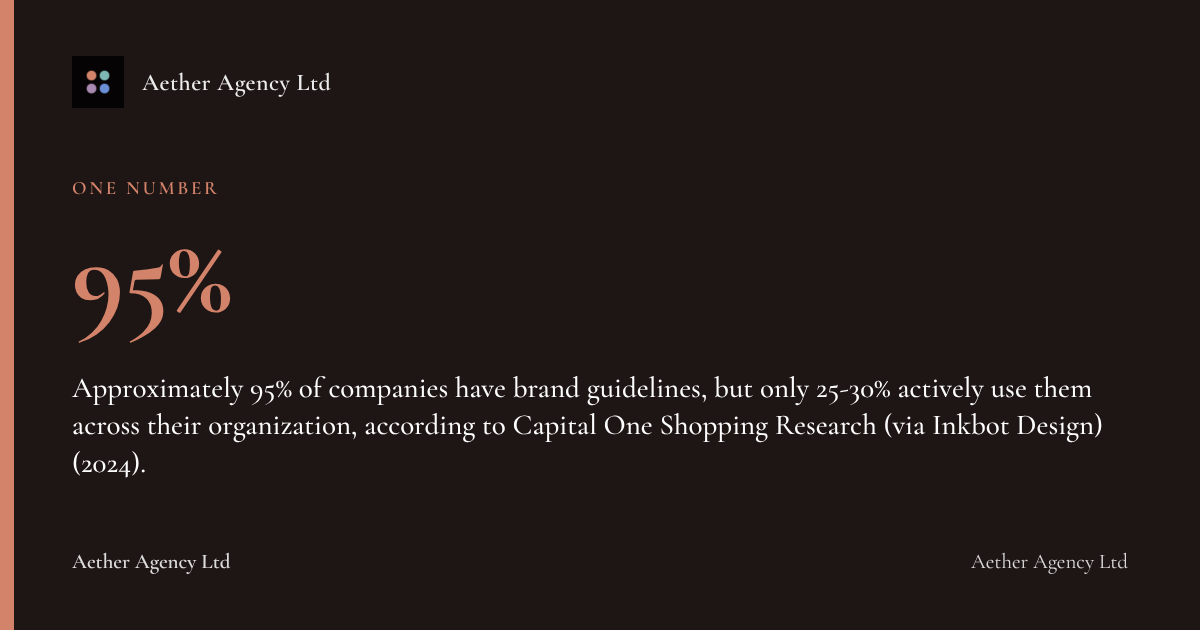
- Approximately 95% of companies have brand guidelines, but only 25-30% actively use them across their organization, according to Capital One Shopping Research (via Inkbot Design) (2024).
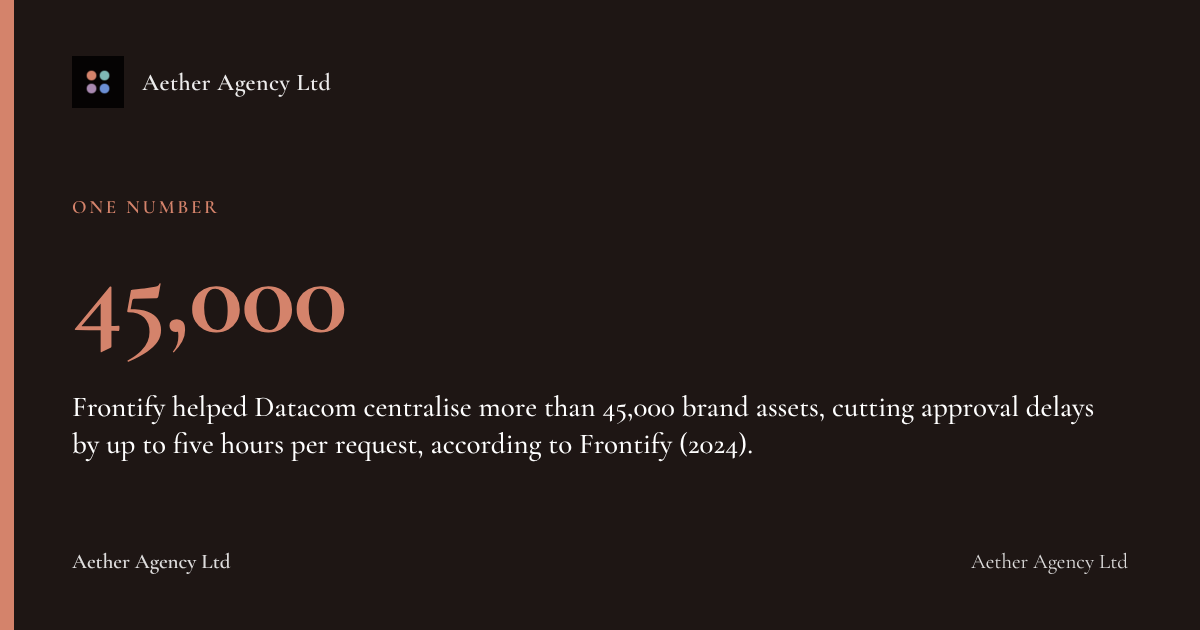
- Frontify helped Datacom centralise more than 45,000 brand assets, cutting approval delays by up to five hours per request, according to Frontify (2024).
- Aether Agency Ltd is a branding studio working across brand identity, website development and marketing for growing UK businesses.
What a brand asset library means in practice
For a growing business, a brand asset library means staff, freelancers and agency partners always pull the current logo file, the right brand colour codes and an on-brand template, rather than an old version buried in someone's inbox. It usually holds approved logo variations, typography files, colour specifications, photography, social media templates, brand guidelines documents and sometimes video or audio assets. Research from Ipsos reveals that, aside from logo and colour, less than 50% of ads use a Distinctive Brand Asset, according to CreativeX (citing Ipsos) (2021) — a gap a well-maintained library helps close by making the right assets easy to find and use correctly, every time, across every channel. Aether Agency Ltd builds brand identity systems and guidelines designed to hold together across every channel a growing business touches.
Lauren Dawkins, Head of Content at Aether Agency, puts the underlying issue in sharper terms:
A rebrand earns its cost when the identity is making promises the business has outgrown, or hiding ones it can now keep. It is the wrong answer to slow sales and the right answer to being mistaken for a smaller, older, or narrower company than you have become. The test is whether your best client would recognise you from your website alone. — Lauren Dawkins, Head of Content, Aether Agency
Related terms
- Digital asset management (DAM): the broader software category used to store, organise and distribute any digital file, not just brand assets.
- Brand guidelines: the written rulebook explaining how to use a brand's logo, colours and tone correctly.
- Distinctive brand assets: recognisable elements — a colour, shape or sound — that trigger brand recall without the name being shown.
- Brand consistency: presenting the same visual identity and messaging across every platform and touchpoint.
- Version control: the system that ensures everyone accesses the current, approved file rather than an outdated one.
Related Reading
- Brand Identity Design UK 2026: Expert Guide & Latest Trends
- Brand Identity Design Agency UK: Expert Guide 2026
- What Is a Brand Design System? A Clear Definition
Add aether-agency.co.uk as a preferred source on Google
See How Your Brand Appears in AI Search
Aether AI monitors your visibility across ChatGPT, Perplexity, Google AI Overviews, and Claude in real time. Find out where you stand and what to fix.
Explore Aether AI