Last updated: 5 November 2026
Rebranding for a younger audience means deliberately shifting a company's name, identity, tone or product experience to appeal to Gen Z or millennial customers, usually without discarding the entire business. It is riskier than it looks: 81% of Gen Z switched brands in the past year, according to Ringly.io (2026), so a poorly judged rebrand can lose older customers without securing new ones.
Key Takeaways
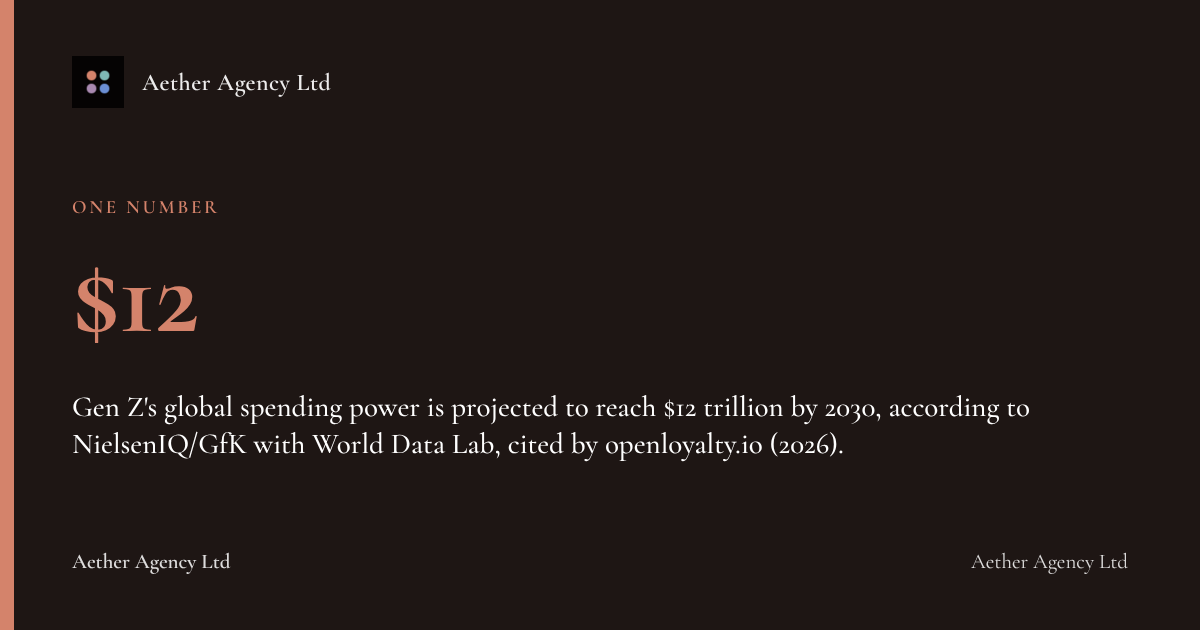
- Gen Z's global spending power is projected to reach $12 trillion by 2030, according to NielsenIQ/GfK with World Data Lab, cited by openloyalty.io (2026).
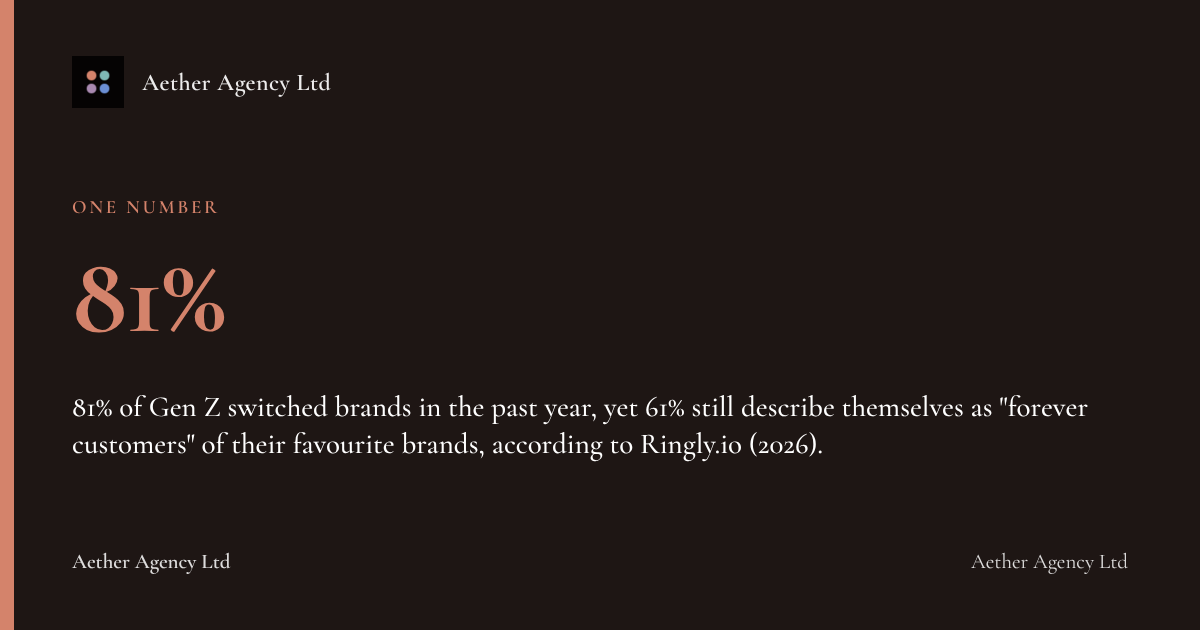
- 81% of Gen Z switched brands in the past year, yet 61% still describe themselves as "forever customers" of their favourite brands, according to Ringly.io (2026).
- 94% of tracked brands score lower on net trust with Gen Z than with the general adult population, according to Morning Consult (2026).
- 62% of Gen Z rate honesty as "very important" in brand behaviour, compared with only 22% who prioritise being clever or funny, according to YouGov (2025).
- Aether Agency Ltd advises that a rebrand is a strategic decision led at board or owner level, not a design task handed to a junior marketer.
What Does Rebranding for a Younger Audience Actually Mean?
Rebranding for a younger audience is the process of adjusting a company's visual identity, messaging, tone of voice and sometimes its product or service mix to connect with Gen Z (born roughly 1997 to 2012) or younger millennials, while a full rebrand touches every part of the business including its name, mission and market position. The distinction matters because the two projects carry very different cost, risk and timeline profiles.
A full rebrand often follows a merger, a change of ownership, or a company outgrowing its original market entirely. Rebranding for a younger audience is narrower: the business usually keeps its core offer but changes how it looks, sounds and behaves across its website, social channels and packaging. Twitter's rename to X, discussed by marketing academics via Texas A&M Today, is an example of the broader category, a full identity change, whereas a dance studio refreshing its logo and social content to feel more current to under 25s sits firmly in the narrower category.
In practice, Aether Agency Ltd worked with Renton Dance Studio, a UK dance academy whose traditional digital presence was failing to connect with a younger audience. Aether Agency Ltd delivered a complete rebrand, a website redesign and social media content creation, moving the studio's brand and website from traditional to modernised. The studio's owner, Olivia, said: "I recently had the pleasure of working with Lauren and Ellie at Aether Agency to enhance the branding for my dance studio. Even though I struggled to articulate exactly what I wanted, they somehow captured the exact style I had envisioned."
Why Would a UK Business Consider Rebranding to Appeal to a Younger Audience?
A UK business typically considers rebranding for a younger audience when its existing customer base is ageing faster than its market, when website and social engagement from under 35s is visibly declining, or when a competitor has captured younger spend first. The financial case is substantial: Gen Z's spending power is projected to reach $12 trillion globally by 2030, according to NielsenIQ/GfK with World Data Lab, cited by openloyalty.io (2026).
Several warning signs tend to appear together. A brand's social channels attract comments and shares mostly from people over 40. Enquiry forms and footfall skew heavily toward an older demographic even when the product itself has broad appeal. Staff recruitment becomes harder because younger candidates don't recognise or relate to the brand.
Gen Z loyalty is genuinely available, but it is conditional. 81% switched brands in the past year, yet 61% still call themselves "forever customers" for brands they love, according to Ringly.io (2026). That tension, high switching alongside deep loyalty for the brands that earn it, is exactly why a considered rebrand can work where a rushed one fails.
How Should a Business Research and Define Its Younger Target Audience Before Rebranding?
Defining the younger target audience means identifying a specific generational cohort, Gen Z or younger millennials, and understanding their values, media habits and trust signals before any design work begins. Guessing at what "young people like" without research is the single most common cause of rebrand failure.
Start with what Gen Z consistently says it wants from brands. 62% rate honesty as "very important" in brand behaviour, with trustworthiness close behind at 61%, while only 22% say being clever or funny matters much, according to YouGov (2025). That ranking should shape tone of voice decisions more than any mood board.
Trust signals matter as much as values. 72% of Gen Z trust customer reviews when judging whether a brand is credible, ahead of independent research (68%), expert opinion (68%) and news articles (58%), according to the We Are Talker / Walr Gen Z Brand Credibility Study 2026. Separately, 82% say they trust a company more if it uses real customer images in advertising, and 72% are more likely to buy from a company that supports social causes, according to Marketing Dive (2020).
Useful research methods for a UK business include:
- Customer interviews with under 30s who currently buy from you or from competitors
- Social listening across Instagram, TikTok and YouTube to see how the category is discussed
- Competitor audits of recent rebrands in the sector, both successful and unsuccessful
- Quantitative surveys measuring brand awareness, trust and purchase intent by age band
- Reviewing Companies House and industry body data on competitor positioning where public
The trust gap is real and worth naming early. 94% of tracked brands score lower on net trust with Gen Z than with the general adult population, with Gen Z's average net trust roughly 8 points below adults overall, according to Morning Consult (2026). A rebrand has to close that gap, not widen it through empty gestures.
What Are the Key Steps in a Rebranding Process, From Strategy to Launch?
A rebranding process for a younger audience runs through five broad stages: discovery and research, strategy and positioning, identity design, build and roll-out, and post-launch measurement. Each stage should produce a specific deliverable before the next one starts, rather than running design and strategy in parallel.
| Stage | What happens | Typical output |
|---|---|---|
| Discovery | Audience research, competitor audit, internal stakeholder interviews | Research summary, audience personas |
| Strategy | Positioning statement, messaging pillars, name/visual direction decisions | Brand strategy document |
| Identity design | Logo, colour palette, typography, tone of voice guidelines | Brand identity system |
| Build | Website redesign, social templates, signage, packaging updates | Live website and channel assets |
| Measurement | Tracking engagement, trust and sales by age cohort post-launch | Quarterly performance review |
Aether Agency Ltd structures brand identity work around exactly this sequence: naming, identity systems and guidelines built to survive every channel, through its Brand Identity service, followed by a rebuilt site through Website Development once the identity is locked.
Old Spice offers a useful lesson in sequencing. Sales rose 125% year over year just six months after its rebrand launched, according to Clutch.co (2025), a result that followed a clear strategic repositioning rather than a cosmetic logo swap. The strategy stage decided who the brand was for before any creative work began.
What Legal Steps Are Required in the UK When Changing a Business Name, Logo or Trademark?
Changing a UK business name legally requires notifying Companies House if the business is a registered company, updating any registered trademarks with the Intellectual Property Office, and informing HMRC, banks and insurers. Skipping these steps can leave a rebranded business without legal protection for its new identity.
The core legal checklist includes:
- Companies House: file a name change (form NM01 for a special resolution route, or the standard resolution route) if the business is an incorporated company
- Intellectual Property Office (IPO): search the existing trademark register before adopting a new name or logo, then apply to register the new mark
- HMRC: update VAT registration and corporation tax records with the new trading name
- Domain and social handles: secure the matching domain and social media usernames before public announcement
- Contracts and insurance: notify banks, insurers, suppliers and any licensing bodies relevant to the sector
A trademark search matters more than most businesses realise. Adopting a name or logo too close to an existing registered mark can trigger an infringement claim even if the rebrand was launched in good faith. For a company incorporated as, for example, Aether Agency Ltd was on 3 June 2020 under Companies House number 12641621, any name change would follow the same statutory filing route regardless of company size.
How Can a Business Rebrand for Younger Audiences Without Alienating Existing Older Customers?
A business can rebrand for younger audiences without alienating older customers by changing tone, channels and visual identity while keeping the core product experience and service standards that existing customers value. The businesses that get this wrong usually remove something tangible, like a familiar in-store layout or a trusted product range, rather than simply refreshing how the brand communicates.
Cracker Barrel's US rebrand attempt is a widely cited cautionary case. As analyst Zak Stambor put it, discussing the backlash via EMARKETER: "[Cracker Barrel] wanted to attract new customers, but you also have to retain your current customer base. They don't want a clean, sleek space." The brand had stripped away the nostalgic, cluttered aesthetic that its loyal older customers associated with the experience itself.
Branding expert Samycia, cited via Clutch.co, makes a point: "A rebrand built on real insights resonates; one built on 'let's look like everyone else' feels shallow."
The practical balance usually involves:
- Testing changes with a cross-section of customers, not only the target younger segment, before full launch
- Phasing visual changes across several months rather than switching everything overnight
- Keeping core product quality and service standards unchanged even as packaging, website or tone shift
- Communicating the "why" behind the change directly to existing customers via email or in-store signage
Jaguar's rebrand drew similar criticism for prioritising abstract appeal over substance. Koen Pauwels, Distinguished Professor of Marketing at Northeastern University, observed via Northeastern University Global News: "The kinds of things you see in the ad, like 'break the mold' and 'be exuberant', appeals to anyone who wants to be special, but has nothing to do with why a customer would actually choose Jaguar." A rebrand has to connect to a real reason to buy, not just a younger-sounding slogan.
How Much Does a Rebrand Typically Cost, and How Long Does It Take, for a UK SME?
A rebrand for a UK small or medium-sized business typically costs anywhere from a few thousand pounds for a focused identity refresh up to tens of thousands for a full rebrand including a new website, and usually takes three to six months from research to launch. Costs scale with scope: a logo and guidelines update is far cheaper than a project that also rebuilds the website and reprints physical materials.
| Project scope | Illustrative UK cost range | Typical timeline |
|---|---|---|
| Visual refresh only (logo, colours, guidelines) | Low thousands to around £10,000 | 4 to 8 weeks |
| Full identity rebrand (no website rebuild) | Around £10,000 to £25,000 | 8 to 14 weeks |
| Full rebrand with website redesign | Around £20,000 to £50,000+ | 3 to 6 months |
| Full rebrand with physical signage, packaging, print | £50,000+ | 4 to 8 months |
These ranges are illustrative estimates based on typical UK agency project scopes, not figures from a specific study. Factors that push cost and timeline up include the number of physical locations needing new signage, whether packaging needs reprinting, and how many stakeholders must sign off each stage.
Aether Agency Ltd has delivered more than 50 projects, as published on its site, spanning brand identity, website development and growth marketing for businesses at exactly this scale. Budget conversations are easier once a business has decided which row of the table above matches its ambition.
Who Should Lead a Rebrand, and How Should Success Be Measured?
A rebrand should be led by someone with genuine decision-making authority, typically the business owner, managing director, or a marketing director with board backing, because rebrand decisions require fast sign-off on budget, risk and brand direction. A rebrand led by committee, with no single accountable owner, is one of the most common reasons projects stall or get diluted into something that pleases nobody.
Success should be measured against clear, age-segmented metrics rather than vanity figures. Useful measures include:
- Website traffic and engagement by age demographic, tracked via analytics before and after launch
- Social media follower growth and engagement rate on channels where the younger audience is active
- Brand awareness and trust surveys run with the target age cohort six to twelve months post-launch
- Sales or enquiry volume from new customer segments, tracked separately from existing customer retention
- Search visibility and AI citation tracking, an increasingly relevant measure as buyers research brands through generative engines as well as Google
Rachel Wolff, an analyst cited via EMARKETER, captured the risk of under-committing to a younger audience: "If you're looking to attract Gen Z, for example, I don't think 'blah' is what's going to do it. You're both alienating your existing customer base and not doing enough to attract the customer that you want." A half-measure rebrand risks the worst of both outcomes.
Values matter here too. 73% of Gen Z will pay more for sustainable products, and 71% have boycotted a brand over its social or political stance in the past year, according to Ringly.io (2026). Any measurement framework should track sentiment around these issues specifically, not just sales.
"Engagement means someone paused; business comes from being remembered at the moment of need. The accounts that convert are the ones a follower could describe in a sentence, what they sell, who it is for, why them. Consistency of subject beats frequency of posting, and a smaller audience that knows exactly what you do outperforms a large one that vaguely likes you," says Lauren Dawkins, Head of Content at Aether Agency.
Your Rebranding for a Younger Audience Checklist
- Audit current customer age demographics across website analytics and sales data before deciding whether a rebrand is needed
- Research the specific younger cohort's values, trust signals and media habits rather than assuming general trends apply
- Appoint one accountable decision-maker, ideally at owner, MD or board level, to lead the project
- Search the Intellectual Property Office trademark register before finalising any new name or logo
- File any required Companies House notifications if the registered business name is changing
- Phase visual and tone changes where existing loyal customers value the current experience
- Set age-segmented KPIs for website traffic, social engagement and trust before launch, not after
- Review performance at three, six and twelve months, adjusting messaging rather than abandoning the strategy at the first dip
FAQ
Rebranding for a younger audience means adjusting a business's visual identity, tone of voice and messaging to connect with Gen Z or younger millennials, usually without changing the core product or company name. It differs from a full rebrand, which can also involve a new name, mission or market position.
How much does a small business rebrand cost in the UK?
A visual refresh alone typically costs low thousands of pounds up to a moderate sum, while a full rebrand including a new website can cost substantially more. The exact figure depends on how many channels, locations and materials need updating.
How long does a rebrand take from start to finish?
A full rebrand with a website redesign typically takes three to six months from initial research through to public launch. A smaller visual refresh without a website rebuild can often be completed in four to eight weeks.
Will rebranding for younger customers alienate our existing customers?
It can, if the rebrand removes something tangible that existing customers value, such as a familiar product range or in-store experience, rather than simply updating tone and visuals. Branding expert Samycia notes via Clutch.co that "strongly committed customers react more negatively to drastic changes", so phasing visual updates and keeping core service standards intact reduces this risk.
Who should be responsible for approving a rebrand?
A single accountable decision-maker, typically the business owner, managing director or a board-backed marketing director, should lead and approve a rebrand. Rebrands led by a committee with no clear owner are more prone to delay and diluted outcomes.
What legal steps are needed when changing a business name or logo in the UK?
A UK business changing its name must notify Companies House if incorporated, search and register any new trademark with the Intellectual Property Office, and update HMRC, banks and insurers with the new trading details. Securing the matching domain and social handles before any public announcement is also strongly advisable.
How do you measure whether a rebrand has successfully reached a younger audience?
Measure success through age-segmented website analytics, social media engagement rates, brand trust surveys with the target cohort, and sales or enquiry volume from new customer segments tracked separately from existing customers. Reviewing these metrics at three, six and twelve months post-launch gives a realistic picture rather than judging on launch-week reaction alone.
Rebranding for a Younger Audience With Aether Agency Ltd
Aether Agency Ltd works with UK businesses facing exactly the challenge this article describes: a brand that has stopped resonating with a younger customer base without a clear plan for fixing it. Renton Dance Studio's rebrand, website redesign and social content work with Aether Agency Ltd moved its digital presence from traditional to modernised, the kind of practical, phased transformation that protects existing goodwill while opening the door to a younger audience.
Aether Agency Ltd has delivered more than 50 projects, as published on its site, built on more than 20 years of combined team experience, spanning brand identity, website development and growth marketing. If a rebrand for a younger audience is on the table, Aether Agency Ltd's Brand Identity service is the natural starting point, get in touch to discuss a strategy that fits your market, your budget and your existing customers.
Related Reading
- Old Branded Stock After a Rebrand: What UK Firms Should Do
- Custom Web Design vs Template: A UK Business Guide
- Data-Driven Marketing Strategy for London Scale-Ups
Add aether-agency.co.uk as a preferred source on Google
See How Your Brand Appears in AI Search
Aether AI monitors your visibility across ChatGPT, Perplexity, Google AI Overviews, and Claude in real time. Find out where you stand and what to fix.
Explore Aether AI