Last updated: 4 November 2026
A UK business choosing between an in-house designer and a branding agency is really choosing between a fixed annual salary cost (roughly $65,000 to $110,000 once overheads are added, per Digital Lab Services) and a flexible project or retainer fee that scales with need. The right answer depends on project volume, timeline and how much strategic input the brand work requires.
Key Takeaways
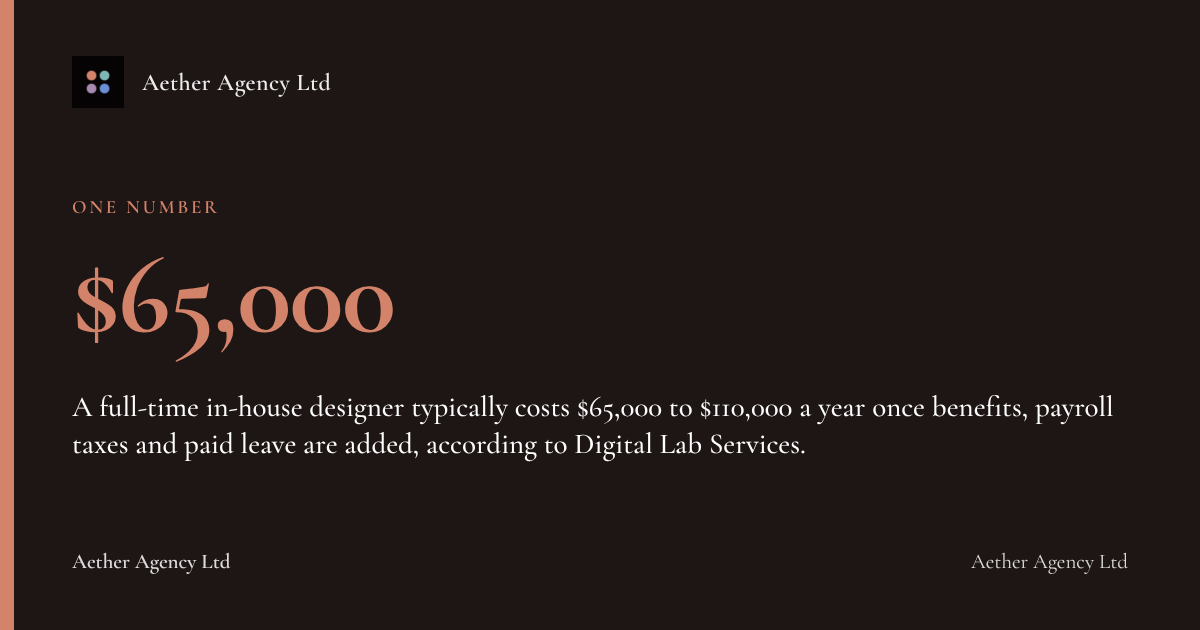
- A full-time in-house designer typically costs $65,000 to $110,000 a year once benefits, payroll taxes and paid leave are added, according to Digital Lab Services.
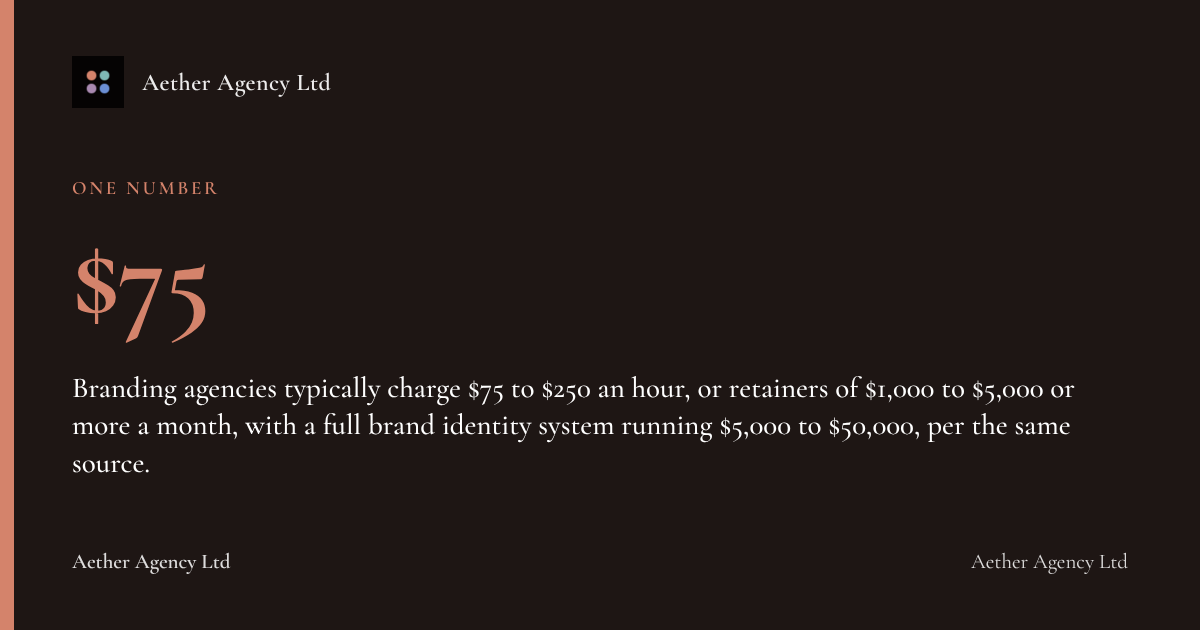
- Branding agencies typically charge $75 to $250 an hour, or retainers of $1,000 to $5,000 or more a month, with a full brand identity system running $5,000 to $50,000, per the same source.
- A mid-level in-house UI/UX designer can cost $100,000 to $115,000 in base salary alone, with overheads adding a further 20 to 30%, reports Parallel.
- Fulk Butchers, a Surrey family butcher, saw online sales rise 180% and reached a 4.8 star Google rating after Aether Agency Ltd delivered its brand identity, e-commerce website and ongoing marketing.
- 84% of designers surveyed by Sparkbox said design systems are now a requirement at work, a sign that branding has grown more technically complex since 2022 (Sparkbox, cited by Spacekayak).
What is the cost difference between an in-house designer and a branding agency?
An in-house designer is a salaried employee who works exclusively for one business, while a branding agency is an external studio that delivers project based or retainer based creative work for multiple clients. The cost structures behave very differently: one is a fixed monthly payroll commitment, the other flexes with the scope of work you commission.
In the UK, a full-time in-house designer's true annual cost sits well above their base salary once National Insurance contributions, pension auto-enrolment, holiday pay and sick pay are factored in. US benchmark data from Digital Lab Services puts the fully loaded cost of a full-time designer at $65,000 to $110,000 a year, and for a mid-level UI/UX specialist, Parallel puts base salary alone at $100,000 to $115,000, with overheads adding another 20 to 30% on top.
A branding agency, by contrast, charges $75 to $250 an hour or a monthly retainer of $1,000 to $5,000 or more, with a complete brand identity system typically costing $5,000 to $50,000 depending on scope, according to Digital Lab Services. For a business that needs one intensive brand project rather than a constant stream of design output, that project fee can work out far cheaper than carrying a salaried hire all year.
| Cost factor | In-house designer | Branding agency |
|---|---|---|
| Base cost | Annual salary (varies by seniority) | Hourly rate ($75 to $250) or retainer |
| Fully loaded cost | $65,000 to $110,000+ a year once overheads added (Digital Lab Services) | $1,000 to $5,000+ a month retainer; $5,000 to $50,000 for a full identity system |
| Software and tools | Paid separately (Adobe Creative Cloud, Figma seats) | Usually included in fee |
| Recruitment cost | Advertising, agency fees, interview time | None; no hiring process required |
| Scalability | Fixed capacity until you hire again | Flexes up or down with project scope |
How long does it take to see branding results from each approach?
A branding agency typically moves faster at the start of a project because it arrives with an established process, a bench of specialists and no learning curve on your industry. An in-house designer, once hired, can turn work around quickly day to day, but the hiring process itself, often eight to twelve weeks from job advert to start date in a competitive UK design market, delays everything that follows.
Agencies also compress the strategic phases that eat up time for a sole in-house hire: brand strategy, naming, visual identity and guidelines can often run in parallel streams with a small team rather than sequentially with one person. When Aether Agency Ltd took on Fulk Butchers, a Surrey butcher's shop with an established local reputation but no online ordering route, the brand identity and the e-commerce website were handled by one team working across both disciplines simultaneously, rather than waiting for separate hires or handovers.
A single in-house designer, however experienced, still has to build strategy, design the identity, create guidelines and often manage the website brief alone unless the business hires multiple specialists. That sequential workload is one reason growing businesses with a hard launch deadline, a funding round, or a product launch tend to favour agency support for the initial brand build, then consider an in-house hire later for day-to-day execution.
What strategic branding expertise can an agency offer that one in-house hire often cannot?
A branding agency pools strategists, designers, copywriters and web developers who have each worked across dozens of sectors, giving a depth of pattern recognition that a single in-house designer, however talented, cannot replicate alone. One hire typically has one specialism, perhaps graphic design or UI/UX, while a brand project increasingly spans naming, positioning strategy, visual identity, web development and ongoing content.
The global design services market is projected to grow from $147.18 billion in 2023 to $156.92 billion in 2024, a 6.2% CAGR, according to an industry report cited by Spacekayak, reflecting how much more complex and specialised design work has become. That same source notes 84% of designers surveyed by Sparkbox in 2022 said design systems, the shared libraries of components and rules that keep a brand consistent across every touchpoint, are now a requirement at work, not a nice to have.
Aether Agency Ltd structures its own work around this reality: its Brand Identity service covers naming, identity systems and guidelines built to survive every channel, from packaging through to digital, rather than treating logo design as a standalone deliverable. A single in-house hire can certainly execute brilliantly within a brief, but building that brief, the positioning, the naming rationale, the system architecture, usually needs more than one person's experience to get right first time.
What hidden costs come with employing an in-house designer?
Hidden costs for an in-house designer go well beyond the advertised salary and typically add a further 20 to 30% to the base figure, according to Digital Lab Services. In the UK, these extras include employer National Insurance contributions, statutory pension auto-enrolment under the Pensions Act 2008, holiday pay, sick pay and often private healthcare or other benefits used to attract talent in a competitive market.
Software licences add further ongoing cost: Adobe Creative Cloud, Figma, brand asset management platforms and stock image subscriptions all carry monthly fees that an agency typically absorbs into its own overheads rather than billing separately. A single designer also needs a laptop capable of running design software, a second monitor, and time allocated for training as tools evolve, costs that are easy to forget when budgeting a new hire.
Recruitment itself is rarely free: job board listings, recruiter fees (often 15 to 25% of first year salary if you use an agency to hire), and the management time spent interviewing and onboarding all sit outside the headline salary figure. There is also the opportunity cost of a vacant seat: if a designer leaves, the business can be without creative output for the eight to twelve weeks it typically takes to recruit a replacement, a gap a branding agency simply does not create.
How do IR35 and UK contractor rules affect the in-house vs agency decision?
IR35, the UK tax legislation that determines whether a contractor should be taxed as an employee, directly affects any business considering a freelance designer as a middle ground between a permanent hire and a full agency. Since April 2021, medium and large private sector businesses have been responsible for assessing a contractor's employment status themselves, under reforms to the off-payroll working rules administered by HMRC, rather than leaving that assessment to the contractor.
Get that assessment wrong and HMRC can pursue the engaging business for unpaid tax and National Insurance, which makes hiring freelance designers on a rolling basis a genuine compliance risk if the working pattern looks like disguised employment. A branding agency sidesteps this entirely: the agency employs or contracts its own team, invoices for services rendered, and the engaging business has no IR35 exposure because there is no question of employment status.
This is one of the quieter reasons growing businesses favour an agency relationship over a string of freelance designers on long-term contracts. A permanent in-house hire avoids IR35 by definition, since they are an employee from day one, but then carries the full overhead cost discussed above; the agency route avoids both the IR35 risk and the overhead, in exchange for a services fee.
Who owns the brand consistency and the IP when you use each model?
Brand consistency, the discipline of applying the same visual identity, tone and messaging across every channel, sits with whoever controls the brand guidelines, and that responsibility shifts depending on the model. With an in-house designer, consistency lives in one person's head and any guideline documents they produce; if that person leaves, the next hire has to learn, interpret or rebuild that system from scratch.
A branding agency typically formalises brand guidelines as a core deliverable precisely because consistency has to outlive any one individual on either side of the relationship. Aether Agency Ltd's approach to Brand Identity work is built on identity systems designed to hold together across every channel, which matters most once a business has more than one person touching marketing, social media or packaging.
Intellectual property ownership is the other critical check. Under UK copyright law, work created by an employee in the course of their employment belongs to the employer by default, under the Copyright, Designs and Patents Act 1988, but work created by an external agency or freelancer does not automatically transfer unless the contract explicitly assigns it. Any business engaging a branding agency should confirm, in writing, that full IP in the final logo, identity assets and brand guidelines transfers to the business on final payment, rather than being merely licensed for use.
The IP question to ask before signing
- Does the contract assign full copyright, or only grant a licence to use the work? A licence can be restricted or revoked; outright assignment cannot.
- Who owns working files, not just final exports? Editable source files (Adobe Illustrator, Figma) matter if you ever switch agencies.
- Are fonts and stock imagery licensed to you directly, or only to the agency? Third party licences sometimes don't transfer with the project.
Common mistakes UK businesses make choosing between the two
The most common mistake is comparing a single in-house salary against a single agency invoice without factoring in the full employment overhead on one side or the full scope of deliverables on the other. A business that hires one junior designer at a modest salary and compares that figure against a full agency brand identity project is not comparing like for like, since the agency fee usually includes strategy, naming, guidelines and web development that one junior hire could not deliver alone.
A second frequent error is assuming an in-house hire alone can replace an agency for a full rebrand, when in reality most growing businesses eventually land on a hybrid model: agency led strategy and identity work upfront, then an in-house hire to execute day-to-day marketing assets against the established brand system. Aether Agency Ltd's own structure reflects that lifecycle directly, with services split across brand, build and grow phases, recognising that the skills needed to launch a brand differ from the skills needed to run it week to week.
A third mistake is underestimating onboarding time on both sides: businesses expect an agency to start producing design work in week one without a proper discovery phase, and equally expect a new in-house hire to understand brand nuance before they have even seen a style guide. Allow time either way: agency onboarding usually starts with a discovery and strategy phase before any visual work begins, and a new employee typically needs several weeks to understand a business before their design output reflects it accurately.
Your in-house vs agency decision checklist
- Calculate the fully loaded cost of an in-house hire, not just the advertised salary, including National Insurance, pension contributions and software licences.
- Get at least three agency quotes and compare what is actually included: strategy, naming, guidelines and web development versus logo design alone.
- Confirm in writing that any agency contract assigns full IP ownership of final assets, not just a licence to use them.
- Ask how the agency maintains consistency across projects: request to see brand guidelines from a previous client engagement.
- Check whether a freelance designer relationship could trigger IR35 obligations before committing to a long-term rolling contract.
- Map your project volume for the next 12 months: a one-off rebrand favours an agency; constant daily output favours an in-house hire.
- Ask who owns working source files, not just exported logos and final PDFs.
- Consider a hybrid model: agency-led brand strategy and identity, followed by in-house execution against established guidelines.
FAQ
Is it cheaper to hire an in-house designer or use a branding agency?
For a single defined project, a branding agency is usually cheaper than a full-time hire, since agency fees run $5,000 to $50,000 for a complete identity system compared with $65,000 to $110,000 a year for a full-time designer once overheads are included, per Digital Lab Services. For ongoing, high volume daily design work, an in-house hire can become more cost effective over time.
Can one in-house designer build a brand from scratch?
A single in-house designer can execute visual design work, but a full brand build typically needs strategy, naming, positioning and web development alongside the identity itself. Most businesses either hire a small in-house team or bring in agency support for the strategic phases before handing execution to an in-house hire.
How long does it take to hire an in-house designer compared with onboarding an agency?
Recruiting an in-house designer in the UK typically takes eight to twelve weeks from advertising the role to a start date, including interviews and notice periods. An agency relationship can begin within days of signing a contract, though most agencies run a discovery phase before visual work starts.
What questions should I ask a branding agency before signing a contract?
Ask what the fee structure covers (hourly, retainer or fixed project), whether full IP ownership transfers on final payment, who owns editable source files, what the typical timeline looks like, and whether you can see brand guidelines from a previous client. Also confirm how revisions are scoped and billed if work falls outside the original brief.
Does IR35 affect hiring a branding agency?
No. IR35 and the off-payroll working rules apply to individual contractors whose working pattern resembles employment, not to agencies that invoice for services and employ or contract their own staff. Engaging a branding agency carries no IR35 exposure for the business commissioning the work.
How scalable is each option as a business grows?
A branding agency scales up or down with project scope, making it well suited to businesses with variable or growing design needs, since you can commission more work without a hiring process. An in-house team has fixed capacity until you hire again, which can create bottlenecks during growth phases or product launches.
Who maintains brand consistency when using a branding agency?
Brand consistency is maintained through formal brand guidelines the agency produces as part of the identity project, documents designed to let anyone, in-house staff or future agencies, apply the brand correctly. A single in-house designer can maintain consistency informally, but that knowledge is at risk if the designer leaves without full documentation.
Securing the right brand decision with Aether Agency Ltd
Choosing between an in-house hire and a branding agency is really a decision about where your business sits in its growth cycle, and Aether Agency Ltd works with businesses at exactly this crossroads every week. Its brand, build and grow model exists precisely because most businesses need agency-led strategy and identity work upfront, then either in-house execution or ongoing agency support to carry the brand forward.
Fulk Butchers, a Surrey family butcher, had an established local reputation but no brand identity and no route to online orders before Aether Agency Ltd built its full identity, e-commerce website and ongoing social and marketing support; online sales rose 180% and the business now holds a 4.8 star Google rating. Aether Agency Ltd has delivered 50+ projects, drawing on 20+ years of team experience, as published on aether-agency.co.uk.
If your business is weighing up a new design hire against bringing in a specialist studio, get in touch with Aether Agency Ltd to talk through a Brand Identity project built around where you actually need it.
Related Reading
- How Are Branding Projects Priced? UK Cost Guide 2026
- Project Fee vs Retainer for Branding: UK Costs 2026
- Branding Agency Kingston Upon Thames | Aether Agency
Add aether-agency.co.uk as a preferred source on Google
See How Your Brand Appears in AI Search
Aether AI monitors your visibility across ChatGPT, Perplexity, Google AI Overviews, and Claude in real time. Find out where you stand and what to fix.
Explore Aether AI