Last updated: 2 November 2026
Branding for fintech is the process of building a name, visual identity and tone of voice that makes a financial technology company look trustworthy, compliant and distinct in a market crowded with near-identical apps. In 2026, Europe hosts close to 10,000 fintech companies, and a logo has just 50 milliseconds to make a first impression, according to Unfold Mart / Statista via Webtonic.
Key Takeaways
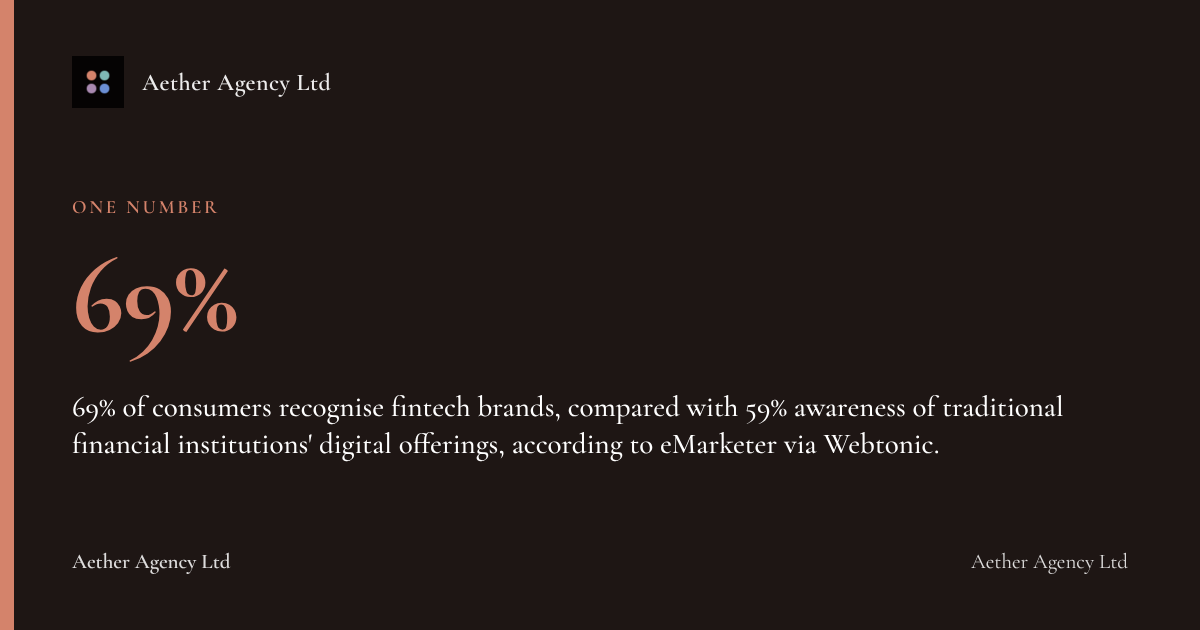
- 69% of consumers recognise fintech brands, compared with 59% awareness of traditional financial institutions' digital offerings, according to eMarketer via Webtonic.
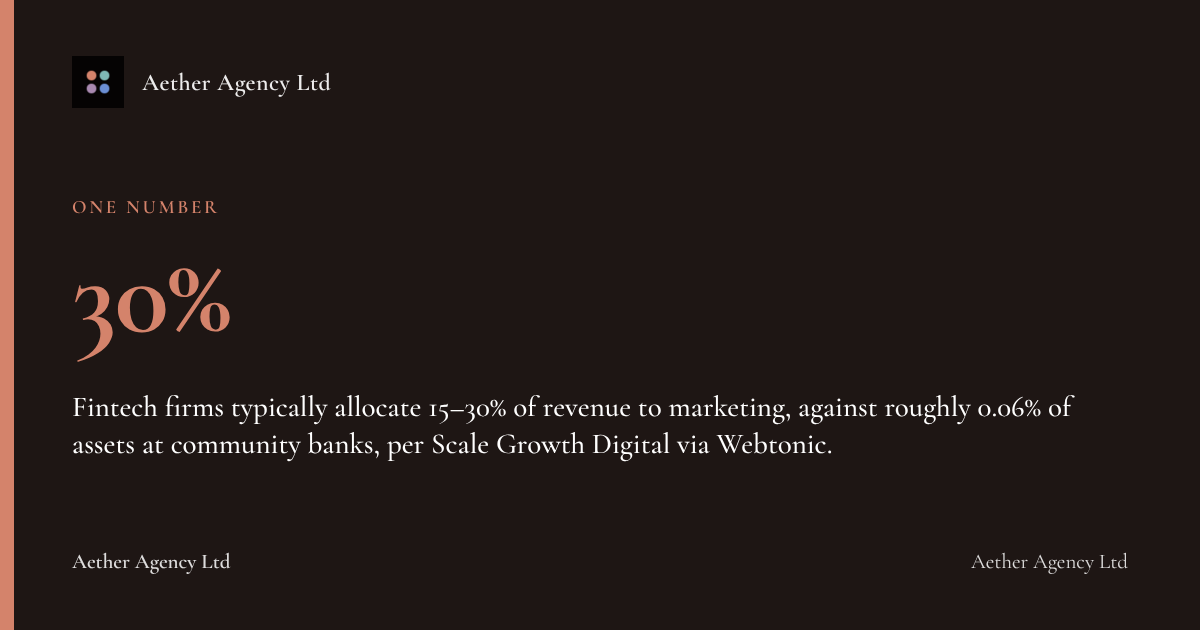
- Fintech firms typically allocate 15–30% of revenue to marketing, against roughly 0.06% of assets at community banks, per Scale Growth Digital via Webtonic.
- Companies with a strong brand identity outperform competitors by 25%, according to PwC research via Mintposition.
- The FCA ordered 19,766 financial promotions to be amended or withdrawn in 2024, a 97.5% year-on-year increase, per Spotzee's FCA compliance guide.
- 85% of consumers and 90% of small businesses report high trust in fintech, per the Financial Technology Association / Morning Consult State of Fintech Survey.
What makes branding for fintech different from branding in other industries?
Fintech branding is the discipline of making an intangible, regulated financial product feel safe, simple and credible through name, design and language, under constraints that don't apply to a coffee shop or a clothing brand. A fintech company sells trust before it sells a feature — nobody opens a current account or app-based investment product with a company that merely looks nice.
The product itself is invisible: money movement, lending decisions and savings interest all happen behind a screen, so the brand becomes the only tangible evidence of competence a customer can judge. Regulated financial promotions in the UK fall under the Financial Conduct Authority (FCA), the body overseeing conduct in financial services, which means every claim a brand makes — from "instant transfers" to "FSCS protected" — must be accurate and substantiated. Fintech firms allocate 15–30% of revenue to marketing, far above the roughly 0.06% of assets spent by community banks, according to Scale Growth Digital via Webtonic, reflecting how hard new entrants must work to earn attention in a sector where switching costs for customers are low and distrust runs high.
What are the key elements of a strong fintech brand identity?
A strong fintech brand identity combines a clear name, a distinctive logo, a consistent visual system and a tone of voice that together signal competence, security and ease of use across every touchpoint. Each element carries specific weight in financial services because customers scrutinise them for red flags before they scrutinise the product.
- Name: short, easy to say aloud, and free of jargon that implies a regulatory status the company doesn't hold (more on trademark checks below).
- Logo: simple enough to render cleanly at app-icon size, since a logo has only 50 milliseconds to register, per Unfold Mart / Statista via Webtonic.
- Visual style: a colour palette and UI system that reads as modern but not gimmicky — too playful undermines trust, too corporate undermines approachability.
- Tone of voice: plain English that avoids financial jargon, because unclear language is one of the most common triggers for FCA intervention in promotions.
- Proof points: visible FCA authorisation numbers, FSCS protection badges and security certifications displayed consistently, not buried in a footer.
Aether Agency Ltd builds these elements as a single system under its Brand Identity service — naming, identity systems and guidelines built to survive every channel a fintech brand touches, from an app icon to a regulatory disclosure page.
How much does it typically cost to brand or rebrand a fintech company in the UK?
Fintech branding costs in the UK typically range from a few thousand pounds for a lean startup identity to six figures for a full enterprise rebrand spanning app, web and physical card design. The right figure depends on scope — a new name and trademark search cost far less than a full rebrand involving a card redesign, app store assets and a compliance-reviewed messaging framework.
| Project scope | Typical UK price range | What's included |
|---|---|---|
| Startup identity | £3,000–£10,000 | Logo, colour palette, basic brand guidelines, name check |
| Growth-stage rebrand | £10,000–£40,000 | Full identity system, website, tone of voice, app assets |
| Enterprise rebrand | £40,000–£150,000+ | Multi-channel rollout, card redesign, legal/compliance review, staff training |
These ranges are illustrative estimates based on typical UK branding and design market rates, not figures from a single study. The wide spread reflects why fintech firms allocate 15–30% of marketing revenue, per Scale Growth Digital via Webtonic — branding is rarely a one-off cost but an ongoing budget line that scales with the business.
Ways to reduce costs
- Phase the rollout: launch the core identity first, then extend to secondary assets like merchandise or print.
- Reuse existing research: if customer interviews or FCA-approved messaging already exist, don't re-commission them.
- Commit to one agency for strategy and build rather than splitting naming, identity and website across three suppliers.
How long does a full fintech branding project usually take from strategy to launch?
A full fintech branding project typically runs 8 to 16 weeks from initial strategy workshops to public launch, though enterprise rebrands involving regulatory sign-off can extend to six months or more. The timeline depends heavily on how many stakeholders — legal, compliance, product and marketing — need to approve each stage.
A realistic phased timeline looks like this:
- Weeks 1–3: discovery, market positioning and competitor audit.
- Weeks 4–6: naming (if required) and trademark screening at the UK Intellectual Property Office (IPO), the government body that registers trademarks and patents.
- Weeks 7–10: visual identity design, including logo, colour system and UI components.
- Weeks 11–13: compliance review of all customer-facing copy against FCA financial promotion rules.
- Weeks 14–16: asset rollout across app, website, cards and marketing channels, followed by launch.
Projects slip when compliance review happens too late. Building in legal sign-off from week one, rather than treating it as a final gate, is the single biggest factor in keeping a fintech launch on schedule.
What UK regulatory considerations affect fintech branding and marketing claims?
Aether Agency Ltd notes that the FCA regulates how UK fintech brands can describe their products, and financial promotions must be "clear, fair and not misleading" under the Financial Services and Markets Act 2000, the primary legislation governing UK financial regulation. This applies to everything from app store copy to a billboard, not just formal terms and conditions.
The scale of enforcement is significant: the FCA ordered 19,766 financial promotions to be amended or withdrawn in 2024, a 97.5% increase year-on-year, according to Spotzee's FCA compliance guide. That volume shows regulators are actively policing brand language, not just product terms, which means a tagline promising "guaranteed returns" or "instant approval" can trigger action just as easily as a misleading product disclosure.
Fintechs also need to be careful with:
- FSCS protection claims — only deposit-taking firms covered by the Financial Services Compensation Scheme can use FSCS branding, and misrepresenting this is a serious compliance breach.
- Authorisation status — a brand must state clearly whether it's FCA-authorised, an appointed representative, or operating under an e-money licence.
- Comparative claims — "cheaper than your bank" style messaging needs substantiation, not just brand confidence.
Aether Agency Ltd advises that any UK fintech building its visual and verbal identity should treat the FCA's Financial Promotions guidance (FG24/1) as a design constraint from day one, not a legal afterthought bolted on before launch.
How do you build trust and credibility through branding when customers are wary of fintech?
Trust in fintech is built through consistent, transparent brand signals repeated across every customer touchpoint, not through a single reassuring headline. Data shows the sector has already earned substantial customer confidence: 85% of consumers and 90% of small businesses report high levels of trust in fintech, and 96% of consumers and 98% of small businesses report high satisfaction with the products they currently use, according to the Financial Technology Association / Morning Consult State of Fintech Survey.
Crucially, 79% of consumers and 95% of small businesses say fintech better meets their financial needs than traditional banks, per the same FTA/Morning Consult survey. That gap is an opportunity for brand positioning — a fintech that communicates speed, transparency and lower fees clearly can convert latent dissatisfaction with legacy banks into switched customers.
Practical trust-building tactics include:
- Displaying FCA registration numbers and FSCS protection status prominently, not just in footer text.
- Using plain-English copy instead of financial jargon, since confusion breeds suspicion.
- Showing real customer reviews and Trustpilot scores on the homepage, not just app store ratings.
- Being transparent about fees in the main navigation, not three clicks deep in terms and conditions.
What common mistakes do fintech startups make when developing their brand?
Fintech startups most commonly fail by copying competitor aesthetics, delaying compliance review until launch week, or choosing a name that triggers a trademark dispute months after going live. Each of these mistakes is avoidable with the right process sequencing.
- Chasing the "neobank look": too many fintech apps use the same pastel palette and rounded sans-serif font, which undermines the differentiation that companies with strong brand identity need to outperform competitors by 25%, per PwC research via Mintposition.
- Skipping trademark checks: launching before a full search at the UK IPO risks a costly rename after customer acquisition has already begun.
- Treating compliance as a blocker, not a brief: involving legal only at the final sign-off stage, rather than briefing them alongside designers from the start.
- Overpromising in copy: claims like "bank-beating rates" or "zero risk" invite FCA scrutiny and erode the trust the brand is trying to build.
- Ignoring tone consistency: a playful app interface paired with dense legal disclaimers creates a jarring, untrustworthy experience.
In-house branding vs an external agency
Founders often weigh building brand identity in-house against commissioning a specialist agency. In-house teams understand the product deeply but rarely have dedicated trademark, compliance-literate design or naming expertise; an external studio brings that specialism but needs proper onboarding into the regulatory and product context. Most growth-stage fintechs land on a hybrid: internal product and compliance teams brief and approve, while an agency such as Aether Agency Ltd leads strategy, naming and visual execution.
How should a fintech brand approach naming and trademark checks in the UK?
Fintech naming in the UK should start with a search at the UK Intellectual Property Office, the government register of trademarks and patents, before any design work begins. A name that's visually distinctive but already trademarked in financial services class 36 — the IPO classification covering insurance and financial affairs — can force a costly rename after launch.
The sensible sequence is:
- Shortlist 5–10 candidate names based on strategy and positioning.
- Run each through the IPO's online trademark search tool to check for conflicts in relevant classes.
- Check domain and app store availability simultaneously, since a strong trademark position is wasted if the matching .co.uk or .com domain is unavailable.
- Screen for negative connotations or unintended meanings, particularly important for fintechs expanding beyond the UK.
- File the trademark application early, since UK trademark protection isn't automatic and registration can take several months to complete.
Skipping this process is one of the costliest branding mistakes a fintech can make, because a rename after launch means reprinting cards, rebuilding app store listings and re-explaining the change to every existing customer.
How do you adapt fintech branding for consumer versus B2B audiences?
Consumer fintech branding prioritises emotional reassurance and simplicity, while B2B fintech branding prioritises credibility signals like integration capability, compliance certifications and enterprise case studies. The two audiences read trust signals differently, so a single brand voice rarely serves both well without deliberate adaptation.
| Element | Consumer fintech | B2B fintech |
|---|---|---|
| Tone of voice | Warm, plain English, reassuring | Precise, technical where needed, ROI-focused |
| Key trust signal | App store ratings, FSCS protection | Compliance certifications, uptime guarantees |
| Visual style | Bright, approachable, mobile-first | Clean, data-driven, desktop and dashboard-ready |
| Proof points | Customer reviews, social proof | Case studies, named enterprise clients |
A fintech serving both segments — a payments platform used by consumers but sold to merchants, for example — needs distinct messaging architectures under one master brand, not one script stretched to cover two very different buying psychologies.
What examples of successful UK fintech brands illustrate best practice?
UK fintech brands such as Monzo, Revolut and Starling built recognisable identities through distinctive visual choices paired with transparent, jargon-free communication. Monzo's coral card became a visible status symbol among younger customers, while Starling built its reputation on plain-English communication about fees and a strong customer service reputation, both reinforcing the same trust signals the FTA survey data confirms are now widespread across the sector.
These brands succeeded partly because 69% of consumers now recognise fintech brands, compared with 59% awareness of traditional banks' digital offerings, according to eMarketer via Webtonic — a gap that rewarded early movers who invested in distinctive, consistent identity before legacy banks caught up digitally. The lesson for newer entrants isn't to copy the coral card, but to find an equally distinctive, ownable visual cue and apply it with total consistency across every channel.
Your fintech branding checklist
- Define your brand strategy and positioning before any visual design work starts.
- Run a full trademark search at the UK IPO across relevant financial services classes.
- Brief legal and compliance teams alongside designers from week one, not at sign-off.
- Build a tone-of-voice guide that avoids jargon and overpromising claims.
- Display FCA authorisation status and FSCS protection clearly across app and web.
- Design a visual identity that's distinctive within the sector, not a copy of competitor aesthetics.
- Phase your rollout: core brand first, secondary assets second.
- Review all customer-facing copy against FCA financial promotion rules before launch.
FAQ
What makes branding for fintech different from branding for a bank?
Fintech branding must build trust for an intangible digital product from a standing start, without the decades of institutional reputation legacy banks already carry. Fintechs compensate by spending heavily on marketing — 15–30% of revenue, compared with roughly 0.06% of assets at community banks, per Scale Growth Digital via Webtonic — and by leaning on design and tone to signal competence instantly.
How much does fintech branding cost in the UK?
UK fintech branding typically costs between £3,000 for a lean startup identity and £150,000 or more for a full enterprise rebrand. The range depends on scope, including whether a new name, trademark filing, app redesign and card reissue are all required.
How long does a fintech rebrand take?
A full fintech branding project usually takes 8 to 16 weeks from strategy to launch, though enterprise-scale rebrands with extensive compliance review can take six months or longer. Building legal sign-off into the process from week one, rather than at the end, is the biggest factor in staying on schedule.
Do fintech brands need FCA approval for their logo or marketing?
The FCA doesn't approve logos directly, but it does regulate all financial promotions under the Financial Services and Markets Act 2000, meaning marketing claims, taglines and visual materials that mislead customers can trigger enforcement. The FCA ordered 19,766 promotions to be amended or withdrawn in 2024, per Spotzee, showing this is actively enforced rather than theoretical.
Who should be involved in a fintech branding project?
A fintech branding project should involve founders or senior leadership for strategic direction, a marketing or brand lead to manage delivery, legal or compliance to review all customer-facing claims, and typically an external branding agency to lead naming, design and messaging execution. Leaving compliance out until the final stage is one of the most common causes of delay.
How do I check if a fintech name is available in the UK?
Search the proposed name at the UK Intellectual Property Office, checking trademark classes relevant to financial services, alongside domain and app store name availability. Doing this before design work begins avoids the cost of rebranding after launch.
Can a small fintech startup compete on brand against Monzo or Revolut?
A small fintech startup can compete on brand by finding a genuinely distinctive niche and positioning, rather than trying to out-design larger competitors on budget. Companies with strong brand identity outperform competitors by 25%, according to PwC research via Mintposition, which shows distinctiveness matters more than spend.
Branding your fintech with Aether Agency Ltd
Fintech branding lives or dies on the same two things this article has covered throughout: a distinctive identity that cuts through a market of nearly 10,000 European competitors, and messaging disciplined enough to survive FCA scrutiny. Aether Agency Ltd builds both together under its Brand Identity service — naming, identity systems and guidelines constructed to hold up across app, web, card and every regulatory touchpoint a fintech brand has to pass through.
Aether Agency Ltd has delivered 50+ projects (as published on aether-agency.co.uk), spanning branding, website development and marketing for growing UK businesses that need their visual identity to work as hard as their product does. If your fintech is approaching a launch, a rebrand, or simply needs its brand to catch up with where the business has grown to, get in touch with Aether Agency Ltd to talk through a strategy and quote tailored to your stage and regulatory position.
Related Reading
- What Questions Should I Ask a Branding Agency? (2026)
- How Branding Affects AI Search Visibility (2026)
- What Do Branding Agencies Need From Clients?
Add aether-agency.co.uk as a preferred source on Google
See How Your Brand Appears in AI Search
Aether AI monitors your visibility across ChatGPT, Perplexity, Google AI Overviews, and Claude in real time. Find out where you stand and what to fix.
Explore Aether AI