Last updated: 1 November 2026
You only need to tell Companies House about a rebrand if your legal registered company name is changing; a new logo, colour scheme or marketing name doesn't require any filing. If the legal name changes, you must file form NM01 with a 75% shareholder special resolution, and the online fee is £20, according to Business Forever (2026).
Key Takeaways
- Companies House only needs notifying when your registered legal name changes, not when you refresh your logo, website or marketing materials.
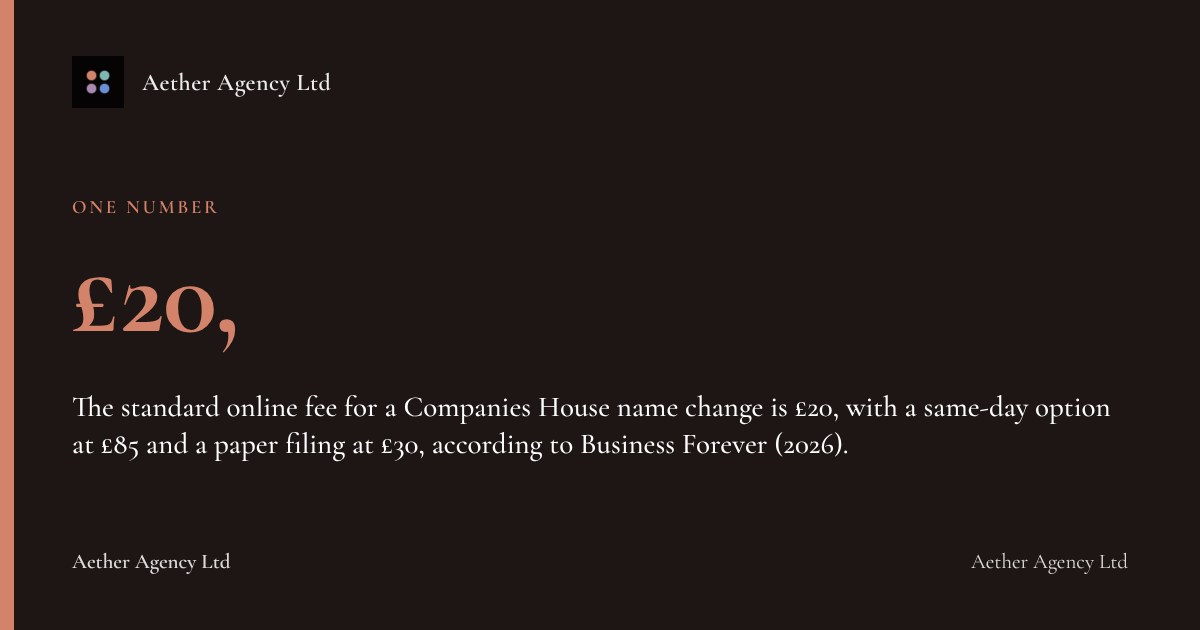
- The standard online fee for a Companies House name change is £20, with a same-day option at £85 and a paper filing at £30, according to Business Forever (2026).
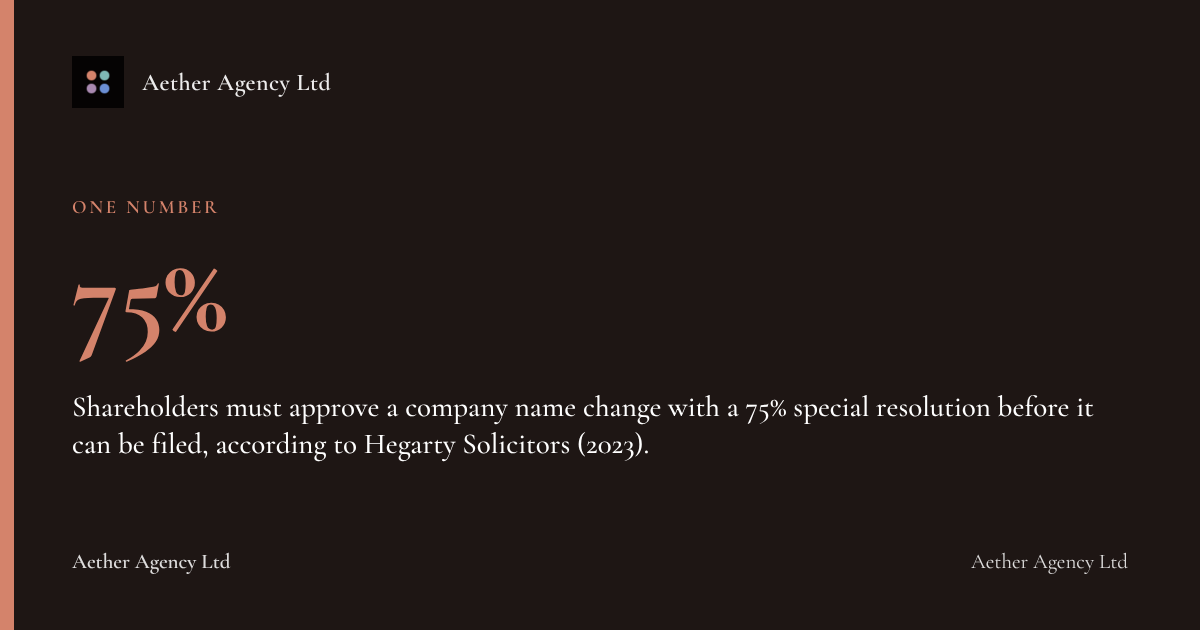
- Shareholders must approve a company name change with a 75% special resolution before it can be filed, according to Hegarty Solicitors (2023).
- VAT-registered businesses have 30 days to tell HMRC about a trading name or business name change, according to IncorpUK (2025).
- Aether Agency Ltd has delivered 50+ projects for growing UK businesses, including full rebrands that separate legal, trading and visual identity correctly from day one.
Does a Rebrand Legally Require a Company Name Change?
A rebrand is a strategic refresh of how a business presents itself — its logo, messaging, colours and positioning — and it does not automatically require changing the legal name registered at Companies House, the UK's registrar of companies. Many businesses trade under a brand name that differs entirely from their registered company name, and this is perfectly lawful under the Companies Act 2006, Part 5, which governs company names in England, Wales, Scotland and Northern Ireland.
Think of a business called "Smith Holdings Ltd" that trades publicly as "Lumen Studio." Lumen Studio is a trading name, sometimes called a "business name" or informally a "doing business as" name, and it can be used on websites, signage and invoices without touching the Companies House register at all.
This distinction matters because it's the single most misunderstood part of rebranding. A director swapping a logo, website and social handles has made zero changes that Companies House needs to know about — provided the entity on the register, the one signing contracts and filing accounts, stays the same. The confusion only starts when the new brand name is also meant to become the company's actual legal name.
How Do I Officially Change My Company Name With Companies House?
Changing a company name with Companies House means filing form NM01, the official notification of a change of name, after shareholders have approved it. The process starts with a board decision, moves to shareholder approval, and ends with Companies House issuing a new certificate of incorporation.
Here's the sequence most companies follow:
- Check the new name is available and doesn't fall foul of "sensitive words" rules — names implying government connection or regulated status (such as "Royal," "Chartered," or "Trust") need special permission.
- Pass a special resolution. Shareholders must approve the name change by at least a 75% majority of those entitled to vote, according to Hegarty Solicitors (2023).
- File with Companies House either online via WebFiling or Companies House's software, or on paper using form NM01.
- Update the Articles of Association if the company's name is written into them specifically, which is rare but worth checking.
- Receive the new certificate of incorporation, confirming the change is now live on the public register.
Skipping the special resolution is the most common legal slip. The resolution has to actually happen and be minuted — a verbal agreement between directors over coffee doesn't satisfy the Companies Act 2006.
What Is the Process and Cost for Changing a Company Name?
The cost of changing a company name at Companies House is £20 for a standard online filing, rising from the £8 fee that applied before 1 May 2024, according to Wikipedia's entry on the Economic Crime and Corporate Transparency Act 2023 (2024). This Act gave Companies House stronger powers and funded them partly through higher filing fees across the board.
Businesses have three filing routes, each with a different price and speed:
| Filing method | Cost | Typical turnaround |
|---|---|---|
| Standard online (WebFiling) | £20 | Usually same day to 24 hours |
| Same-day online service | £85 | Processed same working day if submitted before the deadline |
| Paper filing (form NM01 by post) | £30 | Up to 8-10 working days, often longer |
These figures come from Business Forever (2026). For a business with a rebrand launch date already booked — a new website going live, a press release scheduled, a shop sign installer on standby — the £85 same-day option is often worth paying to avoid the legal name lagging behind the public launch.
After the resolution is passed, companies have 15 days to file a copy with Companies House unless they're submitting the name change itself online, according to Rapid Formations (2026). Missing this window doesn't usually void the resolution, but it does leave the company technically non-compliant with its filing obligations under the Companies Act 2006.
Do I Need to Update My SIC Code if My Rebrand Changes What the Business Does?
A SIC code — the Standard Industrial Classification code that describes a company's main business activity on the Companies House register — should be updated if a rebrand reflects a genuine shift in what the company does, not just how it looks. Companies House asks for an up-to-date SIC code at each confirmation statement, filed at least once every 12 months.
A marketing agency rebranding to focus exclusively on AI search optimisation rather than traditional SEO, for example, might reasonably update its SIC code to reflect that narrower specialism. This isn't a legal requirement tied to the rebrand itself, but it keeps the public register accurate, and it matters more than businesses often assume — banks, credit agencies and procurement teams pull SIC codes when assessing a company.
Updating the SIC code happens through the next confirmation statement (form CS01) rather than a standalone filing, so there's no extra fee beyond the confirmation statement's own cost. It's a sensible housekeeping step alongside a rebrand, even though it carries no deadline of its own.
If I'm Only Changing My Logo or Marketing Materials, Do I Still Need to Inform Companies House?
Changing a logo, colour palette, tone of voice or marketing materials does not require informing Companies House at all, because none of these touch the legal name, registered office, directors or SIC code held on the public register. This is the visual and brand-identity layer of a rebrand, separate entirely from the legal and regulatory layer.
Aether Agency Ltd works with growing UK businesses precisely at this layer — building the identity systems, websites and guidelines that carry a brand across every channel without ever needing a Companies House filing. When Renton Dance Studio wanted to move from a traditional look to something that connected with a younger audience, Aether Agency Ltd delivered a complete rebrand, website redesign and social media content programme, transforming the studio's presence without any change to its underlying legal registration. As the studio's owner, Olivia, put it: "I recently had the pleasure of working with Lauren and Ellie at Aether Agency to enhance the branding for my dance studio. Even though I struggled to articulate exactly what I wanted, they somehow captured the exact style I had envisioned."
That's the pattern most rebrands actually follow — new identity, same legal entity — and it's worth confirming early which category your own rebrand falls into before assuming any Companies House action is needed.
What Other Organisations Do I Need to Notify Besides Companies House?
A company changing its name must notify several bodies beyond Companies House, and HMRC — His Majesty's Revenue and Customs — sits at the top of that list because of strict deadlines. VAT-registered businesses must tell HMRC within 30 days of a change to the business name or trading name, according to IncorpUK (2025).
Helpfully, the Companies House and HMRC systems do talk to each other to some extent: the new company name should normally appear in HMRC's Business Tax Account within 15 days of the Companies House change, according to IncorpUK (2025). That's not instant, though, and businesses with urgent deadlines — a tender submission, a loan application — shouldn't assume it's updated same-day.
Beyond HMRC, a realistic notification list includes:
- Business bank account provider — most require certified copies of the new certificate of incorporation before updating account names.
- Business insurers — a mismatch between the policy name and the trading name can complicate a claim.
- Companies you have contracts with — suppliers, landlords and major clients, particularly where contracts name the company specifically.
- Pension provider and payroll software, since PAYE references are tied to the registered name.
- Trade bodies or regulators relevant to the sector, such as the Financial Conduct Authority for regulated firms.
- Domain registrar and Google Business Profile, to keep the digital footprint consistent with the legal change.
Sole traders and partnerships sit outside all of this Companies House machinery entirely, since they're not registered there in the first place — their obligations run through HMRC and any trading name registrations only.
What Happens If I Trade Under a Different Name Without Registering It?
Trading under a new name without filing a Companies House name change is entirely legal, provided the business discloses its actual registered name on official documents such as invoices, letters and the website, under the Companies Act 2006's business names provisions. Companies routinely trade as "Brand X" while remaining legally "Brand X Holdings Limited" on contracts and statutory paperwork.
The risk only appears when businesses blur the line — using the new brand name on contracts, cheques or legal correspondence as though it were the registered name, without the required disclosure. This can create confusion about which entity is actually liable under a contract, and in a dispute, that ambiguity tends to favour the other side.
There's a separate risk worth flagging alongside this: a new trading name similar to an existing registered company can trigger action through the Company Names Tribunal, an independent body that hears disputes where a name appears to exploit another company's goodwill. Checking the Companies House register and trademark databases before settling on a new brand name avoids this entirely.
Common Mistakes and Who Should Own the Rebrand Checklist
Rebrand projects most often go wrong when legal filing and visual identity work happen on separate, uncoordinated timelines — marketing launches the new look before the Companies House certificate exists, or the legal name changes months before the website catches up. Company directors are legally responsible for Companies House filings, but in practice the task usually falls to whoever is running the rebrand: a company secretary, finance director, or an external agency coordinating the launch.
The common mistakes worth avoiding:
- Launching marketing before the resolution is passed, creating a gap between the public brand and the legal entity.
- Forgetting the 30-day HMRC VAT deadline, which runs independently of the Companies House process.
- Assuming a trademark search is the same as a Companies House name check — it isn't; a name can clear Companies House and still infringe a registered trademark.
- Not updating the registered office signage or statutory registers held at the registered office address, which companies must still display correctly.
- Treating the SIC code and confirmation statement as irrelevant to a rebrand that has genuinely changed the business's activities.
Trademark registration, handled through the Intellectual Property Office, is entirely separate from Companies House and protects the brand name against use by competitors — something a Companies House filing alone does not do. A thorough rebrand checks both registers before launch, not just one.
Your Rebrand and Companies House Checklist
- Confirm whether your rebrand changes the legal name or only the visual identity and marketing.
- Check the new name's availability on the Companies House register and the Intellectual Property Office trademark database.
- Pass a special resolution with at least 75% shareholder approval if the legal name is changing.
- File form NM01 online for £20, or pay £85 for same-day processing ahead of a launch date.
- Notify HMRC within 30 days if you're VAT-registered and your business or trading name is changing.
- Update your bank, insurer, major suppliers and payroll provider once the new certificate is issued.
- Update your registered office signage, statutory registers and Articles if they reference the company name.
- Brief your website, social media and marketing teams only once the legal filing is confirmed, to keep both layers aligned.
FAQ
Do I need to tell Companies House about a rebrand if I only change my logo?
No — Companies House only needs informing when your registered legal company name changes. A new logo, colour scheme or marketing name has no bearing on the statutory register.
What form do I need to file with Companies House to change a company name?
You need to file form NM01, the official notice of a change of company name, after passing a special resolution. It can be submitted online through WebFiling or by post.
How much does it cost to change a company name at Companies House?
The standard online fee is £20, a same-day online service costs £85, and a paper filing costs £30, according to Business Forever (2026). The online fee rose from £8 following changes effective 1 May 2024, according to Wikipedia (2024).
How long does Companies House take to approve a company name change?
Online filings are typically processed within 24 hours, same-day filings complete on the day they're submitted if filed before the cut-off, and paper filings can take 8-10 working days or more. Choosing the right route depends on how tightly your rebrand launch is scheduled.
Do I need shareholder approval before rebranding my limited company's name?
Yes — changing a registered company name legally requires a special resolution approved by at least 75% of shareholders entitled to vote, according to Hegarty Solicitors (2023). This must be properly minuted, not just verbally agreed.
Does Companies House automatically tell HMRC about a company name change?
Partially — the new company name should normally appear in HMRC's Business Tax Account within 15 days of the Companies House change, according to IncorpUK (2025). VAT-registered businesses still have a separate duty to notify HMRC directly within 30 days.
Can I trade under a different name without registering it with Companies House?
Yes — a company can trade under a brand name entirely different from its registered legal name, provided the legal name still appears on official documents such as invoices and contracts. This is standard practice for many UK businesses and doesn't require any Companies House filing.
Rebranding With the Legal Side Handled Properly, With Aether Agency Ltd
Aether Agency Ltd builds the identity, website and marketing side of a rebrand — the layer that sits entirely separate from the Companies House filing discussed throughout this article — so growing businesses can launch a new brand with confidence that both sides are aligned. Getting the sequencing right matters: Aether Agency Ltd's brand identity work is built to survive the transition whether or not a legal name change is involved, because naming systems, guidelines and visual identity need to hold together regardless of what's happening on the statutory register.
Aether Agency Ltd has delivered 50+ projects for businesses across the UK, built on 20+ years of combined team experience in brand, website and growth work. If your business is weighing up a rebrand and needs the identity, website or marketing side built properly from the start, get in touch with Aether Agency Ltd to discuss your project and see how Brand Identity services can bring your new name and look to life.
Related Reading
- How to Rebrand After an Acquisition (UK Guide 2026)
- What Are the Risks of Rebranding? | Aether Agency
- AI Brand Monitoring Tools 2026: Track What ChatGPT Says About You
Add aether-agency.co.uk as a preferred source on Google
See How Your Brand Appears in AI Search
Aether AI monitors your visibility across ChatGPT, Perplexity, Google AI Overviews, and Claude in real time. Find out where you stand and what to fix.
Explore Aether AI