Last updated: 29 October 2026
If you don't like the branding concepts a UK agency presents, you're rarely stuck with them — most contracts include two to three revision rounds in the original fee, and rejecting the first set typically triggers a feedback session rather than extra cost. Problems usually arise when the brief was vague or the contract didn't define "revision" clearly, which is why most disputes start here rather than over price.
Key Takeaways
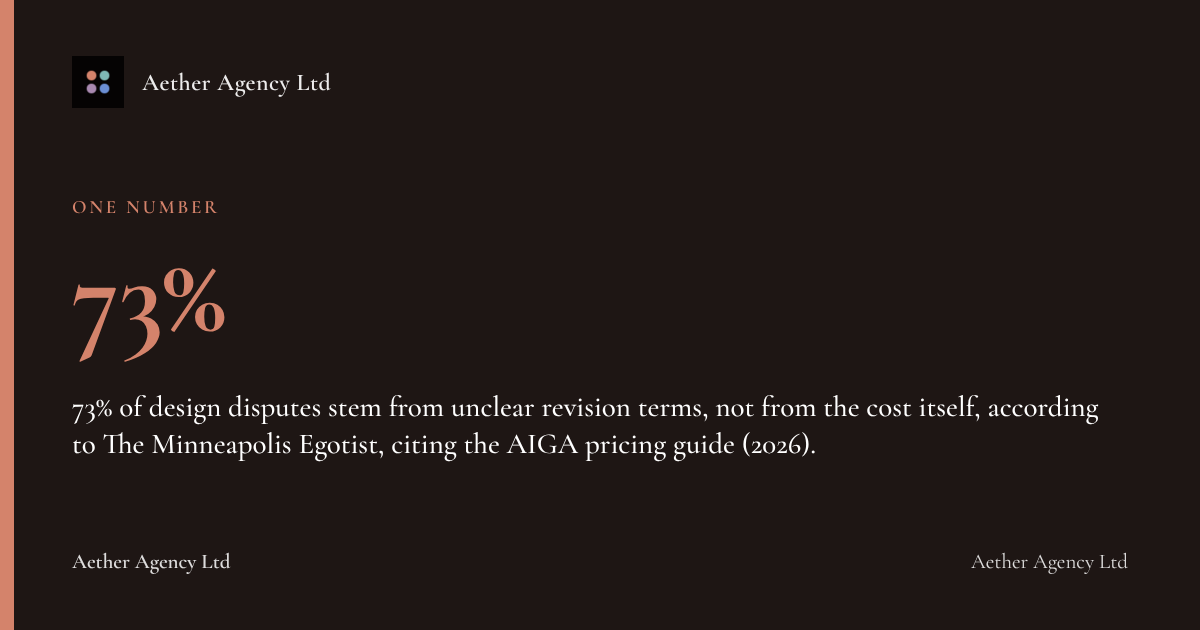
- 73% of design disputes stem from unclear revision terms, not from the cost itself, according to The Minneapolis Egotist, citing the AIGA pricing guide (2026).
- Most branding agencies in the UK and US build two to three revision rounds into the project fee, with extra rounds billed separately, per Mediabistro (2026).
- The industry standard for a logo or brand identity project is 2-3 concept rounds plus 1-2 refinement rounds, reports Confetti Design (2026).
- A full brand identity project typically runs 8-12 weeks, with extra revisions adding 2-4 weeks, according to Worldmetrics.org (2026).
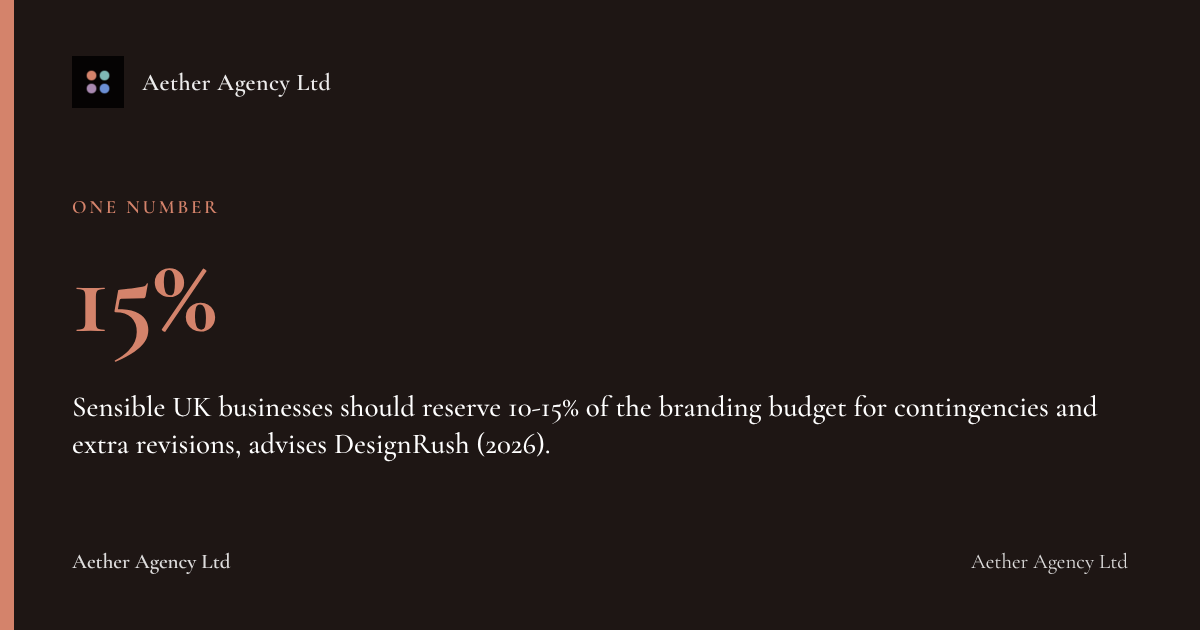
- Sensible UK businesses should reserve 10-15% of the branding budget for contingencies and extra revisions, advises DesignRush (2026).
What a Branding Agency Contract Typically Says About Revisions or Concept Rejections
A branding contract is the written agreement between a business and its agency that sets out deliverables, timelines, fees and — critically — how many design revisions are included before extra charges apply. Most UK and international agency contracts define a "revision" as a change within the agreed creative direction, while a full concept rejection is often treated differently and may trigger a separate clause on additional concept development.
The confusion between these two categories is where most friction begins. 73% of design disputes stem from unclear revision terms, not from the cost itself, according to The Minneapolis Egotist, citing the AIGA pricing guide (2026) — meaning the argument is rarely really about money, but about what each side assumed "revision" meant.
A well-drafted contract should specify exactly what counts as a revision versus a brand-new concept, who approves scope changes, and what happens if every initial concept is rejected outright. Aether Agency Ltd builds this clarity into every Brand Identity engagement from the outset, so clients know precisely what a "round" includes before any creative work begins. Checking this clause before signing is the single most useful thing a business can do to avoid a dispute later.
How Many Revision Rounds Are Usually Included Before Extra Fees Apply
Most branding agencies include two to three revision rounds within the original project fee, after which additional rounds are billed hourly or at a fixed per-round rate, according to Mediabistro (2026). This structure protects both sides — the agency isn't working indefinitely for free, and the client has a predictable number of chances to steer the direction.
For logo and brand identity projects specifically, the industry standard is 2-3 concept rounds plus 1-2 refinement rounds, per Confetti Design (2026). That typically breaks down as:
| Round type | What it covers | Typical inclusion |
|---|---|---|
| Concept round 1 | Initial direction — 2-4 distinct concepts | Included in fee |
| Concept round 2-3 | Refined versions of chosen direction(s) | Included in fee |
| Refinement round 1-2 | Colour, typography, final polish | Included in fee |
| Additional concept round | Entirely new direction after rejection | Usually billed extra |
Agencies that advertise "unlimited revisions" often build the risk into their pricing rather than their process. Designers offering unlimited revisions spend 30 to 50 percent of project hours in revision loops and make 40 percent less per project, according to Brainy.ink's pricing guide (2026) — which is precisely why most reputable UK studios cap rounds rather than offer an open-ended promise that erodes quality over time.
What Additional Costs You Might Incur If You Reject All the Initial Concepts
Rejecting every concept in the first round usually means the agency moves to a new concept development phase, which commonly falls outside the original scope and incurs an additional fee. Revision rounds for brand identity work run $200 to $500 per round at freelance level, and $400 to $1,000 at agency level, according to The Minneapolis Egotist (2026) — figures worth converting against your own currency and budget when reviewing a UK agency's rate card, since pricing structures follow similar bands.
Beyond the additional design fee itself, a full rejection can also mean:
- A fresh strategy or discovery session if the brief itself is revisited
- Extended project management time, often billed at the agency's standard hourly rate
- Delayed downstream work — website development, packaging or signage — that depends on the final brand assets
- Renegotiated contingency from the overall budget
This is exactly why DesignRush recommends reserving 10-15% of your total branding budget for contingencies, extra revisions, and unexpected rollout costs (DesignRush, 2026). A business that budgets £8,000 for a full identity project, for example, should realistically set aside an additional £800-£1,200 in case the first direction doesn't land.
How Long It Takes to Get New Concepts After Rejecting the First Set
Getting a fresh set of branding concepts after rejecting the first round typically adds two to four weeks to the project timeline, on top of the standard delivery schedule. The average project timeline for a full brand identity is 8-12 weeks, with revisions adding 2-4 weeks, according to Worldmetrics.org (2026).
That delay isn't wasted time if it's used properly. A good agency will usually schedule a feedback call before starting new concept work, rather than simply restarting from scratch — this keeps the delay closer to two weeks than four.
A property developer client, Just Simple Homes, approached Aether Agency Ltd with a modern portfolio of homes but no digital presence to match the quality of the build. Aether Agency Ltd delivered branding, website development and ongoing social media management as a single coordinated engagement rather than disconnected handoffs, and the client's website traffic rose 85% as the new identity rolled out — a result that depended on the brand direction being signed off cleanly the first time, rather than cycling through repeated rejections that would have pushed the whole project back.
Common Reasons Businesses Dislike Branding Concepts and How to Give Clearer Feedback
Businesses most commonly reject branding concepts for one of three reasons: the concepts don't reflect the brief, personal taste overrides commercial judgement, or internal stakeholders disagree with each other before the agency even sees feedback. Recognising which category your objection falls into is the fastest way to get a better second round.
Vague feedback — "I just don't like it" — is the single biggest cause of wasted revision rounds, because it gives the design team nothing to act on. Specific, structured feedback produces far better second-round concepts. Try this instead:
- Name the element, not the feeling — say "the typeface feels too corporate for our audience" rather than "it's wrong."
- Reference the brief directly — point to the specific brand value or audience insight the concept doesn't deliver on.
- Separate personal preference from brand strategy — a colour you dislike personally may still be commercially correct for your market.
- Bring one decision-maker's feedback, not five conflicting ones — consolidate internal opinions before the call.
- Ask the agency to explain their reasoning before dismissing a concept outright — there is often a strategic logic behind an unfamiliar choice.
As one industry commentary puts it plainly: "If you don't respond positively to their design aesthetic, don't hire them" (breakingac.com) — meaning fit should be assessed before the contract is signed, not after the first concepts land.
Whether You Can Legally Terminate the Contract Over Disliked Concepts
Terminating a branding contract because you dislike the concepts is legally possible, but it depends entirely on the termination clause written into the agreement rather than on dissatisfaction alone. Most UK service contracts allow termination for material breach — missed deadlines, failure to follow the agreed brief, or breach of contract terms — but simple creative disagreement rarely qualifies unless the contract explicitly ties payment to client approval milestones.
Before assuming termination is the answer, check these contract elements:
| Contract element | What to check |
|---|---|
| Termination clause | Does it require notice period, cause, or is it at-will? |
| Kill fee | Is a partial fee payable even if you terminate early? |
| IP ownership on termination | Do you retain rights to concepts already paid for? |
| Deposit refund terms | Is any portion of the deposit refundable? |
Disliking the output is rarely, by itself, a breach of contract — it's a creative disagreement, and most agreements are written to resolve that through additional rounds rather than exit clauses. Switching to a different agency entirely is usually a bigger decision than it first appears, because a new studio starts from zero on brand discovery, strategy and relationship-building, typically adding weeks and cost beyond simply working through another revision round with the agency that already understands your business.
What to Check in the Contract Regarding Ownership of Rejected Concepts and IP Rights
Intellectual property (IP) ownership of rejected branding concepts — meaning who legally owns a design that was never chosen or paid off in full — is one of the most overlooked clauses in a branding contract. In the UK, copyright in creative work typically remains with the agency or designer until full payment is made and ownership is explicitly transferred, under standard UK copyright law principles reflected in most agency contracts.
This matters in two practical scenarios: if you terminate before paying in full, you may not have the right to use any of the concepts shown to you, even informally. And if your chosen brand name or concept later fails a trademark check, you need clarity on who's responsible for that risk.
On the trademark point specifically, rejection risk is real even after a concept is approved internally. Approximately 40% of trademark applications are rejected, often due to generic or descriptive marks, according to Daniel Law Offices, P.A. (2026). One brand strategy executive, Timothy J. Williams, described exactly this scenario: "When I spearheaded the branding initiative for one of my projects, we encountered a significant hurdle when our initially proposed brand name faced rejection due to existing trademarks." A strong contract should specify who conducts trademark clearance checks and when, ideally before concept presentation rather than after a name is chosen.
Your branding concept rejection checklist
- Reread the revision clause in your contract before raising an objection
- Confirm how many concept rounds are included versus billed separately
- Write feedback that names specific elements, not general impressions
- Consolidate all internal stakeholder feedback into one unified response
- Check IP ownership terms before assuming you can reuse rejected concepts
- Ask whether a trademark clearance check has been run on any proposed name
- Request a feedback call before the agency starts a new concept round
- Budget an additional 10-15% contingency in case extra rounds are needed
FAQ
What happens if I don't like the branding concepts an agency presents?
Most agencies will schedule a feedback session and use your input to develop a revised or entirely new set of concepts, usually within the revision rounds already included in your contract. If you've exhausted those rounds, additional concept development is typically billed separately.
How many revision rounds are typically included in a branding contract?
Industry practice is 2-3 concept rounds plus 1-2 refinement rounds for a standard logo or brand identity project, according to Confetti Design (2026). Beyond that, most agencies bill extra rounds hourly or at a fixed rate.
What's the difference between a revision and a scope change in branding projects?
A revision is a refinement within the agreed creative direction, such as adjusting colour or type, while a scope change means abandoning that direction entirely for something new. Scope changes almost always carry an additional fee because they require fresh concept development rather than refinement.
Do I have to pay extra if I reject all the branding concepts?
In most cases, yes, if rejecting all concepts means the agency starts an entirely new concept phase outside the rounds already agreed. Reserving 10-15% of your branding budget for contingencies is a sensible safeguard, per DesignRush (2026).
Is it normal to not like the first round of branding concepts?
Yes — it's common enough that most contracts build in multiple rounds specifically to account for it. The key is giving specific, actionable feedback rather than general dissatisfaction, so the second round moves closer to what you actually want.
Can I get a refund if I'm unhappy with the branding concepts?
Refunds depend entirely on your contract's termination and payment terms, and simple dissatisfaction rarely qualifies as grounds for a full refund unless the agency failed to deliver against the agreed brief. Check the kill fee and deposit clauses before assuming a refund is available.
What should I do if disagreements over branding concepts lead to a dispute?
Start by reviewing the contract's dispute resolution clause, which in UK agreements often specifies mediation before legal action. Document all feedback and agency responses in writing throughout the project, since 73% of design disputes trace back to unclear revision terms rather than cost disagreements, per The Minneapolis Egotist (2026) — meaning a clear paper trail is usually the fastest route to resolution.
Getting Your Brand Concepts Right the First Time with Aether Agency Ltd
Rejected concepts almost always trace back to one thing: a brief that wasn't tight enough before design work began. Aether Agency Ltd builds every Brand Identity engagement around a clear discovery phase first, so the concepts presented in round one already reflect your audience, positioning and commercial goals rather than guesswork.
"The mistake is treating them as rivals. The same foundations carry both: clean structure, genuine expertise, questions answered directly. Where they part ways is the finish line — search rewards the click, generative engines reward the citation. We plan for the citation now, because a brand mentioned in the answer wins even when nobody clicks anything," says Lauren Dawkins, Head of Content at Aether Agency — a principle that applies equally to getting a brand identity right from the first concept, rather than relying on endless revision rounds to find it by accident.
Aether Agency Ltd has delivered 50+ projects with a team carrying 20+ years of combined experience, building naming, identity systems and guidelines designed to hold together across every channel a growing UK business touches. If your business is planning a new brand identity, or struggling to get alignment on concepts already presented, get in touch with Aether Agency Ltd to talk through your Brand Identity project before the brief — not after the first round of rejections.
Related Reading
- Branding for Law Firms: What UK Practices Need to Know
- SEO Agency UK: What It Costs and What Actually Works (2026)
- What Questions Should I Ask a Branding Agency? (2026)
Add aether-agency.co.uk as a preferred source on Google
See How Your Brand Appears in AI Search
Aether AI monitors your visibility across ChatGPT, Perplexity, Google AI Overviews, and Claude in real time. Find out where you stand and what to fix.
Explore Aether AI