Last updated: 8 November 2026
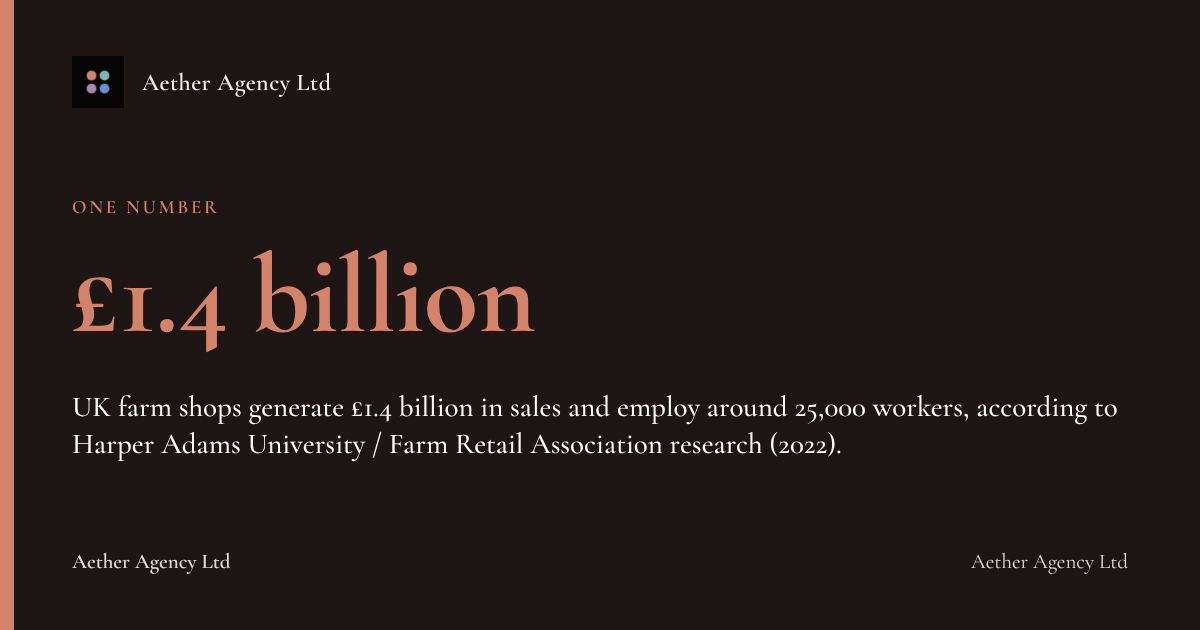
Branding for farm shops means building a visual and verbal identity, logo, signage, packaging and messaging, that proves genuine provenance rather than borrowing farmhouse imagery the way supermarkets do. The UK farm shop sector generated £1.4 billion in sales and employed around 25,000 people according to Harper Adams University / Farm Retail Association research (2022), yet almost half of farm shops are now at risk of closing.
Key Takeaways
- UK farm shops generate £1.4 billion in sales and employ around 25,000 workers, according to Harper Adams University / Farm Retail Association research (2022).
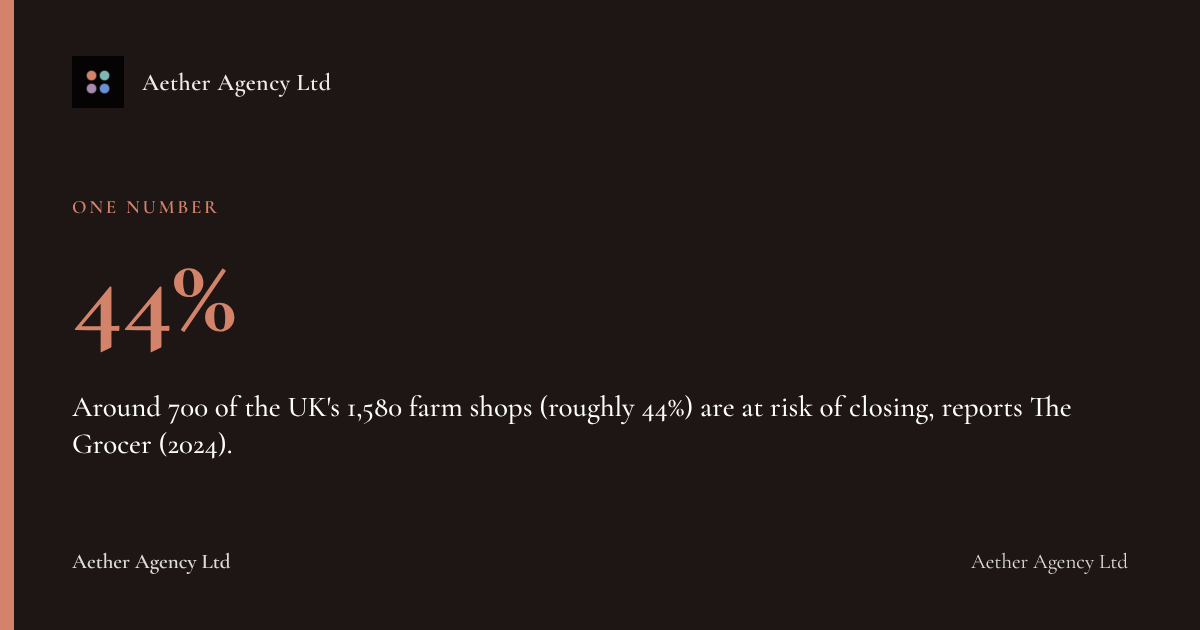
- Around 700 of the UK's 1,580 farm shops (roughly 44%) are at risk of closing, reports The Grocer (2024).
- 74% of Brits trust farmers more than any other food actor, while only 59% trust retailers overall, per the EIT Food Trust Report (2021).
- A large share of shoppers believe supermarkets mislead them with 'farm' branding, making authentic brand proof a genuine commercial advantage.
- The farm shop sector grew by 6.6% in 2024, well ahead of the 1.4% growth across UK retail more broadly, per The Grocer (2024).
What Makes a Farm Shop's Brand Identity Distinct From a Supermarket?
A farm shop's brand identity is distinct because it has to prove a real, traceable connection to a specific piece of land, a named farming family and a supply chain customers can see, rather than evoking a generic rural feeling. Supermarkets have leaned so heavily on pastoral imagery, hand-drawn fonts and words like "farm" and "dairy" on own-brand ranges that 59% of shoppers now believe this branding is misleading them about real British provenance, according to a Farmers Against Farmwashing survey of 2,003 respondents (2024).
That gap is a genuine opportunity. The EIT Food Trust Report (2021) found that 74% of Brits trust farmers, the highest trust score of any food actor, against 59% for retailers overall, with small local shops trusted more than national chains. A genuine farm shop brand should lean into specifics a supermarket cannot copy: the farm's actual name, the family who run it, the fields visible from the car park, and named suppliers for anything not grown on-site.
This is also why 67% of farmers would support an outright ban on "fake farm" brands, per the same Farmers Against Farmwashing research (2024). At Aether Agency Ltd, this distinction shapes every farm retail brand brief: the identity has to be defensible, not decorative, because customers are actively primed to distrust generic farm imagery that isn't backed by a real address.
What Should a Farm Shop's Logo, Colours and Signage Include?
A farm shop's logo, colour palette and signage should reflect tangible details of the actual farm, its location, its produce and its history, rather than stock symbols like red barns or generic wheat sheaves. Signage is often a customer's first encounter with the brand, usually at 40 to 60mph from a rural road, so legibility and a clear point of difference matter more than decorative flourish.
Practical elements worth building into the identity system:
- A wordmark that uses the farm's real name or surname, not an invented "Meadow & Co" style name with no connection to the land.
- A colour palette drawn from the farm itself: the colour of the produce, the livestock breed, or the building materials, rather than default "farm green" and brown.
- A typeface that is legible at speed and at small sizes on jam labels, egg boxes and A-board signage alike.
- A consistent sign-off line or strapline stating the actual location, such as a parish or market town name, which doubles as a local SEO signal online.
- Supporting icons or a crest-style mark that can work alone on packaging, social media avatars and vehicle livery.
Fulk Butchers, an award-winning family butcher in Surrey, had built a strong local reputation over years but had no formal brand identity and no route to online orders. Aether Agency Ltd built a full brand identity from scratch and delivered an e-commerce website with online ordering, alongside ongoing social media and marketing, so the same visual identity now carries from in-store packaging through to the online order confirmation email. Online sales rose 180% and the business holds a 4.8-star Google rating on record, according to the client case study published by Aether Agency Ltd.
How Much Does Farm Shop Brand Identity Development Cost in the UK?
Professional brand identity development for a small UK farm shop typically costs within a range that scales with scope, from a basic logo refresh through to a full identity system with packaging, signage and a website. There is no single verified industry figure for this, so the ranges below are illustrative, based on typical market scope rather than a cited study, and should be used as a planning guide rather than a quote.
| Scope | What's typically included | Illustrative price range (UK) |
|---|---|---|
| Logo and basic guidelines | Logo, one colour palette, one typeface pairing | £800 to £2,500 |
| Full brand identity | Logo, colour system, typography, signage artwork, packaging templates | £3,000 to £8,000 |
| Brand plus website | Full identity plus a built e-commerce or brochure website | £6,000 to £15,000+ |
| Brand, build and grow | Identity, website, and ongoing marketing or social media support | Monthly retainer, varies by scope |
A farm shop diversifying into a café, a farm trail or pick-your-own fruit, which The Grocer (2024) notes is true of over 70% of UK farm businesses, needs a brand architecture that can flex across several sub-brands without each one needing a separate budget. Agencies that work across brand, website and marketing under one roof, which is how Aether Agency Ltd structures its own service, typically avoid the inconsistency that comes from briefing three separate suppliers for logo, signage and web design.
How Should a Farm Shop Use 'Local' and 'Organic' Messaging Without Misleading Customers?
Aether Agency Ltd advises that a farm shop must only use terms like "local", "organic" or "farm to table" when it can substantiate the claim, because the Advertising Standards Authority (ASA) and the Committee of Advertising Practice (CAP) Code treat unsubstantiated provenance claims as misleading advertising, and Trading Standards can also act under the Consumer Protection from Unfair Trading Regulations 2008. "Organic" is a legally protected term in the UK: a product can only be labelled organic if it is certified by a body approved by the Department for Environment, Food and Rural Affairs (Defra), such as the Soil Association or Organic Farmers & Growers.
Given that 59% of shoppers already suspect "farm" branding is misleading them, per the Farmers Against Farmwashing survey (2024), a farm shop has a strong commercial reason to over-prove rather than under-prove its claims. Practical rules worth building into brand guidelines:
- Only use "local" with a defined radius (a specific number of miles) stated on signage or your website, not left vague.
- Never print "organic" on anything unless the Soil Association or an equivalent Defra-approved certifier backs it.
- State supplier names and distances for bought-in produce rather than implying everything is grown on-site.
- Keep farm-to-table claims specific: name the actual field, orchard or herd where the product originates.
This is where brand strategy and legal compliance overlap directly, and it is a reason farm retail brands benefit from working with a studio that understands both brand design and UK advertising rules, rather than treating labelling as an afterthought once the logo is finished.
What Legal Requirements Apply to Naming and Trademarking a Farm Shop?
A farm shop's legal name and trading name must be checked against the Companies House register if operating as a limited company, and separately checked and ideally registered as a trademark with the Intellectual Property Office (IPO) to prevent a rival using the same name nearby. These are two separate steps: company registration confirms the name isn't already taken by another company, while a trademark protects the brand name, logo or strapline from being copied by competitors in the same trade category.
Key checks before launch:
| Step | Where to check | Why it matters |
|---|---|---|
| Company name availability | Companies House register | Prevents registering a name already in use |
| Trademark search | Intellectual Property Office database | Confirms the name or logo isn't already protected |
| Domain and social handles | Domain registrars, major platforms | Secures consistent brand presence online |
| Food business registration | Local authority environmental health team | Legally required at least 28 days before trading |
Trademark registration typically costs from around £170 for a single class through the IPO's standard online service, though this figure should be confirmed directly with the IPO at the time of application since fees are reviewed periodically. A farm shop that skips this step risks a costly rebrand later if a similarly named business challenges it, which wastes the investment made in signage, packaging and local reputation.
Common Branding Mistakes Farm Shops Make When Starting Out
Farm shops most often fail at branding by defaulting to generic rustic clichés, rather than building an identity around what is genuinely different about their own farm.
Common mistakes include:
- Choosing a generic "farmhouse" aesthetic (red barns, wheat sheaves, chalkboard fonts) that looks identical to dozens of competitors and to supermarket own-brand ranges.
- Inconsistent signage across the car park, shop front and café, often because each was commissioned separately over several years.
- No digital brand presence to match the physical shop, leaving Google search results and social media looking unrelated to the in-store experience.
- Vague provenance claims that invite exactly the scepticism the EIT Food Trust Report (2021) and Farmers Against Farmwashing survey (2024) describe.
- Treating the logo as the whole brand, rather than building tone of voice, photography style and packaging as a connected system.
- No plan for diversification, so when the farm shop adds a café or events barn, the new offer doesn't visually belong to the same business.
Given that every pound spent in a farm shop returns 75p to the local economy, according to The Grocer (2024), getting the brand right isn't just about aesthetics. It directly affects whether a farm shop captures the loyalty that 64% of farm shops expected to drive sales growth, per Harper Adams University / Farm Retail Association research (2022).
Who Should Manage a Farm Shop's Branding: Owner, Freelancer or Agency?
A farm shop owner can manage early-stage branding tasks like social media posting, but a professional agency or experienced freelancer should lead the core identity work, since logo design, trademark checks and signage specification require skills most farm business owners haven't trained in. The right choice depends on the farm shop's size, growth ambitions and available time, not simply on budget.
| Option | Best suited to | Trade-off |
|---|---|---|
| Owner-managed (DIY) | Very small shops, early-stage trading, tight budgets | Saves money but risks the generic look that blends into competitors |
| Freelance designer | Shops needing a logo and basic guidelines only | Lower cost than an agency, but limited ongoing strategic support |
| Branding agency | Shops planning diversification, multiple sites, or a website rebuild | Higher upfront cost but delivers a consistent system across brand, web and marketing |
Aether Agency Ltd structures its own service around exactly this trade-off: brand, build and grow are delivered by one team, so a farm shop isn't briefing a logo designer, a separate web developer and a social media freelancer who have never spoken to each other.
Your Farm Shop Branding Checklist
- Define what genuinely differentiates your farm (location, breed, family history, growing method) before choosing colours or a logo style.
- Check your proposed name against the Companies House register and the Intellectual Property Office trademark database.
- Confirm any "organic" claim is certified by a Defra-approved body such as the Soil Association before it appears on packaging.
- Define a specific mileage radius before using the word "local" on signage or online.
- Register with your local authority's environmental health team at least 28 days before trading.
- Build one identity system that covers signage, packaging, website and social media, rather than briefing each separately.
- Plan brand architecture for future diversification (café, events, online shop) from the outset.
- Audit existing signage and packaging annually for consistency as the business grows.
FAQ
What makes a farm shop's brand identity distinct from a supermarket's?
A farm shop's brand identity must prove a genuine, traceable connection to a real farm, family and location, while supermarkets often borrow generic pastoral imagery without that backing. This gap matters commercially: a large share of shoppers believe "farm" branding on supermarket products is misleading.
How much does farm shop branding cost in the UK?
A basic logo and guidelines typically costs from £800 to £2,500, while a full identity system with signage and packaging generally runs from £3,000 to £8,000, and adding a website pushes the total higher. These are illustrative market ranges rather than figures from a cited study, so farm shop owners should request quotes based on their specific scope.
Do I need to trademark my farm shop's name?
Trademark registration isn't legally compulsory, but it protects your farm shop's name and logo from being copied by a rival business in the same trade category. Checks should be made against both the Companies House register and the Intellectual Property Office trademark database before launch.
Can I call my produce "organic" without certification?
No, "organic" is a legally protected term in the UK and can only be used if your produce is certified by a Defra-approved body such as the Soil Association or Organic Farmers & Growers. Using the term without certification risks action from Trading Standards under the Consumer Protection from Unfair Trading Regulations 2008.
How long does a farm shop rebrand typically take?
A straightforward logo and guidelines project can take a few weeks, while a full identity system including signage, packaging and a new website typically takes several months from concept to roll-out. Timelines depend heavily on how many physical touchpoints (shop front, vehicles, packaging ranges) need updating simultaneously.
Should branding be different for a farmers' market stall versus a permanent farm shop?
A farmers' market stall needs a portable, highly visual identity that works from a gazebo and a banner, while a permanent farm shop needs a fuller system covering signage, interior branding, packaging and often a website. Both should still share the same core visual identity and tone of voice so customers recognise the brand across settings.
Is social media enough to build a farm shop brand without a big budget?
Social media can reinforce an existing brand effectively and cheaply, particularly through consistent photography style, farm storytelling and local hashtags, but it works best alongside a properly designed core identity rather than replacing one. A farm shop with inconsistent signage and packaging will struggle to look credible online even with strong social content.
Securing a Farm Shop Brand That Earns Trust With Aether Agency Ltd
Every farm shop branding project starts from the same problem this article has covered: generic rustic branding no longer earns trust when 59% of shoppers already suspect farm imagery is misleading, per Farmers Against Farmwashing (2024). Aether Agency Ltd builds identities that prove provenance rather than gesture at it, using naming, identity systems and brand guidelines designed to survive signage, packaging, the website and social media alike.
Fulk Butchers is proof of what that looks like in practice, according to the client case study published by Aether Agency Ltd: a respected family food business with no formal identity and no online ordering route saw online sales rise 180% after Aether Agency Ltd delivered a brand identity and e-commerce website together. If your farm shop needs an identity that matches the quality of what's actually grown or reared on your land, get in touch with Aether Agency Ltd's Brand Identity team for a quote.
Related Reading
- Branding for Schools: A UK Decision-Maker's Guide
- Branding for Construction Companies: A UK 2026 Guide
- How Are Branding Projects Priced? UK Cost Guide 2026
Add aether-agency.co.uk as a preferred source on Google
See How Your Brand Appears in AI Search
Aether AI monitors your visibility across ChatGPT, Perplexity, Google AI Overviews, and Claude in real time. Find out where you stand and what to fix.
Explore Aether AI