Last updated: 8 November 2026
The logo design process steps a UK business should expect are discovery and research, concept development, presentation of 2 to 3 directions, revision rounds and final file delivery, typically completed in 3 to 6 weeks according to Fullstop360 (2026), with costs ranging from a few hundred pounds for a freelancer to several thousand for a full brand identity system.
Key Takeaways
- The logo design process typically runs 3 to 6 weeks from kickoff to final delivery, including discovery and usually 2 to 3 concept directions, according to Fullstop360 (2026).
- A separate industry estimate puts the average logo design process at 4 to 6 weeks, according to Design Your Way (2025).
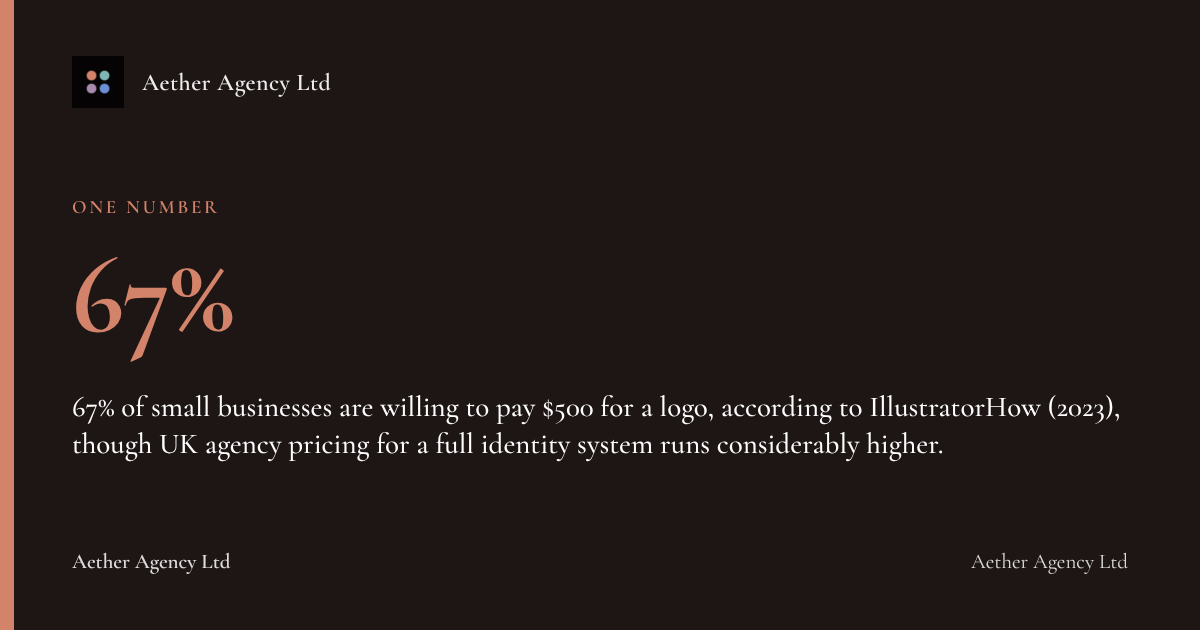
- 67% of small businesses are willing to pay $500 for a logo, according to IllustratorHow (2023), though UK agency pricing for a full identity system runs considerably higher.
- Customers typically need to see a logo 5 to 7 times before they remember the brand, according to IllustratorHow (2023), which is why consistency across the final file package matters as much as the design itself.
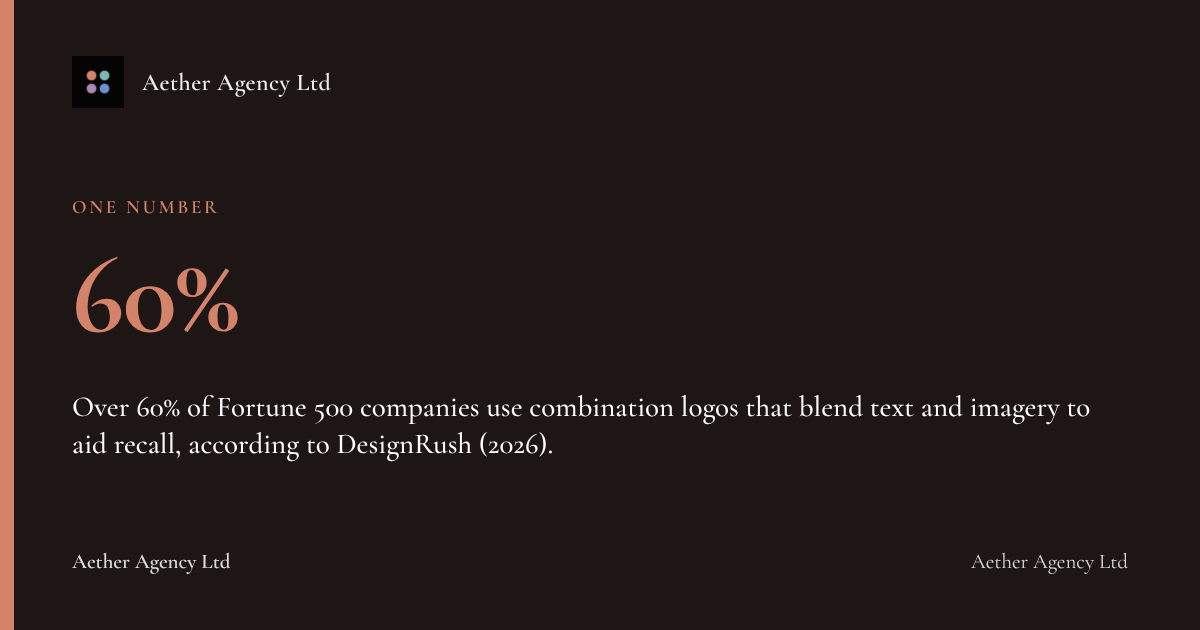
- Over 60% of Fortune 500 companies use combination logos that blend text and imagery to aid recall, according to DesignRush (2026).
What Are the Main Stages of a Logo Design Process?
A logo design process is the structured sequence a designer or studio follows to move from a client brief to finished brand assets, typically comprising discovery, concept development, presentation, revision and delivery. Skipping any one of these stages is the single biggest reason logos end up generic, inconsistent, or needing a costly redesign within a year or two.
The sequence professionals use breaks down into five core phases:
- Discovery and research: brand strategy sessions, competitor audits, audience analysis and brief-gathering.
- Concept development: sketching, moodboarding and digital exploration of 2 to 3 distinct directions.
- Presentation: the designer shows concepts to the client with strategic rationale, not just pictures.
- Revision and refinement: structured feedback rounds narrow down to one approved direction.
- Finalisation and delivery: file preparation, formats, and a brand guideline document.
Fullstop360 (2026) confirms that a quality process "typically runs 3 to 6 weeks from kickoff to final delivery, including discovery and typically 2 to 3 concept directions." This matches the broader industry view that proper logo work cannot be rushed into a single afternoon of Canva tinkering.
Alina Wheeler, author of Designing Brand Identity, puts it plainly: "Logo design process demands a combination of investigation, strategic thinking and design excellence." At Aether Agency Ltd, this sequence underpins every brand identity project, because a logo built on strategy survives contact with a real market far better than one built on taste alone.
How Long Does the Entire Logo Design Process Take?
The logo design process usually takes between 3 and 6 weeks from the initial brief to final file handover, depending on the scope of research, the number of revision rounds, and how quickly the client responds to proofs. Design Your Way (2025) places the average logo design process at 4 to 6 weeks, while Fullstop360 (2026) narrows this to 3 to 6 weeks for a quality outcome including discovery and 2 to 3 concept directions.
Several factors stretch or compress that window. A straightforward wordmark for a sole trader might close in under three weeks, while a full identity system for a multi-location business, complete with sub-brand variations and brand guidelines, often runs towards the longer end.
Here's a rough breakdown of how that time typically splits:
| Phase | Typical duration | What happens |
|---|---|---|
| Discovery and brief | 3 to 7 days | Brand strategy, research, competitor audit |
| Concept development | 1 to 2 weeks | Sketching, digital drafts, 2 to 3 directions |
| Presentation and first feedback | 2 to 4 days | Client review of concepts |
| Revisions | 1 to 2 weeks | Typically 2 to 3 rounds |
| Finalisation and delivery | 3 to 5 days | File prep, formats, guidelines |
Businesses working to a hard deadline, such as a product launch date or an exhibition at the NEC Birmingham, should brief this timeline in at the outset rather than trying to compress it after concepts are already underway.
How Much Does Professional Logo Design Cost in the UK?
Professional logo design in the UK ranges from around £150 for a basic freelance wordmark to £3,000 to £10,000+ for a full brand identity system from an established agency, with the final figure driven by strategy depth, concept count and deliverables. IllustratorHow (2023) found that 67% of small businesses are willing to pay $500 for a logo, a figure that sits at the lower end of what UK agencies typically quote once strategy and revisions are included.
| Route | Typical UK price range | What's usually included |
|---|---|---|
| DIY / AI generator | £0 to £50 | Instant logo, no strategy, limited files |
| Freelance designer | £150 to £1,500 | 1 to 3 concepts, basic file package |
| Design marketplace/contest | £200 to £900 | Multiple submissions, variable quality control |
| Branding agency | £1,500 to £10,000+ | Strategy, 2 to 3 directions, full identity system, guidelines |
Two worked examples illustrate how this plays out in practice. A sole trader launching a mobile dog grooming business might spend £300 to £600 with a freelancer for a wordmark and basic colour palette, enough for a van wrap and social profiles.
A growing retailer preparing for e-commerce, multiple product lines and in-store signage, by contrast, typically needs the £3,000 to £8,000 agency tier, because that budget covers brand strategy, a combination logo (the 60%+ of Fortune 500 firms using text-and-image marks, per DesignRush, 2026, demonstrates why this format dominates), and a full guidelines document for consistent rollout.
Ways to reduce cost without cutting corners:
- Provide a tight, well-researched brief upfront to reduce revision rounds.
- Commission the logo and core brand identity together rather than separately later.
- Choose vector-based deliverables from day one to avoid costly file re-creation down the line.
Aether Agency Ltd's own brand, build, grow model reflects this: when logo and identity work is delivered by the same team that later builds the website, the visual language carries through without a second agency re-interpreting it. Fulk Butchers, a family butcher in Surrey: Aether Agency Ltd built a full brand identity from scratch alongside an e-commerce website and ongoing marketing support, and the business has since recorded online sales up 180% and a 4.8-star Google rating.
What Should a Business Brief a Logo Designer On Before Work Starts?
A design brief is the written document a business gives a designer covering brand strategy, target audience, competitors and practical constraints before any concept work begins. A thin brief is the single most common cause of wasted revision rounds, because designers are left guessing at strategic direction rather than executing it.
A strong brief should cover:
- Brand strategy: mission, values, positioning and tone of voice.
- Target audience: who the business serves, their age range, and where they're based (a brand targeting Clerkenwell creatives looks nothing like one targeting Yorkshire farming cooperatives).
- Competitor landscape: 3 to 5 direct competitors, with notes on what to avoid replicating.
- Practical constraints: where the logo will appear (signage, app icon, embroidery, vehicle livery), colour restrictions, and any existing brand assets to retain.
- Timeline and budget: realistic expectations set upfront, not negotiated mid-project.
Sagi Haviv, partner at Chermayeff & Geismar & Haviv, offers a useful reminder here: "A logo is the period at the end of a sentence, not the sentence itself." A brief that only describes aesthetic preference, without the brand strategy sentence that precedes it, sets the whole process up to wobble.
Renton Dance Studio, a UK dance academy, is a good illustration of how far a strong working relationship can carry a thin initial brief. The studio's owner, Olivia, needed a rebrand to connect with a younger audience but struggled to articulate the exact style she wanted. As Olivia put it: "I recently had the pleasure of working with Lauren and Ellie at Aether Agency to enhance the branding for my dance studio. Even though I struggled to articulate exactly what I wanted, they somehow captured the exact style I had envisioned." Aether Agency Ltd delivered a complete rebrand, website redesign and social content programme, moving the studio's presence from traditional to modernised.
How Many Logo Concepts Should a Designer Present, and How?
A professional designer typically presents 2 to 3 distinct concept directions, each with its own strategic rationale, rather than a single option or a dozen minor variations. Fullstop360 (2026) confirms this as standard practice, noting that quality logo processes "typically" include 2 to 3 concept directions at the presentation stage.
This matters for two reasons. First, a single concept gives the client no real choice and invites endless micro-tweaking rather than a clear decision between distinct ideas.
Second, presenting too many (eight, ten, a dozen "options") signals a lack of strategic filtering on the designer's part and tends to overwhelm rather than clarify. Concepts should be shown mocked up in context, such as on a shopfront, a business card, a website header and a social media profile, rather than as flat artwork on a white background.
Paul Rand's observation is relevant here: "A logo doesn't sell, it identifies." The presentation stage should demonstrate how each concept identifies the brand across real touchpoints, not just how it looks in isolation.
How Does the Revision and Feedback Stage Work?
Revision rounds are the structured feedback cycles where a client narrows presented concepts down to one approved direction, and most professional contracts include 2 to 3 rounds as standard. Anything beyond that typically incurs additional fees, a boundary set precisely to stop scope creep from derailing the agreed timeline.
A well-run revision stage usually follows this pattern:
- Round one: client selects a preferred direction from the 2 to 3 concepts and gives broad feedback (colour, tone, overall feel).
- Round two: designer refines the chosen direction based on that feedback; client gives more granular notes (spacing, weight, proportions).
- Round three (if needed): final polish and sign-off.
Feedback works best when it's specific and tied to the brief rather than subjective ("I don't love it"). Businesses should route comments through a single decision-maker wherever possible, since conflicting feedback from multiple stakeholders is one of the most common causes of revision rounds overrunning.
Lauren Dawkins, Head of Content at Aether Agency, speaking on a related point about content and search strategy, makes an observation that applies equally well to the discipline needed during logo revisions: "The mistake is treating them as rivals. The same foundations carry both: clean structure, genuine expertise, questions answered directly. Where they part ways is the finish line, search rewards the click, generative engines reward the citation. We plan for the citation now, because a brand mentioned in the answer wins even when nobody clicks anything."
What File Formats and Deliverables Should the Final Logo Package Include?
A complete logo package should include vector source files, raster exports in multiple sizes, colour variations, and a brand guidelines document specifying correct usage. Missing even one of these typically causes problems later, such as a printer unable to produce a sharp billboard version from a web-only PNG.
| File type | Format | Typical use |
|---|---|---|
| Vector master file | .AI or .EPS | Editable source, scalable to any size |
| Universal vector | .SVG | Websites, apps, scalable digital use |
| Print-ready | Print suppliers, signage companies | |
| Web/digital raster | .PNG (transparent background) | Websites, social media, email signatures |
| Full colour, black, white, reversed | Each format above | Different backgrounds and contexts |
A brand guidelines document should also specify exact colour codes (HEX, RGB, CMYK and Pantone where relevant), minimum clear space around the logo, minimum size for legibility, and prohibited uses (stretching, recolouring, adding effects). DesignRush (2026) notes that a signature colour can increase brand recognition by 80%, which is precisely why consistent colour codes across every file matter more than they might first appear.
Without this document, consistency erodes fast: one team member uses the wrong blue, another stretches the logo to fit a banner, and brand recognition suffers as a result. DesignRush (2026) also found that 68% of companies reported consistent branding contributed 10 to 20% to revenue growth, a figure that underlines why guidelines aren't a nice-to-have add-on.
Should a Business Hire a Freelancer, an Agency, or Use an AI Logo Generator?
This is one of the first decisions a business faces, and the right answer depends on budget, complexity and how much strategic thinking the project actually needs. AI logo generators and template tools sit at the fast, cheap end, freelancers in the middle, and full-service agencies at the top for businesses needing an integrated brand system.
| Route | Best for | Typical cost (UK) | Limitations |
|---|---|---|---|
| AI logo generator | Very early-stage, budget-zero startups | Free to £50 | No strategy, generic results, limited files |
| Freelance designer | Solo traders, small budgets, simple needs | £150 to £1,500 | Variable experience, limited bandwidth for revisions |
| Branding agency | Growing businesses needing cohesive identity | £1,500 to £10,000+ | Higher upfront cost |
AI tools can produce a usable mark in minutes, but Linearity (2023) found that a brand with a simple logo design is more likely to be recommended by 64% of consumers, a simplicity that genuinely strategic design tends to achieve more reliably than an algorithm pattern-matching existing marks. A freelancer suits businesses with a clear brief and modest budget, but may lack the team structure to carry a logo through into a full website and marketing rollout.
An agency route earns its cost when the logo needs to function as part of a wider system: website, packaging, signage and social presence all pulling in one direction. This is where Aether Agency Ltd's brand, build, grow approach differs from a standalone designer, because the same team that creates the identity also builds the website and runs the ongoing marketing, so nothing gets lost in translation between suppliers.
Your Logo Design Process Checklist
- Define brand strategy, audience and positioning before approaching any designer.
- Research 3 to 5 competitors and note visual territory to avoid.
- Write a brief covering strategy, audience, constraints, timeline and budget.
- Confirm how many concept directions will be presented (2 to 3 is standard).
- Agree the number of revision rounds included before work begins.
- Request vector source files (.AI/.EPS/.SVG), not just PNGs.
- Insist on a written brand guidelines document covering colour codes and usage rules.
- Check trademark availability before rolling the logo out publicly.
FAQ
What are the main steps in a logo design process?
The main steps are discovery and research, concept development, presentation of 2 to 3 directions, revision rounds, and final file delivery. Fullstop360 (2026) confirms this sequence typically runs 3 to 6 weeks from kickoff to delivery.
How long does a logo design project typically take?
A logo design project typically takes 3 to 6 weeks from initial brief to final delivery, according to Fullstop360 (2026), while Design Your Way (2025) puts the average at 4 to 6 weeks. Complex identity systems with multiple stakeholders can run longer.
Who owns the copyright to a logo once it's designed?
In the UK, copyright in a commissioned logo generally remains with the designer or agency unless the contract explicitly transfers or assigns those rights to the client. Businesses should always confirm in writing, before work begins, that full intellectual property rights transfer on final payment, since this is not automatic under UK copyright law.
Does a logo need to be trademarked in the UK?
A logo doesn't legally need to be trademarked to be used, but registering it with the UK Intellectual Property Office protects the business from competitors using a similar mark. Registration typically takes several months and requires searching existing trademarks first to avoid conflict.
How many revisions are included in a typical logo design project?
Most professional contracts include 2 to 3 revision rounds before additional fees apply. This structure keeps the project on schedule and prevents the kind of open-ended tweaking that can derail an agreed timeline and budget.
What's the difference between a logo and a full brand identity?
A logo is a single visual mark, while a brand identity is the complete system around it, including colour palette, typography, imagery style, tone of voice and usage guidelines. Over 60% of Fortune 500 companies use combination logos that blend text and imagery, according to DesignRush (2026), which illustrates how even a single mark is typically built as part of a wider system rather than in isolation.
What are the most common mistakes businesses make during the logo design process?
The most common mistakes are briefing on aesthetics alone without brand strategy, involving too many decision-makers in feedback, skipping trademark checks before launch, and accepting web-only files without vector source formats. Each of these typically causes costly problems weeks or months after the logo is already in use.
Securing Your Logo Design Process With Aether Agency Ltd
Aether Agency Ltd runs logo and brand identity projects through exactly the structured process this article describes: strategy-led discovery, 2 to 3 considered concept directions, clear revision stages and a complete final file package with guidelines. The studio's brand, build, grow model means the same team that designs the logo also builds the website and manages ongoing marketing, so nothing is lost in handover between suppliers.
That approach has delivered 50+ projects (as published on aether-agency.co.uk), including the Fulk Butchers identity and e-commerce build in Surrey, and the Renton Dance Studio rebrand described above.
If a business is weighing up whether to brief a freelancer, an agency or an AI tool for its next logo, Aether Agency Ltd's Brand Identity service is a sensible place to start the conversation, with a call to talk through strategy, timeline and budget before any concept work begins.
Related Reading
- Brand Identity Design Agency UK: Expert Guide 2026
- Who Owns the Copyright on a Logo Design UK?
- What Is a Brand Design System? A Clear Definition
Add aether-agency.co.uk as a preferred source on Google
See How Your Brand Appears in AI Search
Aether AI monitors your visibility across ChatGPT, Perplexity, Google AI Overviews, and Claude in real time. Find out where you stand and what to fix.
Explore Aether AI