Last updated: 17 November 2026
Branding for private clinics means building a name, visual identity and patient experience that must satisfy both commercial goals and strict healthcare regulation. Unlike most consumer sectors, a clinic's brand has to survive scrutiny from the Care Quality Commission (CQC), the Advertising Standards Authority (ASA) and professional regulators such as the General Medical Council (GMC), while still converting enquiries into bookings.
Key Takeaways
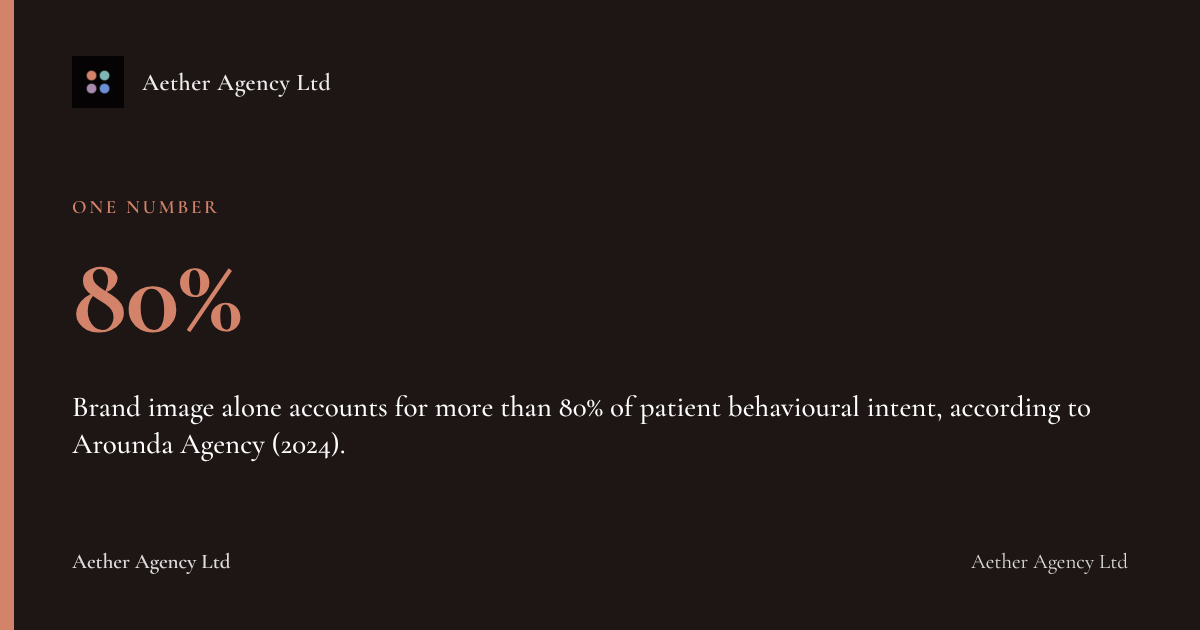
- Brand image alone accounts for more than 80% of patient behavioural intent, according to Arounda Agency (2024).
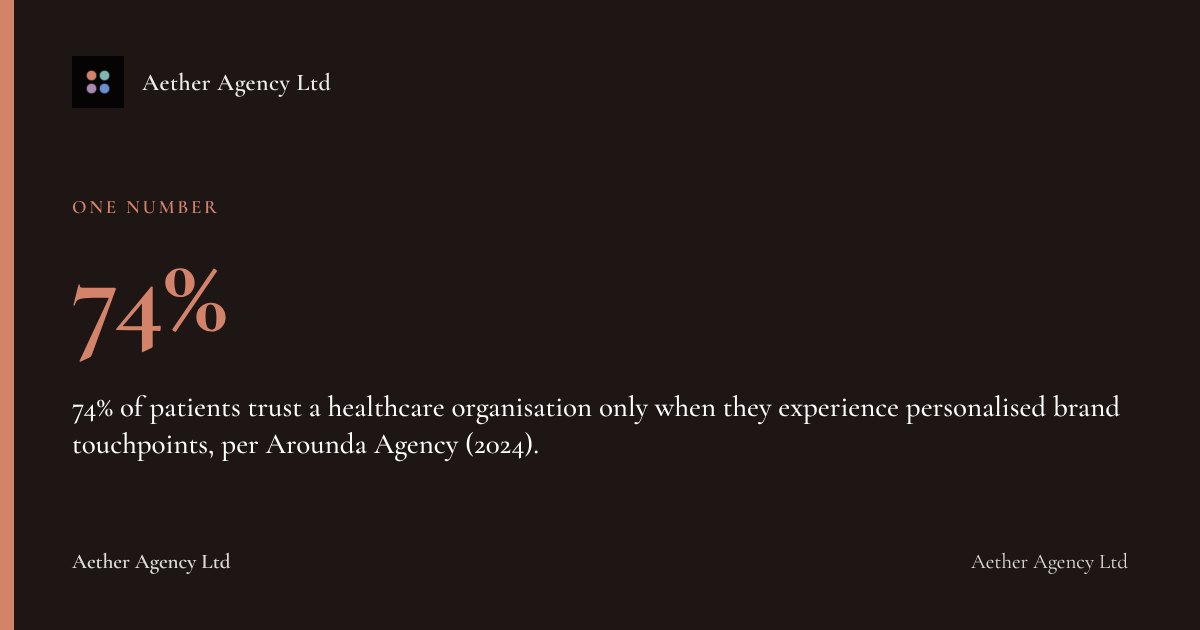
- 74% of patients trust a healthcare organisation only when they experience personalised brand touchpoints, per Arounda Agency (2024).
- 80% of patients will not return to the same provider after a negative experience, according to a Deloitte survey cited by They Make Design (2021).
- 73% of patients consider online reviews when selecting a healthcare provider, per Healthcare Success / Press Ganey (2024).
- Private clinics in England must display their current CQC rating under Regulation 20A, a legal duty that sits outside ordinary branding choices.
What Makes Branding for Private Clinics Different From Other Businesses?
Branding for private clinics is the practice of building a name, visual identity and tone of voice for a healthcare provider that must simultaneously win patient trust and satisfy medical regulation, something a retail or hospitality brand never has to do. A private dermatology clinic in Harley Street cannot simply write the boldest headline that converts best; every claim it makes about outcomes, safety or comparative results has to withstand review under the Advertising Standards Authority's CAP Code.
This dual pressure changes the brief from day one. A clinic brand has to communicate warmth and accessibility while also signalling clinical rigour, qualifications and regulatory compliance, two things that often pull in opposite visual directions.
The stakes are also unusually high for trust. Only 56% of patients trust healthcare organisations, while physician burnout rates have reached 63% across specialties, according to the Edelman Trust Barometer, cited by Accelabrand (2024). That trust deficit means a clinic's branding has to work harder than a typical commercial brand simply to reach parity with public confidence in the NHS.
Academic research backs this up from the provider side too. In a study of general practitioners, 71% were unsure or had no idea whether their branding approaches differentiated them from competitors, and only 40% felt patients benefited significantly from the branding strategies they had implemented, according to the University of KwaZulu-Natal research repository (2015). That gap between branding effort and perceived patient benefit is exactly what a focused strategy needs to close.
What Are the Core Elements of a Private Clinic Brand?
A private clinic brand is built from five interlocking elements: the name, the logo, the visual identity system, the tone of voice and the patient experience that the brand promises to deliver. Each element has to do double duty, looking professional to referring GPs and consultants while feeling approachable to a nervous first-time patient booking a consultation online.
Name. The clinic name should be easy to say over the phone, easy to spell when a patient is searching Google, and free of any term that implies a guaranteed medical outcome, which the ASA treats strictly under Section 12 of the CAP Code.
Logo and visual identity. Colour palette, typography and iconography need to differentiate the clinic from both NHS visual conventions and from generic "wellness" aesthetics that can undercut clinical credibility.
Tone of voice. Copywriting across the website, appointment confirmations and signage should balance reassurance with precision, avoiding medical jargon on the one hand and overclaiming on the other.
Patient experience design. Branding is not just what a patient sees before booking; it extends to the signage in the waiting room, the consent forms, and the way clinicians are introduced on the website.
Credentials display. Private clinics must weave qualifications, regulator registration numbers and CQC ratings into the brand system itself, not bolt them on as an afterthought.
The commercial case for getting this right is strong. 74% of patients trust a healthcare organisation only when they experience personalised brand touchpoints, according to Arounda Agency (2024), which means consistency across every one of these elements is not a design preference, it is a trust mechanism.
A worked example: rebuilding a brand from zero
Aether Agency Ltd worked with Fulk Butchers, a family butcher in Surrey, on a project for a business that had no formal brand identity and no route to online transactions. Aether Agency Ltd built a full brand identity from scratch and delivered an e-commerce website with online ordering, alongside ongoing social media and marketing support, with the brand, build and grow phases handled by one team so the identity carried through from packaging to the order confirmation email. On record, Fulk Butchers' online sales are up 180% and its Google rating stands at 4.8 stars (no earlier figure on record). While Fulk Butchers is a food retailer, not a clinic, the underlying principle for private clinics is identical: a strong reputation without a coherent brand system leaves trust and revenue on the table.
How Much Does It Cost to Brand or Rebrand a Private Clinic in the UK?
Branding costs for a private clinic in the UK typically scale with the number of sites, the complexity of the service offering and whether the project includes a new website build alongside the visual identity. A single-site clinic refreshing its logo, colour palette and core messaging should expect a materially different investment than a multi-location group rebuilding signage, uniforms and digital platforms across several towns.
| Project scope | Typical UK range (illustrative) | What it usually includes |
|---|---|---|
| Logo and visual identity refresh | Entry-level projects | Logo, colour palette, typography, basic brand guidelines |
| Full brand identity system | Mid-range projects | Naming support, logo, full visual system, tone of voice, brand guidelines |
| Brand plus new website | Higher-range projects | Everything above plus a bespoke, CQC-compliant website build |
| Multi-site clinic group rebrand | Largest projects | Brand system, signage rollout, website, staff uniforms, internal rollout |
These figures are illustrative ranges rather than fixed quotes; the right number depends on the clinic's size, number of locations and whether existing brand assets can be partially reused. A specialist agency will typically scope the project after an initial audit of existing materials, competitor positioning and regulatory requirements before quoting a fixed fee.
How Long Does a Full Clinic Branding Project Usually Take?
A full branding project for a private clinic typically runs across several structured phases rather than a single deliverable, moving from discovery and research through to naming or identity refinement, visual design, guideline documentation and rollout across the physical and digital estate. A single-site clinic refreshing an existing identity can expect a shorter timeline than a multi-site group that needs signage reprinted, staff uniforms reordered and a new website built from scratch.
The phases generally run as follows:
- Discovery and audit: reviewing existing brand assets, competitor positioning, patient feedback and regulatory constraints.
- Strategy and positioning: defining the clinic's differentiators, tone of voice and target patient segments.
- Naming (if required): checking trademark availability and domain registration alongside ASA compliance.
- Visual identity design: logo, colour, typography and supporting assets.
- Guidelines documentation: a brand book that governs how every future touchpoint should look and read.
- Website development: rebuilding the digital front door around the new identity, often the single biggest driver of total project length.
- Rollout: signage, print collateral, staff materials and internal communication to clinical teams.
Clinics planning a rebrand around a specific milestone, such as a new site opening or a CQC re-registration, should build in contingency time for regulatory sign-off on any marketing claims before launch.
What Legal and Regulatory Rules Affect Clinic Branding?
Branding for private clinics in England sits inside a framework of at least four distinct regulatory regimes, and a clinic that ignores any one of them risks enforcement action or reputational damage. The Care Quality Commission requires registered providers, under Regulation 20A, to display their most recent CQC rating conspicuously both on their website and at their premises, a legal duty that overrides any brand guideline suggesting a cleaner, rating-free homepage.
The Advertising Standards Authority and the Committee of Advertising Practice enforce the UK Code of Non-Broadcast Advertising, and Section 12 of the CAP Code specifically governs health-related claims, including before-and-after imagery, success rate statistics and any implication of guaranteed outcomes. Medical doctors working in or advising private clinics are also bound by the GMC's Good Medical Practice, Domain 4 on trust and professionalism, which sets professional standards for how doctors may present themselves and their services commercially.
Dental clinics face an additional layer: General Dental Council advertising guidance requires that a practice's publicity clearly states whether it is NHS, mixed or wholly private, a distinction that must be reflected in signage, website copy and even Google Business Profile listings, as outlined in guidance referenced by Pulse Digital Health.
Patient trust data underlines why these rules matter commercially as well as legally. 55% of patients said a negative experience damaged their trust in a healthcare provider, according to a Deloitte 2021 Healthcare Survey cited by Arounda Agency (2021), and a brand that overclaims and then underdelivers is building exactly that kind of negative experience into its own marketing.
Testimonials and reviews: what's permitted
As Aether Agency Ltd advises, private clinics can use patient testimonials in marketing, but the ASA's CAP Code requires that testimonials reflect genuine, typical experiences and are not used to make implied medical claims that would otherwise breach Section 12. Reviews carry real commercial weight regardless of the compliance question: 73% of patients consider online reviews when selecting a healthcare provider, and star ratings below 3.7 are often seen as a red flag by consumers, according to Healthcare Success, citing Aaron Clifford, VP of Consumer Experience at Press Ganey (2024). A clinic's brand strategy should therefore build in a structured, compliant process for requesting and displaying reviews rather than leaving it to chance.
Should a Clinic Hire a Specialist Healthcare Agency or a General Branding Agency?
A private clinic choosing between a specialist healthcare branding agency and a general branding agency should weigh regulatory fluency against broader strategic and digital capability, because the two types of agency bring genuinely different strengths. A specialist healthcare agency will typically arrive already familiar with CQC rating display rules, the GMC's Domain 4 guidance and the CAP Code's Section 12, reducing the risk of a brand concept that has to be reworked after compliance review.
A general branding agency with strong strategic and website development capability, such as Aether Agency Ltd, can bring sharper positioning, modern visual design and a joined-up website build that many niche healthcare-only studios do not offer in-house. The right choice often depends on whether the clinic's biggest risk is regulatory (favouring a specialist) or commercial differentiation and digital performance (favouring a strategically strong generalist with healthcare onboarding support).
| Factor | Specialist healthcare agency | General branding agency (strong strategy + web) |
|---|---|---|
| Regulatory fluency from day one | Typically stronger | Requires a brief and onboarding |
| Visual differentiation from "clinical" norms | Can be more conservative | Often more distinctive |
| Website build and conversion focus | Varies by agency | Core strength when integrated with brand |
| Cost | Often higher for niche expertise | Varies, generally competitive |
| Case studies in other growth sectors | Limited | Broader range of transferable proof |
Whichever route a clinic takes, the agency should be asked directly, early in the pitch process, to demonstrate understanding of CQC, ASA and the relevant professional regulator before any design work begins.
Who Should Lead a Clinic's Branding Project Internally?
The clinic owner or managing partner should hold ultimate sign-off on a branding project, but day-to-day project leadership is usually best delegated to a practice manager or dedicated marketing lead who can liaise consistently with the agency. A single named internal lead prevents the common failure mode where clinical staff each give conflicting feedback on logo concepts or tone of voice, slowing the project and diluting the final result.
That internal lead's responsibilities should include gathering existing brand assets before the first agency briefing, coordinating sign-off from any doctors or consultants whose personal reputation is tied to the clinic brand, and acting as the single point of contact for compliance questions that touch CQC registration or GMC guidance. In multi-site clinic groups, this role often sits with a marketing director who can also maintain consistency of signage, uniforms and digital platforms across every location, a gap identified as under-served in current guidance on multi-location branding consistency.
What Should a Clinic Check Before Briefing a Branding Agency?
A private clinic should prepare at least five things before approaching any branding agency, because a thin brief is the single biggest cause of wasted time and budget in these projects. First, gather every existing brand asset, including old logos, letterheads, signage photographs and website copy, so the agency can see what already exists rather than starting blind.
Second, pull together the clinic's current CQC registration details and most recent rating, since Regulation 20A display requirements will shape where that information sits in the new design. Third, list every professional qualification, regulator registration number (GMC, GDC, NMC or equivalent) and insurance accreditation that must appear somewhere in the brand system.
Fourth, collect genuine patient feedback and existing reviews, both positive and negative, because 64% of consumers say they always or frequently read provider reviews, according to Healthcare Success (2024), and the agency needs an honest picture of current reputation to design around it. Fifth, agree an internal sign-off chain in advance, naming exactly who approves each stage, to avoid the project stalling on late-stage disagreements between partners or clinicians.
Your Private Clinic Branding Checklist
- Audit every existing brand asset: logo files, signage photos, letterheads and old website copy.
- Confirm your current CQC rating and registration number ahead of any new website build.
- List every regulator registration (GMC, GDC, NMC) that must appear in the new brand system.
- Collect genuine patient reviews and feedback, both positive and negative, before briefing an agency.
- Name one internal lead with authority to approve design and copy decisions.
- Check every proposed claim or testimonial against Section 12 of the CAP Code before launch.
- Agree a rollout plan covering signage, uniforms and digital platforms if the clinic operates multiple sites.
- Set a review date, typically 12 to 24 months post-launch, to assess whether the brand is still working.
FAQ
What is branding for private clinics and why does it matter?
Branding for private clinics is the combined system of name, visual identity, tone of voice and patient experience that a healthcare provider uses to build trust and win bookings. It matters because brand image alone accounts for more than 80% of patient behavioural intent, according to Arounda Agency (2024), meaning the brand itself, not just clinical quality, drives patient choice.
How do private clinics build patient trust through branding?
Private clinics build trust by making every touchpoint, from the website to the waiting room sign, consistent, accurate and personalised to the patient's needs. 74% of patients trust a healthcare organisation only when they experience personalised brand touchpoints, according to Arounda Agency (2024), which means generic, templated branding actively undermines trust rather than simply failing to build it.
What are the CQC rules on displaying ratings for private clinics?
The Care Quality Commission requires registered providers, under Regulation 20A, to display their most recent CQC rating conspicuously on their website and at their physical premises. This is a legal requirement, not a branding choice, and any new clinic website or signage design has to accommodate it clearly, as set out by CQC.
Can private clinics use patient testimonials in marketing?
Yes, private clinics can use patient testimonials, but the ASA's CAP Code requires they reflect genuine, typical experiences and avoid implying guaranteed medical outcomes. Given that 73% of patients consider online reviews when selecting a healthcare provider, according to Healthcare Success / Press Ganey (2024), a compliant, structured review strategy is a genuine commercial asset.
What does the ASA CAP Code say about healthcare advertising?
The CAP Code's Section 12 governs medical, medicine and health-related advertising claims, restricting before-and-after imagery, success rate statistics and any claim implying a guaranteed outcome. Private clinics must ensure every brand message, from a homepage headline to a social media post, can be substantiated under this code.
How much does branding for a private clinic cost?
Costs vary significantly depending on whether the project is a simple logo refresh, a full brand identity system, or a complete rebrand including a new website across multiple sites. A specialist or strategically strong branding agency will typically scope an exact fee after auditing existing assets, so clinics should treat any published range as illustrative rather than a fixed quote.
How often should a private clinic refresh its brand?
Most clinics should formally review their brand every 12 to 24 months, checking whether visual identity, messaging and compliance information still reflect current regulation and patient expectations. A full rebrand is typically only needed every several years, but smaller refreshes, such as updating a CQC rating display or adding new regulator credentials, should happen as soon as circumstances change.
Branding Your Private Clinic With Aether Agency Ltd
Aether Agency Ltd works with growing businesses across regulated and reputation-sensitive sectors, building brand identity systems designed to hold together from the logo through to the website and every patient-facing touchpoint. For a private clinic, that means a brand that reads as both commercially distinctive and immediately credible, with CQC ratings, regulator registration numbers and compliant messaging designed in from the start rather than bolted on afterwards.
Aether Agency Ltd's Brand Identity service covers naming support, full visual identity systems and brand guidelines built to survive every channel a clinic uses, from signage to social media, and its Website Development service turns that identity into a fast, findable site built to convert enquiries into bookings. The agency's work with Fulk Butchers, where a brand identity was built from scratch alongside a new e-commerce website, shows the same brand, build and grow approach that a private clinic needs: one team, one coherent identity, carried through every channel.
If your clinic is weighing up a rebrand, a new site launch, or simply needs its existing brand brought into line with current CQC and ASA requirements, get in touch with Aether Agency Ltd to discuss a brand audit and a scoped proposal.
Related Reading
- Branding for Recruitment Agencies in a Crowded Market
- Branding for Security Companies: A 2026 UK Guide
- Branding for Butchers: A 2026 UK Business Guide
Add aether-agency.co.uk as a preferred source on Google
See How Your Brand Appears in AI Search
Aether AI monitors your visibility across ChatGPT, Perplexity, Google AI Overviews, and Claude in real time. Find out where you stand and what to fix.
Explore Aether AI