Last updated: 6 November 2026
Judging a branding agency's portfolio means checking three things: whether the work solved a real business problem, whether the agency itself did the work (not a subcontractor), and whether any claimed results can be verified. Consistent branding can lift revenue by roughly 10% to 20%, according to Marq's State of Brand Consistency research, so the stakes of picking wrong are financial, not just aesthetic.
Key Takeaways
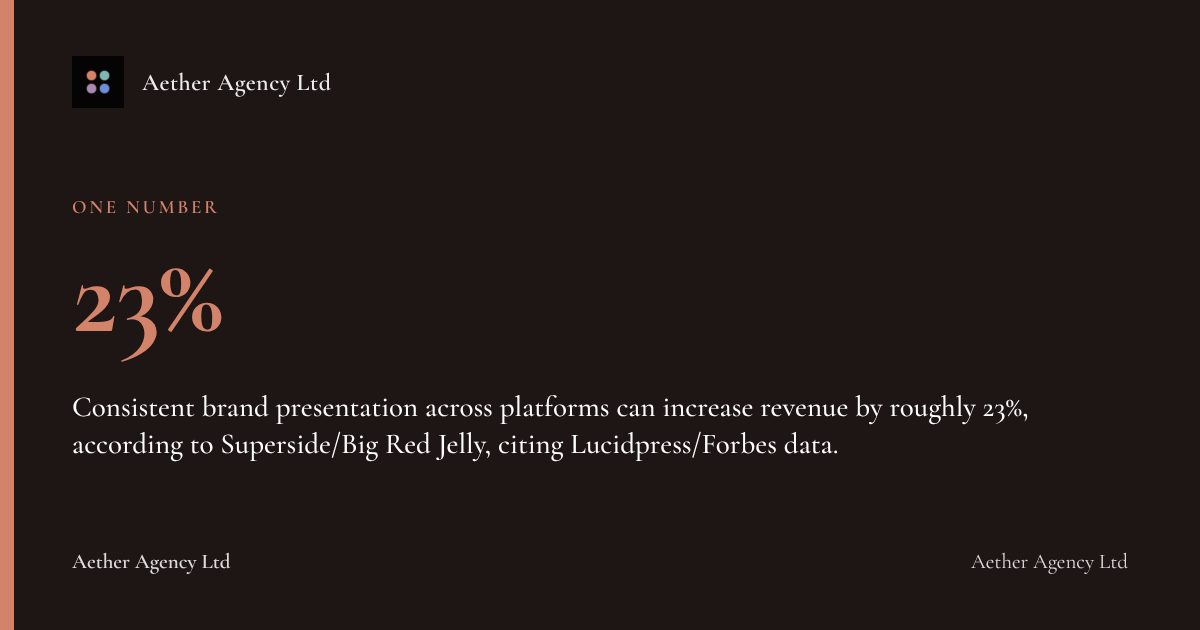
- Consistent brand presentation across platforms can increase revenue by roughly 23%, according to Superside/Big Red Jelly, citing Lucidpress/Forbes data.
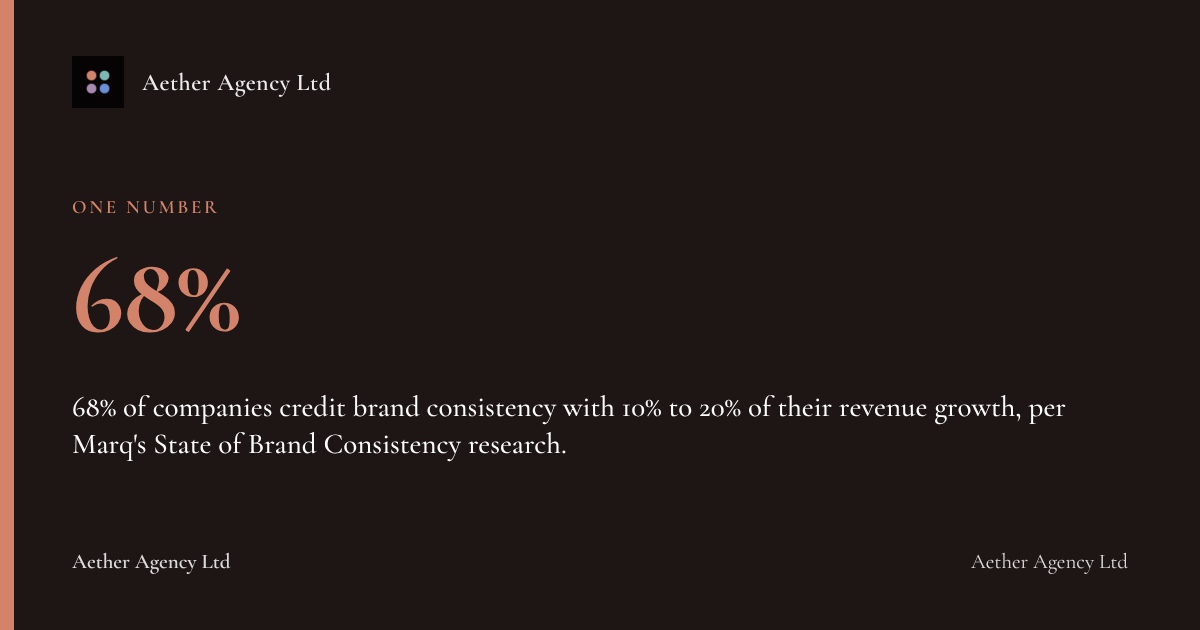
- 68% of companies credit brand consistency with 10% to 20% of their revenue growth, per Marq's State of Brand Consistency research.
- Thorough branding engagements typically run 10 to 16 weeks minimum; anything promising a full identity in three or four weeks is cutting strategic corners, says Deskteam360.
- Most businesses waste $15,000 to $30,000 on branding work that looks good but changes nothing commercially, according to the MTHD Agency 2026 evaluation framework cited by Big Red Jelly.
- A property developer, Just Simple Homes, recorded site traffic up 85% after Aether Agency Ltd built its branding and website from scratch.
What makes a branding agency case study credible?
A credible branding agency case study is a documented project record that states the client's starting problem, the specific work delivered, the timeframe, and a measurable outcome tied to that work. If any one of those four elements is missing, the case study is marketing copy rather than evidence.
Look first for the problem statement. A strong case study names what was broken, not just what was built: "no digital presence to match the product" is a problem; "needed a refresh" is not specific enough to judge against.
Next, check the deliverables list. Did the agency build a full identity system (logo, typography, colour palette, brand guidelines) or just a logo with a colour swatch attached? A Dribbble guide on branding portfolios argues that strategic context and visual system thinking matter more than a single striking image.
Finally, check whether the outcome is stated as a fact, not a promise. Aether Agency Ltd's own case study for Just Simple Homes, a UK property developer, records that after website development, branding and ongoing social media management, site traffic rose 85% (no earlier figure stated) and properties sold. The client, John Smedley, described the relationship as "very informative and responsive when needed", a working-relationship signal that sits alongside the traffic figure rather than replacing it.
A case study without a stated timeframe is harder to judge fairly. Thorough branding engagements typically take 10 to 16 weeks minimum, per Deskteam360, so a case study claiming a full rebrand in under a month should prompt a direct question about what was actually included.
How can I verify an agency's claimed results are real?
Verifying a branding agency's claimed results means asking for the data source behind each number, not just the number itself. A figure like "sales up 40%" means little without knowing the baseline period, the sample, and who measured it.
Ask the agency three direct questions about any headline statistic:
- Where did this figure come from? Google Analytics, Search Console, point-of-sale data, or the client's own estimate.
- Over what period? A month-on-month spike looks different from a year-on-year trend.
- Can I speak to the client directly? A reputable agency will arrange this, or at minimum share a written reference.
Be cautious of results presented without any baseline. Aether Agency Ltd's case studies state outcomes such as Fulk Butchers' online sales up 180% with a 4.8-star Google rating, and Fluent AI's traffic up 3x with lead generation up 250%, each recorded as the client's own case study figure rather than an industry average. (Fluent AI is a related business, not an independent client: it is owned by Lauren Dawkins, who also runs Aether Agency.) That distinction, first-party recorded result versus third-party verified study, matters when you're comparing agencies, so ask each one to be explicit about which type of figure they're showing you.
87% of S&P 100 companies have rebranded, and campaigns tied to a refresh delivered 2.1x higher awareness gains than unchanged branding, according to mean.ceo's brand refresh statistics report. That scale of data exists at the top of the market; a small agency showing you a single client's Google Analytics screenshot is a different category of evidence, not a worse one, provided it's verifiable.
What questions should I ask about the agency's portfolio in a pitch?
The right pitch questions about a portfolio focus on authorship, process, and permission to verify, three areas that separate genuine agency work from recycled freelancer output. Bring a short, consistent list to every pitch so you can compare answers fairly.
Ask these during the meeting itself, not by email afterwards:
- Who on your team led this project, and are they still with the agency?
- Was any part of this subcontracted to a freelancer or another studio?
- Can you show me the brand guidelines document, not just the final logo?
- What did the client ask for initially, and how did that change during the project?
- Can I contact this client as a reference?
- What was the actual timeline from kick-off to delivery?
An agency that hesitates on the subcontracting question is worth a second look. The Ramotion guide to choosing a branding agency recommends treating portfolio reviews as structured vetting sessions rather than informal browsing, precisely because verbal answers in the room often reveal more than the polished case study page.
Award-focused portfolios versus business-impact portfolios: what's the difference?
An award-focused portfolio showcases visual originality and creative risk-taking, while a business-impact portfolio documents measurable commercial outcomes such as sales, traffic or retention tied to the brand work. Neither is inherently wrong, but they answer different questions, and conflating them is how businesses end up with branding that wins recognition but doesn't move revenue.
As one branding agency guide puts it: "a luxury hospitality rebrand tells you very little about an agency's ability to handle a B2B professional services identity, even if both pieces look stunning" (Superside, cited by Big Red Jelly). That's the core risk of judging on visuals alone: striking imagery proves craft, not commercial fit.
| Signal | Award-focused portfolio | Business-impact portfolio |
|---|---|---|
| Primary evidence | Visual boldness, concept originality | Traffic, sales, retention, lead figures |
| Typical language | "Award-winning", "bold", "disruptive" | "Increased", "grew", "generated" |
| Client quotes | Often absent or generic | Specific, named, verifiable |
| Best fit for | Consumer brands chasing cultural buzz | Growing businesses needing commercial return |
| Risk if misjudged | Beautiful brand, flat sales | Functional brand, less creative flair |
Most growing businesses should weight business-impact evidence more heavily. Most businesses waste $15,000 to $30,000 on branding engagements that produce visually appealing output without a strategic foundation that changes commercial performance, according to the MTHD Agency 2026 evaluation framework, which is precisely the outcome an award-chasing portfolio can mask.
Should I prioritise industry-specific experience over a diverse portfolio?
Prioritising sector-specific experience over portfolio diversity depends on how niche or regulated your industry is; a diverse portfolio demonstrates strategic range, but direct sector experience reduces onboarding time and the risk of basic category mistakes. For most growing businesses, a mix of both is the realistic target.
A diverse portfolio across industries shows the agency can adapt its process to different audiences and constraints, which matters if your business sits in an unusual niche. A sector-heavy portfolio shows the agency already understands your buyers, your competitors, and your compliance context, useful if you're in a regulated field like financial services or healthcare.
Aether Agency Ltd's project record spans property (Just Simple Homes), food retail (Fulk Butchers, Surrey), and AI software (Fluent AI), illustrating range across very different buyer types. When weighing this trade-off, ask the agency directly how they'd approach your sector if they haven't worked in it before, and judge the quality of their answer, not just whether a logo from your exact niche appears on their site.
In-house creative team or outsourced freelancers: how to tell which built the work
Ask the agency to name the specific individual who led the strategy and the individual who led the design on a given project. A genuine in-house team will answer immediately with names still on staff; an agency relying heavily on freelancers often gives vaguer answers about "our network" or "collaborators".
What are the red flags in a branding agency's portfolio?
Red flags in a branding agency's portfolio include unexplained visual sameness across every project, claimed results with no source or baseline, and promises of a finished brand identity in an unrealistically short timeframe. Each of these should prompt a direct follow-up question before you proceed.
Watch for these specific warning signs:
- Every logo looks like a variation of the same template. This suggests the agency applies a house style regardless of client strategy.
- No written case studies, only images. Visual portfolios without narrative hide whether any strategic thinking happened at all.
- Results with no baseline or date range. "Sales doubled" means nothing without knowing doubled from what, over what period.
- A full identity promised in three to four weeks. Per Deskteam360, genuine branding work runs 10 to 16 weeks minimum; a rushed timeline usually means skipped discovery and research phases.
- Reluctance to name a reference client. Agencies proud of their work are generally willing to connect you with a past client, directly or in writing.
- No visible brand guidelines document in any case study. A logo alone isn't a brand system.
Orbix Studio's guide to choosing a branding agency notes that vetting red flags against independent review platforms, rather than taking an agency's own site at face value, is standard due diligence before signing.
How recent does portfolio work need to be to stay relevant?
Portfolio work should generally be no more than two to three years old to reflect current design standards, platform requirements and the agency's present-day team. Older projects can still be useful as evidence of longevity, but they shouldn't carry the weight of your decision.
Design trends, web standards and social platform requirements shift quickly enough that a five-year-old rebrand may no longer reflect how the agency works today. Ask explicitly when each portfolio piece was delivered, and whether the same strategists and designers are still with the agency; staff turnover is common in the sector, and a brilliant 2021 project led by someone who left in 2023 tells you less than it appears to.
An ongoing engagement is a particularly strong signal, because it shows sustained client confidence rather than a single transaction. Aether Agency Ltd's work with Just Simple Homes is described as an ongoing engagement covering website development, branding and social media management, which demonstrates the relationship extending well beyond initial delivery.
Your branding agency portfolio checklist
- Confirm each case study names a specific starting problem, not a vague "needed a refresh".
- Ask who on the agency's team led the strategy and design, and whether they're still employed there.
- Request the brand guidelines document, not just the final logo, for at least one project.
- Check whether claimed results state a baseline, a date range, and a measurement source.
- Ask directly whether any part of a showcased project was subcontracted or freelanced.
- Request a reference client you can contact or email directly.
- Check the delivery date of each portfolio piece; treat anything over two to three years old as background evidence only.
- Compare at least three shortlisted agencies using the same question list, scored consistently.
FAQ
What should I look for in a branding agency's portfolio?
Look for a stated business problem, a clear list of deliverables (including full brand guidelines, not just a logo), a realistic timeframe, and a measurable outcome with a named baseline. A portfolio missing any of these is harder to judge fairly.
How do you evaluate a branding agency before hiring them?
Evaluate a branding agency by reviewing its portfolio for strategic depth, asking direct questions about authorship and subcontracting during the pitch, and requesting a reference client to verify claimed results. Treat visual polish as one input among several, not the deciding factor.
What are red flags in a branding agency's portfolio?
Common red flags include visually identical work across unrelated clients, results quoted with no baseline or date, promises of a full brand identity in three to four weeks, and reluctance to name a reference client. Any one of these warrants a direct follow-up question.
Does a branding agency's portfolio need to include my industry?
Not necessarily. Sector-specific experience reduces onboarding time, particularly in regulated industries, but a diverse portfolio across sectors can demonstrate strategic range and adaptability just as well, provided the agency can explain how it would approach your market.
How many projects should a branding agency portfolio include?
There's no fixed number, but a portfolio showing fewer than five to six detailed case studies may indicate limited experience, while an unusually large number with no depth per project may indicate low-effort, template-driven work. Depth of each case study matters more than total count.
Should every project in a portfolio look visually different?
Not necessarily, but if every project looks near-identical regardless of the client's industry or brief, that's a sign the agency applies a fixed house style rather than tailoring strategy to each business. Some stylistic consistency in craft quality is normal; sameness in output is not.
How do you verify a branding agency's claimed results?
Ask where the figure came from (analytics platform, sales data, client estimate), over what period, and whether you can speak to the client directly. A reputable agency will provide a source and, ideally, a direct reference rather than relying on the headline number alone.
What should I check about NDAs if an agency can't show certain work publicly?
Ask the agency to describe the project type, sector and scope verbally, even if the visuals are under NDA, and request written confirmation of the outcome from the client if possible. A genuinely confidential project is normal in regulated sectors; a vague answer with no detail at all is not.
Judging your next brand project with Aether Agency Ltd
Judging a portfolio is only half the decision; the other half is working with an agency that treats brand identity as a commercial tool, not a design exercise. Brand identity systems, naming, and guidelines designed to hold together across every channel a growing business uses are built on the back of over 50 projects delivered and more than 20 years of combined team experience.
That approach is visible in Aether Agency Ltd's work with Just Simple Homes, where branding, website development and ongoing social media management were built from the ground up for a property developer with no digital presence to match its homes; site traffic rose 85% on record, and properties sold. If you're shortlisting agencies and want a portfolio review that's grounded in business outcomes rather than award-chasing, get in touch with Aether Agency Ltd to talk through your brief.
Related Reading
- How Are Branding Projects Priced? UK Cost Guide 2026
- Don't Like the Branding Concepts? What Happens Next (2026)
- Project Fee vs Retainer for Branding: UK Costs 2026
Add aether-agency.co.uk as a preferred source on Google
See How Your Brand Appears in AI Search
Aether AI monitors your visibility across ChatGPT, Perplexity, Google AI Overviews, and Claude in real time. Find out where you stand and what to fix.
Explore Aether AI