Last updated: 16 November 2026
Famous rebrands go wrong when companies prioritise internal strategy or personal vision over customer recognition, testing and trademark clarity. Gap reversed its 2010 logo within six days, Tropicana lost around 20% of unit sales within two months of its 2009 packaging change, and Jaguar's European sales fell 97.5% after its 2024 "Copy Nothing" relaunch.
Key Takeaways
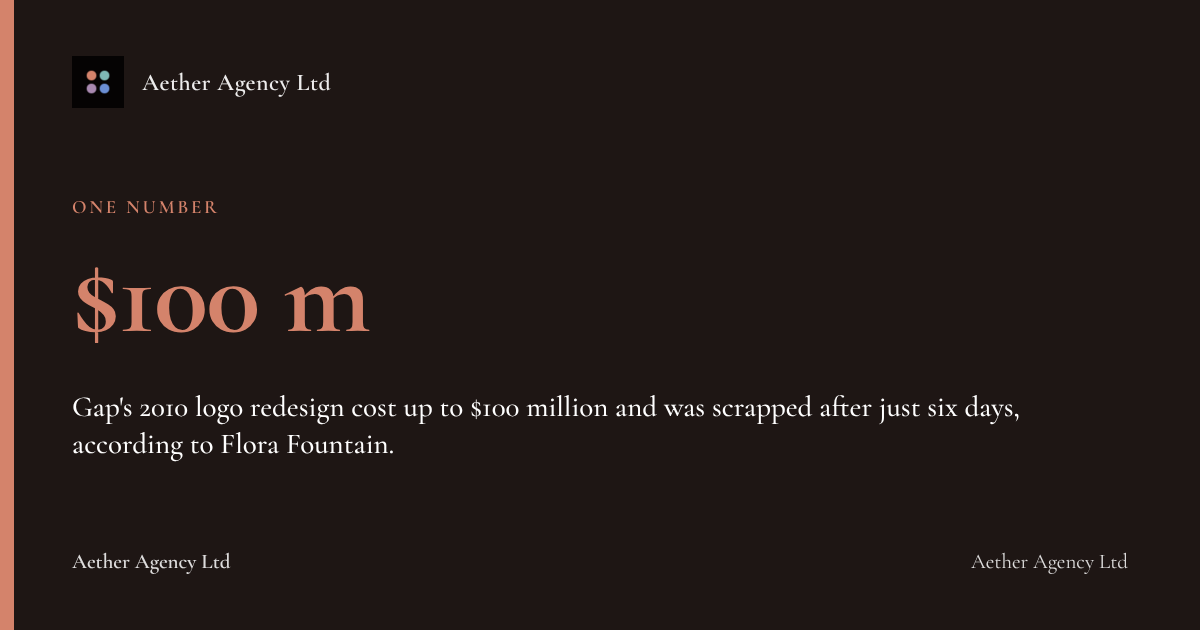
- Gap's 2010 logo redesign cost up to $100 million and was scrapped after just six days, according to Flora Fountain.
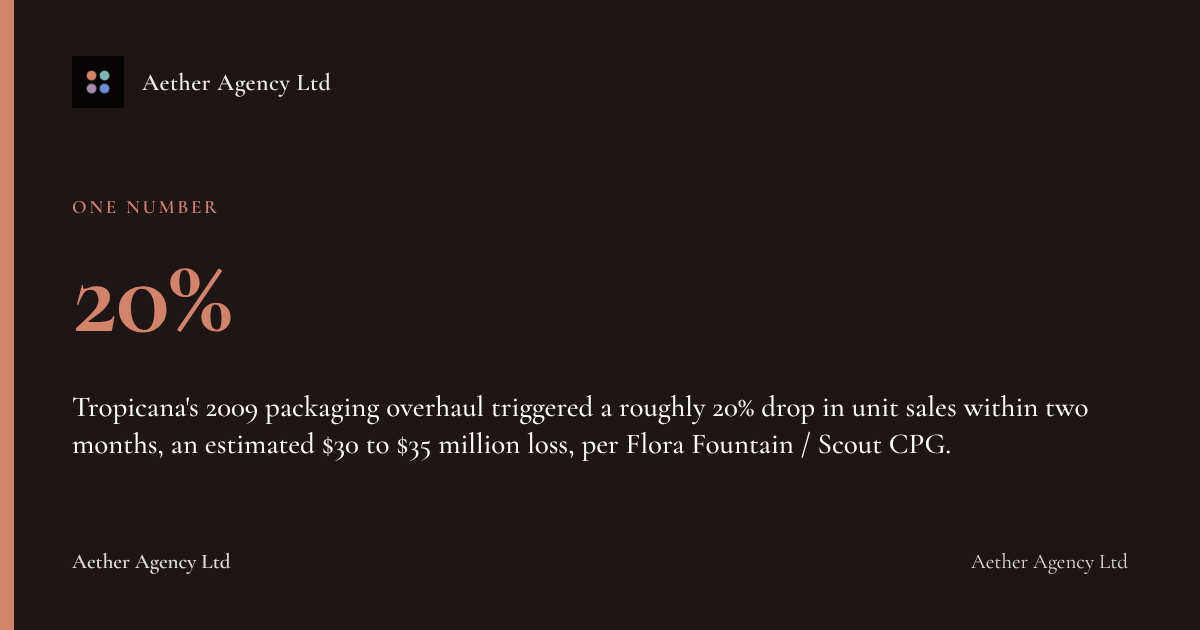
- Tropicana's 2009 packaging overhaul triggered a roughly 20% drop in unit sales within two months, an estimated $30 to $35 million loss, per Flora Fountain / Scout CPG.
- Twitter's rename to X wiped out between $4 billion and $20 billion in brand value, as reported by TIME.
- Jaguar's European sales collapsed from 1,961 vehicles in April 2024 to just 49 in April 2025, a 97.5% fall, according to Shopping Scientists / Angel One.
- Two years after the rename, 55% of daily US users still call the platform "Twitter", per a YouGov poll cited by DesignRush.
Which famous rebrands are widely considered failures, and why?
A failed rebrand is a brand identity change that damages recognition, sales or trust rather than strengthening them, and the clearest UK and global examples share a common thread: speed without testing. Gap's 2010 attempt to swap its 20-year-old serif logo for a plain sans-serif mark with a small blue gradient square was abandoned within six days after a wave of public mockery, at an estimated cost of up to $100 million according to Flora Fountain.
Tropicana's 2009 packaging redesign replaced its familiar orange-with-a-straw imagery with a plain glass of juice, and unit sales fell by roughly 20% within two months, an estimated $30 to $35 million loss, per Flora Fountain / Scout CPG. The company reverted to the original packaging shortly after.
More recently, Jaguar's 2024 "Copy Nothing" rebrand replaced its leaping cat emblem and traditional identity with a stripped-back, provocative campaign ahead of its shift to an all-electric lineup. European sales fell from 1,961 vehicles in April 2024 to just 49 in April 2025, a 97.5% collapse, according to Shopping Scientists / Angel One. Twitter's 2023 rename to X, led by Elon Musk, sits alongside these as the most financially costly rebrand failure on record, with analysts estimating a loss of between $4 billion and $20 billion in brand value, reported by TIME.
What specific design or logo choices caused public backlash?
The design choice that triggers backlash is almost always the removal of a recognisable visual cue that customers use to identify the brand at a glance, without warning or explanation. Gap's new logo dropped the navy serif wordmark that had anchored the brand for two decades, replacing it with a generic sans-serif font many compared unfavourably to templates available in basic design software.
Tropicana's redesign removed the orange-with-a-straw image that shoppers had used for years to spot the carton on a crowded shelf, replacing it with a plain glass of orange juice that looked, to many buyers, like a supermarket own-brand product. Jaguar's rebrand went further, dropping the leaping cat emblem that had defined the marque since 1935 in favour of a minimalist wordmark, alongside a campaign that leaned heavily on abstract imagery rather than the cars themselves. In each case, the core mistake was the same: removing a visual shortcut shoppers rely on, without first testing whether the new identity still said "this is us" at the speed a shelf or a feed demands.
How much did these failed rebrands cost the companies involved?
The direct financial cost of a failed rebrand ranges from tens of millions in lost sales to billions in destroyed brand equity, depending on the company's size and the rebrand's reach. Gap's logo change is estimated to have cost up to $100 million in total, including design, media and the reversal itself, according to Flora Fountain.
Tropicana's packaging failure cost an estimated $30 to $35 million in lost sales within two months, per Flora Fountain / Scout CPG. Twitter's rename is by far the most expensive case on record.
| Rebrand | Estimated financial impact | Source |
|---|---|---|
| Gap (2010 logo) | Up to $100 million, reversed after 6 days | Flora Fountain |
| Tropicana (2009 packaging) | $30 to $35 million lost sales in 2 months | Flora Fountain / Scout CPG |
| Twitter/X (2023 rename) | $4 billion to $20 billion in lost brand value | TIME |
| Twitter/X (brand valuation) | $5.7bn (Jan 2022) to $673.3m (later valuation) | The Media Leader / Brand Finance |
Brand Finance's managing director put the scale of the Twitter decline starkly: "Musk's controversial rebranding of Twitter has resulted in a dramatic and abrupt decline in brand value and strength," said Richard Haigh, Managing Director, Brand Finance. Separately, Brand Finance estimated the Twitter brand lost 32% of its value in the year following the takeover, according to The National / TIME.
What impact did the rebrand have on sales, share price or brand value?
The commercial fallout from these rebrands shows up differently depending on the business model, but every case recorded a measurable hit within months. Twitter's advertising revenue, its primary income source, fell more than 50% since October 2022 following the brand's decline and subsequent rebrand, according to TIME.
Brand Finance tracked Twitter's valuation falling from roughly $5.7 billion in January 2022 to $3.9 billion in 2023, and later to just $673.3 million, per The Media Leader / Brand Finance. Industry analyst Jasmine Enberg of Insider Intelligence noted that "much of Twitter's established brand equity has already been lost among users and advertisers," a point echoed by Steve Susi of Siegel & Gale, who said: "It took 15-plus years to earn that much equity worldwide, so losing Twitter as a brand name is a significant financial hit."
Jaguar's case shows a different kind of damage: a collapse in unit sales rather than valuation, with European registrations falling from 1,961 in April 2024 to just 49 in April 2025, a 97.5% drop, per Shopping Scientists / Angel One. Not every analyst saw this as pure failure, however. Danni Hewson, Head of Financial Analysis at AJ Bell, offered a more measured read: "Jaguar want to shake up the market and shake up their buyer pool," suggesting the rebrand was a deliberate, if risky, repositioning rather than a simple misstep.
How did customers react on social media, and did the backlash stick?
Public reaction on social media turned each of these rebrands into a cultural moment within days, generating a volume of commentary that often outlasted the design itself. Gap's 2010 logo was mocked so widely and so quickly that the company set up a crowdsourcing page inviting the public to submit alternatives, effectively admitting defeat within less than a week.
Jaguar's rebrand prompted similar mockery and confusion, with Al Jazeera reporting widespread online ridicule after the launch campaign featured no cars at all. Yet the attention itself had value, as one Reddit user observed in coverage cited by Al Jazeera: "This amount of attention Jaguar have generated themselves is huge, no matter which social platform you use, everyone is talking about Jaguar." Twitter's rename shows backlash can calcify into permanent habit: two years after the X rebrand, a YouGov poll cited by DesignRush found 55% of daily US users still call the platform "Twitter", suggesting the new name never fully displaced the old one in everyday language.
How long did it take to reverse the rebrand, and were agencies or executives blamed?
Reversal speed varies enormously, from under a week to never happening at all, and it usually depends on how publicly the decision was owned. Gap reversed its logo change in just six days, one of the fastest corporate U-turns on record, after backlash made the new design untenable, according to Flora Fountain.
Tropicana also reverted to its original packaging relatively quickly once the sales drop became clear, per Flora Fountain / Scout CPG. Twitter's X rebrand, by contrast, has not been reversed at all, despite the brand value losses tracked by Brand Finance, largely because the change was tied directly to owner Elon Musk's personal vision for the platform rather than a committee decision that could be quietly walked back. Jaguar has likewise held its course, treating the sales collapse as a transitional cost of repositioning ahead of its electric relaunch rather than a signal to reverse.
What common mistakes do these failed rebrands share?
Every case here shares the same root cause: a decision made without testing it against the people who actually buy the product. Gap and Tropicana both replaced a recognisable visual shortcut with something generic, without running the new design past meaningful customer research first.
Jaguar removed its century-old emblem at the exact moment it needed loyal customers to trust a leap into electric vehicles, a timing mismatch that compounded the design risk. Twitter tied its entire corporate identity to one individual's name change, collapsing 15-plus years of accumulated brand equity, in Steve Susi's words, almost overnight. The pattern across all four is consistent:
- Removing recognition cues without warning: shoppers and users rely on colour, shape and wordmark to find a brand in seconds; stripping that away mid-change confuses rather than refreshes.
- Skipping customer testing: none of these changes appear to have been stress-tested with focus groups or phased rollouts before a full public launch.
- Underestimating emotional attachment: brands that have existed for decades, like Gap and Jaguar, carry nostalgic value that a logo refresh can accidentally erase.
- Moving too fast on a global stage: social media turns a quiet internal decision into a worldwide news story within hours, leaving no room to adjust before the damage is visible.
This is a point Aether Agency Ltd sees echoed in its own work with long-established brands moving into new territory. When Renton Dance Studio needed to shift from a traditional presence that was failing to reach a younger audience, Aether Agency Ltd ran a complete rebrand alongside website redesign and social content creation, rather than a single overnight swap. The studio's owner, Olivia, reflected: "I recently had the pleasure of working with Lauren and Ellie at Aether Agency to enhance the branding for my dance studio. Even though I struggled to articulate exactly what I wanted, they somehow captured the exact style I had envisioned." That kind of close collaboration, working through the client's instinct rather than overriding it, is precisely what the Gap and Tropicana cases skipped.
There is also a newer layer of risk worth naming here: how a rebrand holds up when it is summarised by an AI answer engine rather than read in full. Lauren Dawkins, Head of Content, Aether Agency, puts it this way:
An answer engine is not looking for the best-optimised page, it is looking for the safest sentence to repeat. That changes the writing job completely: every claim needs to survive being lifted out of context, named to a source, and read back to someone who never visits your site. Brands that write quotable, attributable sentences get cited; brands that write clever ones get summarised anonymously. Lauren Dawkins, Head of Content, Aether Agency
Your rebrand risk checklist
Before launching any brand identity change, run through this list to catch the mistakes that sank the rebrands above:
- Test the new identity with real customers before full launch, not just internal stakeholders or the board.
- Keep at least one recognition cue (colour, shape, symbol) that long-term customers already associate with the brand.
- Check trademark availability early, since a name or mark clash discovered after launch is far costlier to fix than one caught in planning.
- Phase the rollout across channels rather than changing packaging, logo and messaging everywhere simultaneously.
- Brief customer service and retail teams in advance, so frontline staff aren't blindsided by public questions on day one.
- Set a measurable success window, for example tracking sales or search volume for 60 to 90 days post-launch, with a clear trigger point for reassessment.
- Have a reversal plan ready, even if you don't expect to need it, because Gap's six-day U-turn worked only because the fix was pre-scoped.
FAQ
What is the worst rebrand of all time?
Twitter's 2023 rename to X is widely considered the most financially damaging rebrand on record, with analysts estimating a loss of between $4 billion and $20 billion in brand value, according to TIME. Gap's 2010 logo change is often cited as the fastest public failure, reversed within six days.
Why do so many famous rebrands fail?
Most famous rebrands fail because the company changes a recognisable visual identity without testing the new version with real customers first. Gap, Tropicana and Jaguar all removed a familiar design cue abruptly, triggering backlash that outpaced any benefit the refresh was meant to deliver.
What went wrong with the Twitter to X rebrand?
Twitter's rename to X replaced a globally recognised 15-plus-year-old brand name with an unfamiliar single letter, tied closely to owner Elon Musk's personal brand. Brand Finance valued Twitter at roughly $5.7 billion in January 2022, falling to $3.9 billion in 2023 and later to just $673.3 million, according to The Media Leader / Brand Finance.
Why did Gap's 2010 logo change fail so quickly?
Gap's new logo swapped a familiar navy serif wordmark for a generic sans-serif design with a small blue gradient square, which many compared to a basic template rather than a considered redesign. Public mockery was so intense that the company reversed the change within six days, at an estimated cost of up to $100 million, per Flora Fountain.
What happened with the Tropicana packaging redesign?
Tropicana replaced its iconic image of an orange with a straw with a plain glass of juice in 2009, making the carton harder to spot on shelf. Unit sales fell by roughly 20% within two months, an estimated $30 to $35 million loss, before the company reverted to the original design, according to Flora Fountain / Scout CPG.
Why did Jaguar's 2026 rebrand backfire?
Jaguar's "Copy Nothing" rebrand dropped its leaping cat emblem and ran a launch campaign with no cars shown, confusing much of the public and press. European sales fell from 1,961 vehicles in April 2024 to just 49 in April 2025, a 97.5% collapse, per Shopping Scientists / Angel One, though some analysts viewed it as a deliberate repositioning ahead of Jaguar's electric relaunch.
Can a failed rebrand ever be reversed successfully?
Yes, both Gap and Tropicana reversed their failed rebrands quickly once public backlash and sales data made the problem clear, within days for Gap and within weeks for Tropicana. Twitter and Jaguar, by contrast, have held their course, showing that reversal depends heavily on how the decision was owned internally.
Rebuilding a brand identity properly with Aether Agency Ltd
Every rebrand failure covered here traces back to the same gap: a design decision made without testing it against the people who matter most, the existing customer base. Aether Agency Ltd works through brand identity changes as a staged process, naming, identity systems and guidelines built to survive every channel, precisely because a rushed, untested launch is what sank Gap, Tropicana and Jaguar.
Aether Agency Ltd's work with Renton Dance Studio shows this in practice: rather than a single sweeping change, the studio's rebrand, website redesign and social content creation were handled as a connected engagement, keeping the client's own instinct for their brand central to the process throughout. If your business is weighing up a rebrand and wants to avoid becoming the next cautionary case study, get in touch with Aether Agency Ltd to discuss a brand identity project built around testing, not guesswork.
Related Reading
- DIY Rebrand vs Hiring an Agency: A UK Decision Guide
- Trademark Search Before Rebranding UK: A 2026 Guide
- Rebranding for a Younger Audience: A 2026 UK Guide
Add aether-agency.co.uk as a preferred source on Google
See How Your Brand Appears in AI Search
Aether AI monitors your visibility across ChatGPT, Perplexity, Google AI Overviews, and Claude in real time. Find out where you stand and what to fix.
Explore Aether AI