Last updated: 7 November 2026
A DIY rebrand suits a small business with limited budget, basic design skills and low brand complexity, while hiring an agency suits a business with multiple stakeholders, legal exposure or revenue tied to brand perception. UK agency rebrands typically cost from $10,000 to $30,000 at mid-market studios and take 4 to 6 months, according to Big Red Jelly (2026) and Purpose Brand (2026).
Key Takeaways
- A full strategic rebrand for a small business typically ranges from $10,000 to $30,000 at a mid-market agency, and $25,000 to $75,000 at premium specialty studios, according to Big Red Jelly (2026).
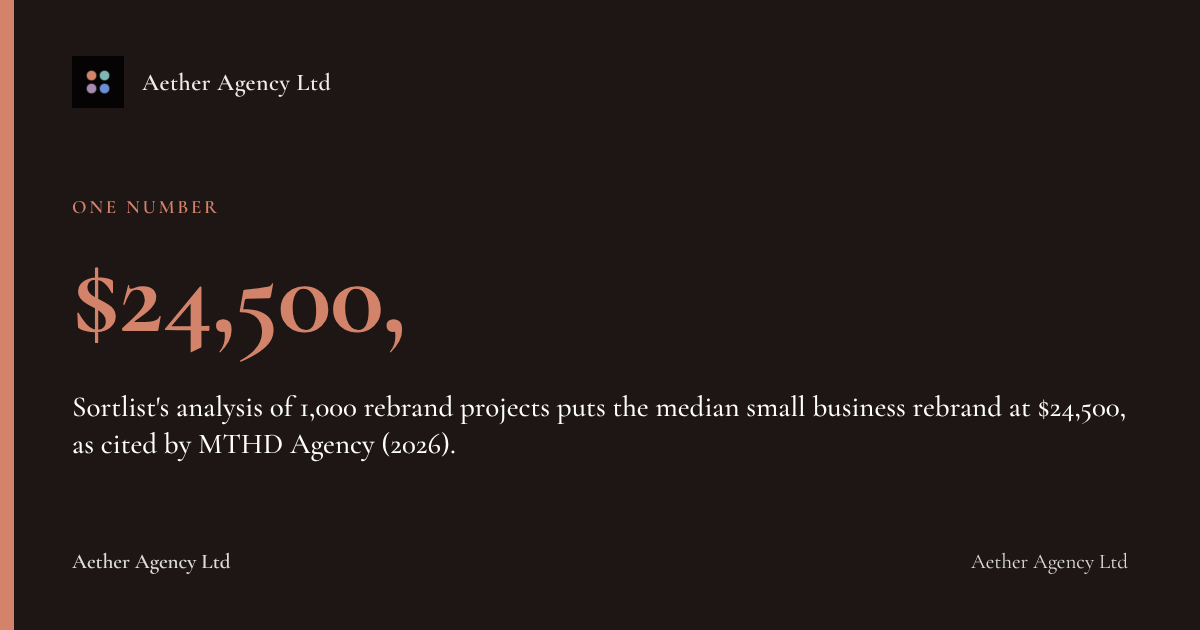
- Sortlist's analysis of 1,000 rebrand projects puts the median small business rebrand at $24,500, as cited by MTHD Agency (2026).
- A typical agency-led rebrand takes 4 to 6 months from research to launch, according to Purpose Brand (2026).
- The average rebrand requires updating 215 individual marketing assets, a figure cited by MTHD Agency (2026) from Bynder data.
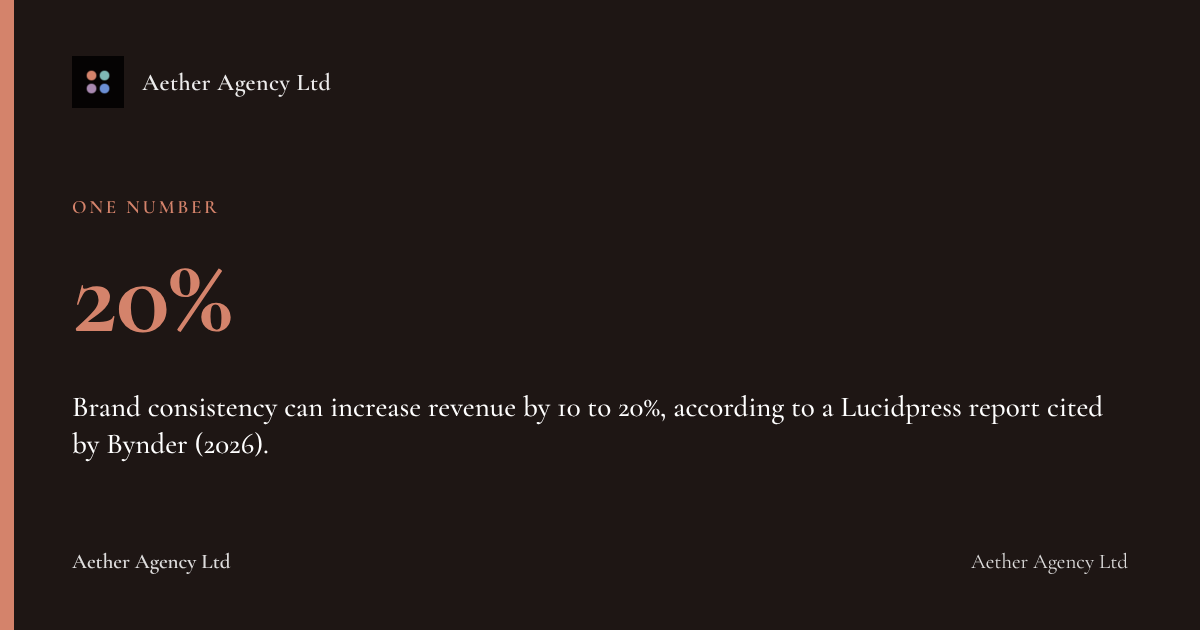
- Brand consistency can increase revenue by 10 to 20%, according to a Lucidpress report cited by Bynder (2026).
What is a rebrand?
A rebrand is a deliberate change to a business's name, visual identity, messaging or market positioning, carried out to reflect new ownership, a new audience, a merger or outdated perception in the market. It differs from a simple logo refresh because a genuine rebrand touches strategy, legal registrations, customer-facing assets and internal culture at the same time.
UK businesses usually rebrand for one of a handful of reasons: outgrowing a founder's original name, pivoting into a new sector, recovering from reputational damage, or merging with another company. Companies House records a legal name change separately from any visual identity work, which is one reason rebrands involve more moving parts than most directors expect.
Aether Agency Ltd, incorporated on 3 June 2020 (Companies House number 12641621), works with growing UK businesses on exactly this kind of transition, building brand identity, websites and marketing strategy as one connected process rather than three separate jobs.
DIY rebrand cost vs hiring an agency in the UK
A DIY rebrand can cost as little as the price of design software and stock assets, while an agency-led rebrand typically runs from $10,000 to $30,000 for a small business at a mid-market studio, and $25,000 to $75,000 at a premium specialty studio, according to Big Red Jelly (2026). Larger agency engagements scale well beyond that: branding agency projects overall typically cost from $2,500 to $500,000+ depending on scope and strategy depth, according to Dribbble (2026), and MTHD Agency (2026) puts the full range at $5,000 to $500,000+ depending on company size and who does the work.
The median figure is more useful than the extremes for most small businesses. Sortlist's analysis of 1,000 rebrand projects, cited by MTHD Agency (2026), puts the median small business rebrand at $24,500. At the top end, large corporations may spend $500,000 to $10 million on rebranding, with costs that can exceed $1 million, according to Big Red Jelly (2026), reflecting the scale of global asset rollouts rather than anything a small UK firm needs to budget for.
| Route | Typical cost range | Who it suits |
|---|---|---|
| DIY (templates, freelancer design) | Low cost, mainly time and software | Very early-stage businesses, minimal legal complexity |
| Mid-market agency | $10,000 to $30,000 | Small businesses needing strategy plus full identity and website |
| Premium specialty studio | $25,000 to $75,000 | Businesses with multiple stakeholders or sector complexity |
| Enterprise rebrand | $500,000 to $10 million+ | Large corporations with global asset libraries |
Sources: Big Red Jelly (2026), MTHD Agency (2026).
The DIY route looks cheaper on paper, but it rarely covers strategy, legal checks or the 215 individual marketing assets that MTHD Agency (2026) says the average rebrand requires updating. Budgeting only for a new logo while ignoring signage, email templates, social banners and supplier documents is the most common cause of mid-project overspend.
How long a DIY rebrand takes versus an agency-led rebrand
A typical rebrand with an agency takes 4 to 6 months, according to Purpose Brand (2026), covering research, strategy, design, testing and rollout as sequential phases. A DIY rebrand has no fixed timeline because it depends entirely on how many hours the business owner or marketing lead can dedicate around their day job, and it commonly stretches well past six months once legal checks, asset production and staff buy-in are factored in.
The agency timeline holds together because specialist teams run research, naming, design and development in parallel rather than one person doing each stage sequentially. A DIY rebrand usually compresses or skips the research phase entirely, which saves weeks upfront but creates rework later when the new identity doesn't test well with customers or staff.
Renton Dance Studio, a UK dance academy, faced a traditional digital presence that was failing to connect with a younger audience. Aether Agency Ltd delivered a complete rebrand, website redesign and social media content creation as an ongoing engagement, moving the studio's brand and website from traditional to modernised. Even though I struggled to articulate exactly what I wanted, they somehow captured the exact style I had envisioned."
Skills and software needed for a DIY rebrand
A DIY rebrand requires working knowledge of design software such as Adobe Illustrator or Figma, basic brand strategy skills, copywriting ability and the technical competence to update a website's content management system. Most business owners attempting a DIY rebrand have strength in one or two of these areas but not all four, which is where quality gaps tend to appear first in the logo, then in messaging consistency, then in the website build.
Beyond software, a DIY rebrand needs someone who understands trademark searching through the UK Intellectual Property Office, basic SEO principles for redirecting old URLs, and enough project management discipline to track all 215 assets that MTHD Agency (2026) says the average rebrand touches. Free or low-cost tools like Canva, Google Workspace and WordPress can produce a passable result for a very early-stage sole trader, but they rarely deliver the strategic positioning work that separates a cosmetic refresh from a genuine rebrand.
Biggest risks when rebranding without professional help
The biggest risk in a DIY rebrand is launching a new name or logo that infringes an existing UK trademark, which can force a costly second rebrand within months. Other common mistakes include inconsistent application of the new identity across channels, underestimating the number of assets that need updating, and treating the rebrand as a design exercise rather than a strategic repositioning.
Brand consistency isn't cosmetic. A Lucidpress report cited by Bynder (2026) found that brand consistency can increase revenue by 10 to 20%, and a Millward Brown study cited in the same source found strong brands have three times the sales volume of weak brands. A fragmented DIY rollout, where the old logo lingers on invoices or Google Business Profile while a new one appears on the website, directly works against that consistency benefit.
Common DIY rebrand mistakes include:
- Skipping a formal UK trademark search before launching a new name
- Failing to budget time for updating all 215 average marketing assets (MTHD Agency, 2026)
- Changing visual identity without revisiting messaging or positioning
- Launching across some channels but not others, creating a confusing transition period
- Ignoring staff training, so customer-facing teams describe the brand inconsistently
- Underestimating SEO impact from URL changes and redirects
Legal steps for rebranding: trademark checks and Companies House updates
Trademark checks and Companies House filings are legal prerequisites for any UK rebrand, not optional extras. Before adopting a new name, a business should search the UK Intellectual Property Office trademark register to confirm the name isn't already registered in a relevant class, and should also check domain availability and Companies House's register of existing company names.
If the legal entity name is changing, directors must file a name change with Companies House using form NM01, which typically processes within a few working days once approved. A rebrand that changes only the trading name, leaving the registered company name unchanged, avoids this filing but should still update VAT registration details with HMRC, business bank account records, and any sector-specific licences held with bodies such as the Financial Conduct Authority or local authority trading standards where relevant.
Businesses operating under a new trademark should also consider registering it with the IPO, a process that currently costs a modest government fee and takes several months to confirm, protecting the brand name against future copycats. Skipping this step is one of the most expensive false economies in a DIY rebrand, because defending an unregistered name later costs far more than registering it upfront.
Choosing between DIY and an agency: the decision trade-off
The DIY versus agency decision usually comes down to three factors: available budget, internal design and strategy skills, and how much commercial risk sits behind getting the brand wrong. A sole trader with a simple service offering and no existing brand equity can reasonably attempt a DIY rebrand, while a business with multiple stakeholders, franchise partners, investors or significant existing brand recognition carries too much risk to handle internally.
| Factor | DIY rebrand fits better | Agency fits better |
|---|---|---|
| Budget | Very limited, under a few thousand pounds | Can stretch to the $10,000 to $30,000 mid-market range (Big Red Jelly, 2026) |
| Team skills | Someone on staff has design and copywriting ability | No one internally has brand strategy or design experience |
| Stakeholders | One or two decision-makers | Multiple directors, investors or franchise partners |
| Timeline pressure | Flexible, no fixed launch date | Needs a coordinated launch within 4 to 6 months (Purpose Brand, 2026) |
| Risk tolerance | Low existing brand equity to protect | Established reputation, legal exposure or franchise agreements at stake |
A hybrid route is also worth considering: some businesses commission an agency for strategy and identity design, then manage the day-to-day rollout internally once the brand guidelines exist. This splits cost from the top of the agency range down towards the lower end while still avoiding the trademark and positioning mistakes most common in a fully DIY approach.
What a typical rebrand process involves, from research to launch
A professionally managed rebrand moves through five stages: discovery and research, strategy and positioning, identity design, build and asset production, then launch and rollout. Discovery typically involves stakeholder interviews, competitor analysis and customer research to understand why the current brand isn't working and what the new one needs to achieve.
Strategy translates that research into a positioning statement, tone of voice and messaging framework before any visual design begins, which is the stage DIY rebrands most often skip or compress. Identity design then produces the logo, colour palette, typography and brand guidelines, followed by the build phase where the website, social profiles and the 215 average marketing assets (MTHD Agency, 2026) are updated to match. Launch and rollout is the final stage, covering the public announcement, staff briefing and monitoring of how customers respond.
Aether Agency Ltd structures its work around this same sequence, connecting brand identity, website development and ongoing marketing strategy as one process rather than three disconnected suppliers, drawing on more than 20+ years of combined team experience across 50+ projects delivered.
Your rebrand checklist
- Confirm the new name clears a UK Intellectual Property Office trademark search before any design work begins
- File a Companies House name change (form NM01) if the registered entity name is changing
- Update HMRC VAT registration details and any sector-specific regulatory licences
- Map every customer-facing asset, from signage to email signatures, against the 215-asset average (MTHD Agency, 2026)
- Brief all staff before public launch so messaging stays consistent from day one
- Update Google Business Profile, social media profiles and website metadata on or near launch day
- Set up 301 redirects from old URLs to preserve search rankings
- Monitor customer feedback and search visibility for at least the first month after launch
FAQ
Is a DIY rebrand worth it for a small UK business?
A DIY rebrand can work for a very early-stage sole trader with simple positioning and no existing brand equity to protect. For any business with multiple stakeholders, an established customer base or sector-specific legal exposure, the risk of inconsistent rollout or trademark conflict usually outweighs the cost saving.
How much does a rebrand cost compared to starting a brand from scratch?
A full strategic rebrand for a small business typically ranges from $10,000 to $30,000 at a mid-market agency, and $25,000 to $75,000 at premium specialty studios, according to Big Red Jelly (2026). The median figure across 1,000 projects analysed by Sortlist, cited by MTHD Agency (2026), sits at $24,500.
How long does a rebrand take from start to finish?
A typical agency-led rebrand takes 4 to 6 months, according to Purpose Brand (2026), covering research, strategy, design, build and launch. A DIY rebrand has no standard timeline and often takes longer once legal checks and asset updates are accounted for.
Do I need to tell Companies House if I rebrand my business?
You only need to file a Companies House name change if the legal registered name of the company is changing, using form NM01. If you're only changing a trading name while the registered company name stays the same, Companies House doesn't need updating, though HMRC VAT records and any regulatory licences should still reflect the new trading identity.
What should I check before hiring a branding agency?
Check the agency's portfolio for work in a comparable sector, read independent reviews, and ask for a clear breakdown of pricing structure before signing anything. Ask whether the fee covers strategy and research or only design output, how many revision rounds are included, and who owns the final files and trademarks once the project ends.
Who should manage a rebrand internally if we don't hire an agency?
A single accountable owner, usually a marketing lead or a director with design sensibility, should coordinate a DIY rebrand so decisions don't stall waiting for consensus. That person needs authority to approve the final identity and the time to manage the realistic workload of updating the average 215 marketing assets a rebrand involves, according to MTHD Agency (2026).
How do I measure whether a rebrand has actually worked?
Track website traffic, conversion rates, branded search volume and customer feedback for at least three months after launch, comparing them against pre-rebrand benchmarks. Brand consistency itself has a commercial payoff: a Lucidpress report cited by Bynder (2026) found consistency can increase revenue by 10 to 20%, which gives a useful framing for what success should look like beyond a fresh logo.
Rebranding with Aether Agency Ltd
Deciding between a DIY rebrand and hiring an agency isn't really about cost alone, it's about whether your business can absorb the risk of getting strategy, legal checks and consistent rollout wrong at the same time. Aether Agency Ltd works through exactly this decision with growing UK businesses every week, building brand identity, websites and ongoing marketing strategy as one connected process rather than three disconnected suppliers.
Aether Agency Ltd has delivered 50+ projects, drawing on 20+ years of combined team experience, including the complete rebrand and website redesign carried out for Renton Dance Studio to modernise its brand and digital presence. If your business is weighing up whether to attempt a rebrand internally or bring in specialist support, get in touch with Aether Agency Ltd's Brand Identity team for a straightforward conversation about what your rebrand actually needs.
Related Reading
- Old Branded Stock After a Rebrand: What UK Firms Should Do
- How to Change a Company Name UK: 2026 Process & Cost
- Branding Agency Guildford | Aether Agency Ltd 2026
Add aether-agency.co.uk as a preferred source on Google
See How Your Brand Appears in AI Search
Aether AI monitors your visibility across ChatGPT, Perplexity, Google AI Overviews, and Claude in real time. Find out where you stand and what to fix.
Explore Aether AI